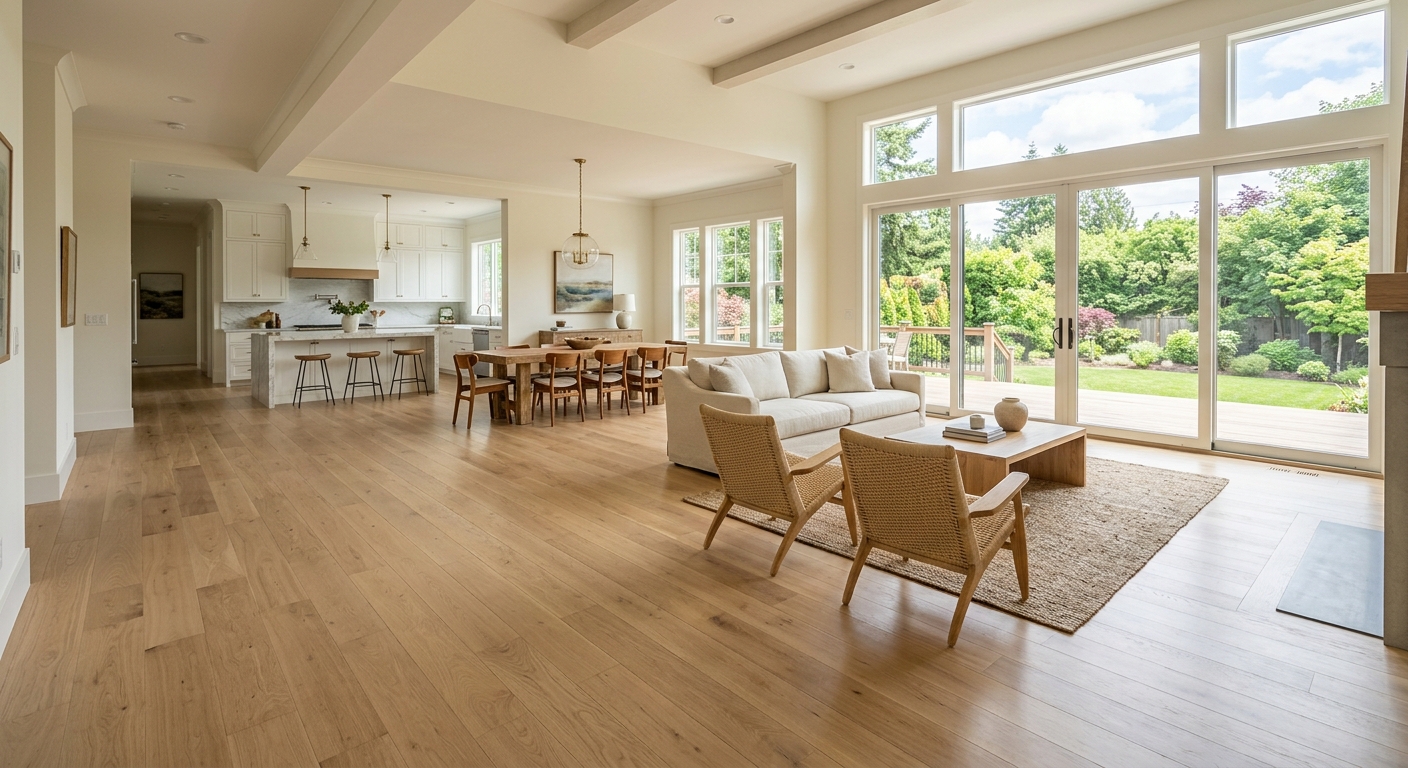
Flooring options and costs in Edmonton
Edmonton homeowners often start with the same question: “What can we afford, and what will hold up?” In a city with cold winters and frequent indoor humidity swings, your budget is strongly influenced by product choice and how well your subfloor is prepared—especially in older neighbourhoods. In Edmonton’s housing stock, 40.5% of homes were built before 1981 (Statistics Canada, 2021 Census), and that matters because mature basements and aging subfloors commonly require levelling, patching, or underlayment adjustments before new flooring goes in. Those preparation steps are a frequent hidden line item that can add roughly $1.50–$4.00 per sq ft in preparation costs.
At the same time, Edmonton’s massive indoor humidity changes can make solid hardwood expand and contract with the seasons. That’s why, below grade or where moisture vapour is a concern, engineered wood and luxury vinyl plank (LVP) are typically the safest “set-and-forget” choices. LVP is also commonly used in basement suites where durability and water resistance matter. In areas with busy owner-rental turnover—like South West Edmonton and the Oliver Square corridor—contractors see steady demand for durable, moisture-tolerant floors and quick turnaround installs.
Use the table below to compare typical Edmonton price ranges by material and performance level, then you can match the right option to each room and budget.
| Type |
Best Room |
Moisture Resistance |
Lifespan |
Price per sq ft |
| Solid hardwood (nail-down, above grade only) |
Living / dining, hallways (dry areas) |
Low (not for basements or slab moisture) |
20–35 years |
$10–$25 |
| Engineered hardwood (float or glue, above + on-grade) |
Living rooms, bedrooms, corridors |
Medium–high (tolerates humidity better) |
15–30 years |
$8–$22 |
| Laminate (click-lock, above-grade) |
Bedrooms, living spaces (dry zones) |
Low–medium (water still damages edges) |
10–20 years |
$4–$8 |
| Luxury vinyl plank / LVP (waterproof, any level) |
Kitchen, basement (finished), entry areas |
High (waterproof core) |
15–25 years |
$5–$12 |
| Porcelain / ceramic tile |
Bathrooms, kitchens, foyers |
High (grout sealed + correct install) |
25–50 years |
$6–$15 |
| Carpet (broadloom or modular tile) |
Bedrooms, stairs, comfort-first rooms |
Low–medium (avoid chronic dampness) |
8–15 years |
$4–$9 |
Prices are estimates only and vary by project scope, site access and material selection.
What affects the price of flooring in Edmonton
In Edmonton, two “similar” flooring projects can land 30–50% apart even when the chosen product looks the same on paper. The biggest reasons are hidden: subfloor condition, moisture risk, and how much labour is required to make the surface flat and ready. In older parts of the city—where 40.5% of homes were built before 1981 (Statistics Canada, 2021 Census)—it’s common to discover uneven plywood, worn OSB, or spots that need patching before install. When levelling is required, that’s where costs jump quickly.
From a technical standpoint, solid hardwood is the most sensitive. It expands and contracts with humidity and typically should be installed above grade using nail-down methods; it also shouldn’t be glued or floated over concrete slabs, and it performs poorly where basement moisture is present. By contrast, engineered hardwood and LVP handle seasonal movement better, and LVP is waterproof for below-grade conditions. Edmonton’s cold winters also make radiant heat compatibility a planning factor; many hydronic and electric systems perform best with materials like tile, LVP, and many engineered floors—while most solid hardwood options are more limited.
Here are a few real Edmonton examples that can raise or lower your quote: (1) A 900 sq ft basement with moisture-prone concrete often costs more because we may need additional vapour management and proper underlayment—sometimes shifting the “best price” from laminate ($4–$8) to LVP ($5–$12) to avoid future gapping. (2) A 1,200 sq ft main floor with noticeably uneven subfloor can add roughly $1.50–$4.00 per sq ft for levelling/patching prep. (3) Radiant-heated rooms sometimes require product changes and careful prep to stay within manufacturer specs.
That’s why comparing quotes should include preparation scope, moisture plan, and installation method—not just the sticker price.
| Price Factor |
Why It Matters |
Cost Impact |
| Room area in sq ft |
Drives material quantity and labour hours |
Moderate to high (more square footage increases both) |
| Subfloor condition |
Levelling or repair needed before install for a flat result |
Can add roughly $1.50–$4.00/sq ft for prep |
| Moisture / below-grade install |
Rules out solid hardwood; affects underlayment and floor system |
Shifts you toward engineered or LVP and adds prep steps |
| Material choice |
Solid vs engineered vs LVP vs tile changes tolerances and install complexity |
Large range (e.g., laminate $4–$8 vs tile $6–$15) |
| Removal and disposal of existing flooring |
Old flooring removal, haul-away, and potential damage repair |
Often moderate; higher if there’s glued flooring or lots of layers |
| Stair nosing / transitions |
Custom edges and additional profiles increase time and waste |
Charged per step or per linear foot; can be significant |
| Radiant heat compatibility |
Limits materials and requires correct specs and acclimation |
May change product choice and underlayment system |
| Installation method |
Float vs glue-down vs nail-down impacts labour and surface prep |
Nail-down and tile can be labour-heavier than click-lock |
Permits & regulations in Alberta
In Alberta, installing flooring itself generally does not require a building permit. That means your standard work—such as removing existing flooring, installing LVP, laminate, engineered hardwood, carpet, or tile surfaces—usually proceeds without pulling permits. However, several connected tasks can trigger permit requirements depending on what’s being altered.
Work that may require permits or involve licensed trades includes: electrical changes tied to in-floor heating (upgrades, adding circuits, or altering wiring), and any structural subfloor repair that goes beyond minor patching (for example, fixing beams or significant framing components). If a project includes moisture remediation that involves making changes to drainage pathways or substantial building envelope adjustments, approvals can become relevant through the proper channels. For condo buildings, the key rule is not usually a permit—it’s the condominium corporation’s bylaws and sound requirements. On upper floors, rules about impact noise can restrict what underlay you can use and may require specific products or systems to meet sound transmission expectations.
Step-by-step for Edmonton homeowners: (1) Ask the contractor for their Alberta licence details (where applicable for the trade they’re performing), (2) request a certificate of liability insurance, and (3) confirm WSIB/WCB coverage (documentation should be provided). Verify coverage by requesting current certificates directly from the contractor and confirming the policy details match the work location and dates. For condo projects, request board approval in writing before you start—especially for hardwood or tile above grade in multi-unit settings.
Best flooring for each room in your Edmonton home
The best flooring in Edmonton is the one that matches each room’s moisture exposure, traffic load, and comfort expectations—while staying practical for long, cold winters and indoor humidity swings. For living and dining areas, engineered hardwood or high-quality laminate offers a warmer look than tile without the tight moisture limits of solid hardwood. In master bedrooms, carpet is popular because it adds softness underfoot, dampens sound, and helps regulate perceived warmth during winter mornings.
For kitchens, go with LVP or large-format porcelain tile. LVP is waterproof, handles spills, and is forgiving over minor subfloor irregularities better than laminate. In Edmonton basements (especially where moisture vapour is a concern), LVP is usually the clear winner: solid wood and most laminate can suffer gapping or edge swelling, while waterproof LVP tolerates the typical below-grade conditions and is commonly used for finished basement floors.
Bathrooms should be porcelain or ceramic tile only, with proper subfloor prep, correct thinset method, and sealed grout where appropriate. If your home has radiant heat, many Edmonton households find it works best with LVP and tile, and some engineered wood systems—provided the installer follows manufacturer radiant guidelines.
Where price differences make sense: if you’re choosing between laminate at $4–$8 per sq ft and LVP around $5–$12 per sq ft, that extra cost is often justified in basements or kitchens where moisture or spills are routine. Spending slightly more upfront can prevent the kind of “installed beautifully but it won’t last” problem that costs far more to fix later.
| Room |
Best Material |
Why |
Moisture Risk |
Price Band per sq ft |
| Living / dining room |
Engineered hardwood |
Warm appearance with better humidity tolerance than solid |
Low (normal indoor conditions) |
$8–$22 |
| Master bedroom |
Carpet or engineered hardwood |
Comfort and sound control; engineered option holds up well to season changes |
Low (keep dry; address any leaks quickly) |
$4–$18 |
| Secondary bedrooms |
Laminate (good quality) or engineered hardwood |
Durable, family-friendly, and easier maintenance |
Low (avoid wet mopping around seams) |
$4–$18 |
| Kitchen |
Luxury vinyl plank (LVP) |
Waterproof core and easy cleanup for spills |
Medium (sink/traffic risks) |
$5–$12 |
| Basement (finished) |
Luxury vinyl plank (LVP) |
Best tolerance of below-grade moisture vapour and slab conditions |
High |
$5–$12 |
| Bathroom |
Porcelain / ceramic tile |
Moisture-resistant and long-life surface when installed correctly |
Very high |
$6–$15 |
How to choose a flooring contractor in Edmonton
Choosing the right flooring contractor in Edmonton starts with verification and clarity. First, confirm the contractor’s coverage and credentials: request their certificate of liability insurance and confirm dates and project location match your address. For worker protection, ask for proof of WSIB/WCB coverage; don’t accept verbal assurances—request the document. If the scope includes electrical work for radiant heating or other related tasks, ensure the correct licensed trade is handling that portion.
Next, get 2–3 itemised written quotes. You want the breakdown to separate labour, subfloor prep (levelling/patching), underlayment, materials, removal/disposal, and any transitions or stair nosing. Avoid “lump sum only” quotes; they hide cost drivers and make it hard to compare like-for-like. Read the scope carefully for exclusions: What isn’t included? Is disposal included? Are you paying extra if the subfloor turns out worse than expected? In Edmonton’s older housing stock, this is a common quote difference.
Warranty matters too. Ask for a workmanship warranty length (and what qualifies), plus the manufacturer warranty for the product. Clarify whether warranties are transferable if you sell the home. Payment schedule should be conservative: typically no more than 10–15% upfront, with a holdback until the job is complete and cleaned.
Finally, request timeline details in writing—start date, expected phases (demo/repair/install), and a completion estimate—so you’re not guessing while winter conditions affect indoor drying and acclimation.
- Confirm liability insurance certificate and that it covers your project dates and address.
- Request proof of WSIB/WCB coverage for the workers on site.
- Ask whether the contractor is experienced with basements and subfloor levelling in older Edmonton homes.
- Get itemised quotes showing labour vs materials vs prep.
- Ask how moisture risks are assessed before deciding on LVP vs engineered vs laminate.
- Confirm whether removal and disposal of existing flooring is included.
- Ask who supplies underlayment, transitions, and stair nosing profiles.
- Verify radiant heat compatibility: product selection and installation method.
- Ensure acclimation requirements are included in the work plan.
- Request a written workmanship warranty (length + conditions) and manufacturer warranty details.
- Use a payment schedule with a holdback until punch list items are finished.
- Get start date and completion estimate in writing.
Red flags in Edmonton include: quotes that don’t mention subfloor prep or moisture handling, offering solid hardwood “in basements” without a clear system, refusing to provide insurance/WSIB documentation, using vague scopes that exclude transitions/disposal, and requiring large upfront payments beyond 10–15%.
Frequently asked questions — flooring in Edmonton
Can I install hardwood over concrete?
In most Edmonton situations, solid hardwood is a poor fit over concrete slabs. Solid boards typically expand and contract with humidity, and the slab can hold moisture vapour that pushes the floor system out of balance. That’s why solid hardwood is usually limited to above-grade installations with the manufacturer’s approved method (often nail-down over a dry subfloor). If you want a hardwood look over concrete, engineered hardwood is usually the safer option because it handles humidity swings better and can be installed using an approved method (float or glue-down) per the manufacturer’s specs. If you’re dealing with older homes—where 40.5% were built before 1981 (Statistics Canada, 2021 Census)—we also pay close attention to subfloor flatness and any signs of slab moisture before committing.
How long does flooring installation take?
Edmonton timelines depend mainly on square footage, removal complexity, and subfloor prep. Typical installs for a single level with straightforward access can be completed in a few days, but older homes often add time for levelling or repairs. In practical terms, the largest “schedule risk” is when the subfloor needs patching or underlayment additions—work that can add roughly $1.50–$4.00 per sq ft in preparation costs and usually requires extra labour time. If you’re installing tile or stair transitions, expect additional time for careful layout and curing. For basements, we also factor in acclimation and any moisture-related prep steps. Ask your contractor for a written schedule that breaks the job into demo/repair/install, and confirm when the installer expects you to be able to move furniture back in.
What flooring works with radiant heat?
Radiant heat compatibility is important in Alberta because winter comfort depends on how the floor responds to heat cycling. In general, materials that typically work well include LVP, many engineered hardwood systems, and tile (porcelain/ceramic). These options can better tolerate temperature movement when installed according to manufacturer requirements. Solid hardwood is more limited because humidity and temperature changes can create gapping or stress if the system isn’t designed for that use. Laminate can work in some cases, but not all products are rated for radiant—so you must verify the specific flooring’s approved installation instructions. When quoting in Edmonton, a good installer will confirm your radiant type (hydronic vs electric), document the product’s radiant rating, and ensure the prep and underlayment system match the manufacturer’s specs.
Engineered vs solid hardwood — what's the difference?
Solid hardwood is one continuous piece (or full-thickness construction) and is typically more sensitive to moisture and humidity swings. That’s why, for many Edmonton basements or slab-adjacent areas, solid hardwood is a poor choice. Engineered hardwood is built in layers with a stable core, so it performs better under seasonal humidity changes and is generally more forgiving for on-grade and some concrete-slab situations (when installed using approved methods). In terms of cost, Edmonton projects for engineered wood often land in a similar overall neighbourhood to hardwood, but exact pricing varies by product quality and prep. The key difference is risk management: engineered is usually easier to spec for homes with older subfloors and indoor humidity changes—while solid is best where conditions stay consistently dry.
Do I need to level my subfloor first?
Most of the time, yes—especially for click-lock laminate, floating engineered floors, and LVP, where an uneven substrate can cause gaps, clicking, or premature wear. In Edmonton’s older housing stock, it’s common to find uneven plywood or worn subfloor sections that need patching or levelling. Preparation costs can add approximately $1.50–$4.00 per sq ft depending on how extensive the corrections are. Tile has its own requirements for flatness and may need additional underlayment or self-levelling in localized areas. A reliable contractor will measure flatness and show you what needs correction before choosing the floor system. If your quote doesn’t clearly describe subfloor prep, it’s a common reason the final invoice becomes higher than expected.
What's the most durable flooring for pets and kids?
For pets and kids in Edmonton, durability usually means a combination of impact resistance, stain resistance, and moisture tolerance. LVP is often the top pick because it’s waterproof, handles spills and accidents without swelling, and typically holds up better to daily wear than laminate in active households. If you’re comparing price bands, LVP commonly falls around $5–$12 per sq ft, while laminate often targets the $4–$8 per sq ft range—yet laminate can still be damaged at seams if moisture gets underneath. For bathrooms and entry areas, porcelain tile is extremely durable, and for bedrooms, carpet can be comfortable and forgiving (especially if you choose a quality fibre and backing). The best choice also depends on your subfloor condition; in basements, LVP usually outperforms solid hardwood and most laminate due to moisture vapour concerns.