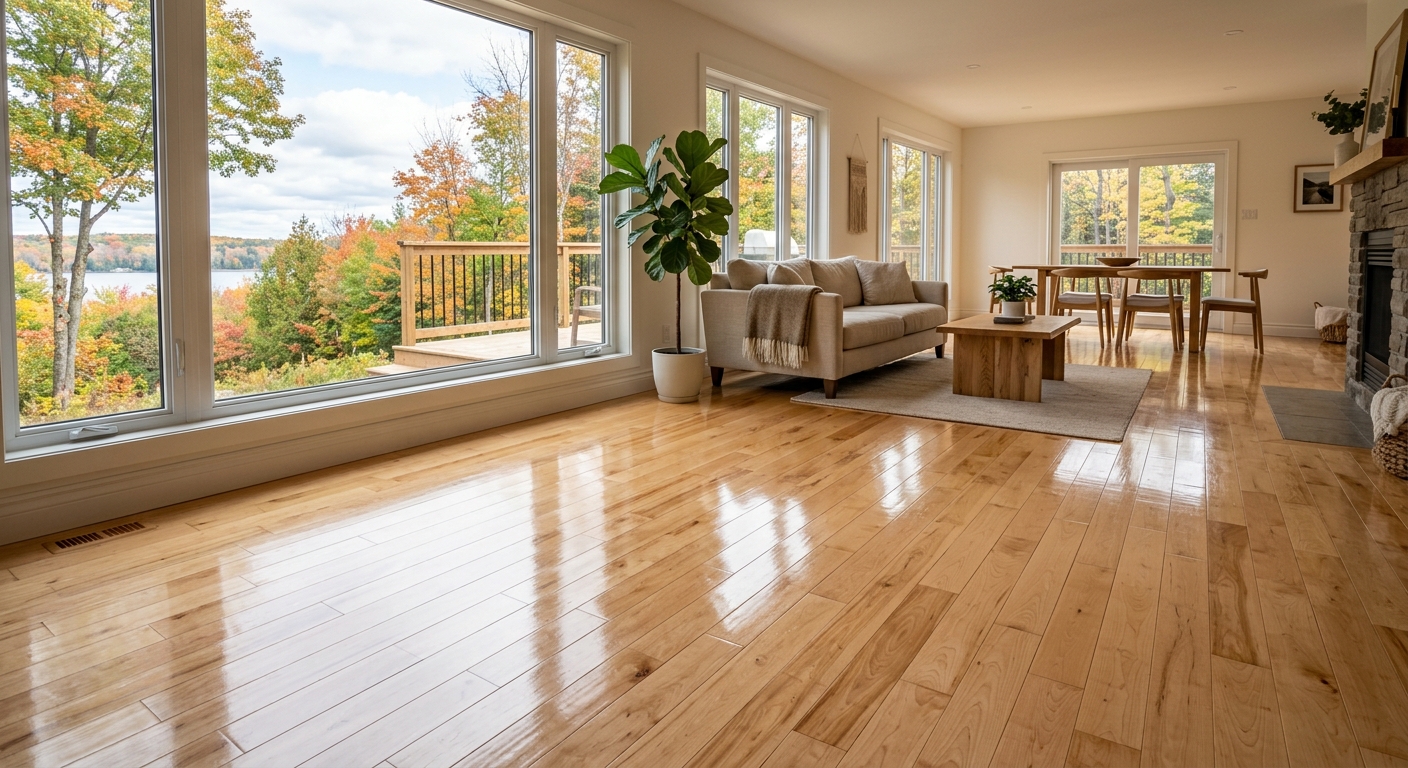
Flooring options and costs in Medicine Hat
Medicine Hat homeowners often see bigger flooring price swings than they expect, because the city’s homes are a mix of older housing stock and many finished basements. With 48.4% of dwellings built before 1981 (Statistics Canada, 2021 Census), it’s common to find uneven subfloors, aging underlayments, or concrete that isn’t perfectly flat—each of which can add prep time before any finish flooring goes down. Add to that the region’s wide indoor humidity swings, plus the reality that many renovations include basement space, and moisture management becomes one of the biggest cost drivers in the Lethbridge–Medicine Hat market. That’s why many contractors recommend engineered hardwood or luxury vinyl plank (LVP) instead of solid hardwood when you’re working on slabs or below-grade areas.
On top of the technical side, labour and availability matter. In neighbourhoods with higher renovation activity—like Westview and the south-side newer pockets—contractors tend to schedule faster, but they also see more “surprise” work in older homes, such as levelling compound, plywood overlays, or moisture barrier upgrades. Basements and concrete slabs often run cool and damp, so installers frequently budget for moisture testing and a compatible system (underlayments/adhesives) to protect the finished floor. If you’re also using radiant heat, material choice becomes more specific, since not every product tolerates temperature cycling.
Below is a practical cost comparison you can use when reviewing quotes, followed by what changes pricing the most.
| Type |
Best Room |
Moisture Resistance |
Lifespan |
Price per sq ft |
Price Range |
| Solid hardwood (nail-down, above grade only) |
Main floor living areas (no basements) |
Low (humidity-sensitive; avoid below grade) |
25–50 years |
$10–$18 |
$10,000–$18,000 |
| Engineered hardwood (float or glue, above + on-grade) |
Living/dining, bedrooms, hallways (on-grade) |
Medium–high (more dimensionally stable) |
20–35 years |
$10–$18 |
$10,500–$19,000 |
| Laminate (click-lock, above-grade) |
Above-grade bedrooms, hallways |
Low–medium (water-resistant top, moisture-sensitive core) |
10–25 years |
$4–$9 |
$4,500–$10,500 |
| Luxury vinyl plank / LVP (waterproof, any level) |
Kitchen, main floor, and finished basements |
High (waterproof; handles moisture vapour better) |
15–25 years |
$4–$9 |
$4,000–$10,000 |
| Porcelain / ceramic tile |
Bathrooms, entries, kitchens |
Very high (surface waterproof) |
30–50 years |
$12–$22 |
$12,000–$23,000 |
| Carpet (broadloom or modular tile) |
Bedrooms, rec rooms |
Medium (needs good subfloor dryness) |
8–15 years |
$4–$9 |
$3,500–$10,500 |
Prices are estimates only and vary by project scope, site access and material selection.
What affects the price of flooring in Medicine Hat
In Medicine Hat and the broader Lethbridge–Medicine Hat economic region, the same flooring type can land in quotes that are 30% to 50% apart for reasons that are mostly technical—not “nickel-and-diming.” Wide indoor humidity swings and below-grade moisture are the key drivers: solid hardwood expands and contracts with humidity, and it can’t be installed reliably on concrete or in basements without strict environmental control. That’s why solid hardwood is usually restricted to above-grade areas, while engineered hardwood and LVP are commonly chosen for above-and-on-grade installs because they’re more dimensionally stable. Where cold winters and radiant heat are common, product compatibility matters too—most solid hardwood is not the easy option over radiant, and some laminate lines can be less ideal around temperature cycling.
Older regional housing stock (48.4% built before 1981) frequently needs subfloor levelling or repair, and that’s where costs grow quickly: a modest levelling pass can be relatively straightforward, but damaged OSB, missing plywood, or a moisture remediation step can add labour and materials. For example, swapping from laminate (typically in the $4–$9 per sq ft band) to engineered hardwood (often in the $10–$18 per sq ft band) can be justified if your subfloor needs less patching because the installer can use a more forgiving underlayment system—yet the real driver is still subfloor condition and the installation method.
Two local examples you’ll hear from installers in Medicine Hat: (1) finished basements often require moisture testing on concrete and may need a vapour-control approach before LVP or tile; and (2) older floors sometimes need plywood or levelling compound before any click-lock product, because “soft spots” can cause joints to separate over time.
| Price Factor |
Why It Matters |
Cost Impact |
| Room area in sq ft |
Material and labour both scale directly with square footage. |
Large rooms swing total cost the most. |
| Subfloor condition — levelling or repair needed before install |
Unevenness and worn boards must be corrected to prevent failure. |
Often adds a noticeable premium in older Medicine Hat homes. |
| Moisture / below-grade install — rules out solid hardwood |
Solid hardwood and many laminate cores are humidity-sensitive. |
Can change the product category and add testing/mitigation. |
| Material choice — solid vs. engineered vs. LVP vs. tile |
Different materials handle humidity, slabs and radiant heat differently. |
Typical per sq ft band differences can be several dollars. |
| Removal and disposal of existing flooring |
Demo time, hauling, and subfloor access affect labour. |
Can add cost even if flooring is “budget” material. |
| Stair nosing / transitions — charged per step or per linear foot |
Transitions are labour-heavy and require matching details. |
Commonly increases total cost on multi-level installs. |
| Radiant heat compatibility — limits material options |
Some products aren’t rated for temperature cycling. |
May require an upsell to compatible engineered/LVP/tile systems. |
| Installation method — float vs. glue-down vs. nail-down |
Each method has different prep, materials, and time. |
Glue-down and nail-down usually cost more when prep is complex. |
Permits & regulations in Alberta
In Alberta, a standard flooring installation (like installing carpet, laminate, LVP, engineered hardwood or tile over an existing, properly prepared subfloor) typically does not require a building permit. However, when your project includes associated work that affects structure or electrical components, permits and inspections can come into play. For example, structural subfloor repair that goes beyond “surface correction” (extensive joist/beam work or changes that alter the structural system) may require permitting. Moisture remediation that involves significant modifications to drainage or slab conditions can also require trade coordination. If your flooring project ties into in-floor heating work—especially electrical circuits for radiant systems—an electrical permit may be required.
In condominiums, the rules often aren’t about permits; they’re about sound transmission. Corporation policies may limit underlay types and require specific sound-rated underlay to meet STC/IIC expectations for hard flooring on upper levels. Before you buy materials, ask the board for written approval and confirm the required underlay and installation method for hardwood, tile, or other hard finishes.
To protect yourself in Medicine Hat, verify three things in writing: (1) Alberta contractor licensing status (using the relevant provincial registry and the contractor’s business details), (2) liability insurance certificate of insurance (COI) with your project as an additional insured where offered, and (3) WSIB/WCB coverage (clearance letter or confirmation). Then, keep copies—quotes should match the scope, and your contractor should be able to provide updated certificates on request.
Best flooring for each room in your Medicine Hat home
Choosing the right floor in Medicine Hat is mostly about matching the room’s moisture exposure, traffic level, and comfort needs to a product that can handle regional humidity swings. For living and dining rooms, many homeowners prefer engineered hardwood or high-quality laminate because you get a warmer look than tile and a good balance of durability with easier maintenance. In bedrooms, carpet remains a strong choice for comfort and sound absorption—especially in homes where you want quieter footsteps during Alberta winters.
Kitchens and entries take the most everyday abuse from spills and melt-water traffic. Here, luxury vinyl plank (LVP) is usually the best “set it and forget it” option because it’s waterproof and forgiving if water lands on the surface. Bathrooms are where you should use porcelain or ceramic tile only—its surface is waterproof, and with proper grout and waterproofing where needed, it’s the safest long-term choice.
Basements (finished) are the decision point in this region. Because slabs can feel cool and damp, and because below-grade humidity can fluctuate, LVP is often the clear winner. Solid hardwood and most laminate can be a headache in basements, even when the product seems fine at first—movement and cupping tend to show up as humidity shifts.
If you have radiant heat, confirm compatibility in writing. In Medicine Hat, radiant systems are common in renovated basements and newer builds, and this can rule out many solid hardwood installations. The price difference is sometimes worth it: for instance, going from laminate at the $4–$9 per sq ft band to engineered hardwood in the $10–$18 per sq ft band can pay off when it reduces the likelihood of comfort and joint issues on an imperfect subfloor.
| Room |
Best Material |
Why |
Moisture Risk |
Price Band per sq ft |
| Living / dining room |
Engineered hardwood |
Warm, natural look with better stability through humidity swings than solid. |
Low to medium (manage humidity; keep basements dry). |
$10–$18 |
| Master bedroom |
Carpet (or engineered hardwood if you prefer hard floors) |
Comfort and sound reduction in winter; engineered option adds easy upkeep. |
Low |
$4–$9 |
| Secondary bedrooms |
Laminate or LVP (depending on family needs) |
Budget-friendly and durable; LVP helps if spills happen frequently. |
Low to medium (higher if kids/teens bring wet gear). |
$4–$9 |
| Kitchen |
Luxury vinyl plank (LVP) or large-format porcelain tile |
LVP resists spills and is faster to live with; tile is best for heavy wet zones. |
Medium (spills, occasional splashes, melt-water traffic). |
$4–$22 |
| Basement (finished) |
LVP (waterproof) |
Handles below-grade moisture conditions better and is more forgiving on slabs. |
High (vapour and cool slab conditions are common). |
$4–$9 |
| Bathroom |
Porcelain / ceramic tile |
Waterproof surface and long service life when installed with proper underlayment. |
High |
$12–$22 |
How to choose a flooring contractor in Medicine Hat
Start by verifying the contractor’s Alberta licensing status, then confirm liability insurance and WSIB/WCB coverage before you sign anything. In practice, homeowners in Medicine Hat should request: (1) a certificate of insurance (COI) showing liability coverage and the correct business name and address, (2) proof of workers’ compensation coverage via WSIB/WCB clearance information, and (3) licensing information from the applicable provincial registry and/or contractor documentation they provide you. Don’t accept “we’re covered” without paper—ask for the current documents.
Next, get 2–3 itemised written quotes with labour and materials separated. You want a breakdown that shows removal/disposal, subfloor prep (levelling/plywood/moisture barrier if needed), underlayment, transitions, and stair work—because two quotes that both say “LVP installation” can differ drastically once prep is measured. Carefully review exclusions: is drywall repair included? Is permit work included if radiant or electrical is involved? Is disposal included, and what’s the plan for dust control?
Warranty matters. Confirm the workmanship warranty length (and what it covers), the manufacturer product warranty terms, and whether warranties are transferable if you sell the home. For payment, never pay more than 10% to 15% upfront, and use a holdback until the job is fully complete and you’ve inspected key areas (edges, transitions, and traffic lanes). Lastly, request a written start date and a completion estimate.
- Ask for Alberta licensing details and match them to the company’s paperwork.
- Request COI for liability insurance before work begins.
- Request WSIB/WCB clearance or confirmation in writing.
- Get quotes itemised by labour, materials, and subfloor prep.
- Confirm whether moisture testing is included for concrete and below-grade areas.
- Ask how they handle uneven subfloors (levelling compound vs. plywood repair/overlay).
- Verify underlayment/vapour barrier compatibility for the specific product line.
- Confirm transition details: stair nosings, reducers, and matching trims.
- Make sure removal and disposal are included (and note any limits).
- Get a written start date, completion date, and change-order process.
- Confirm warranty coverage: workmanship and manufacturer terms.
- Use a sensible payment schedule and keep a holdback until final inspection.
Red flags to watch in Medicine Hat: contractors who won’t provide insurance/WSIB/WCB documents, quotes that are lump-sum without subfloor prep detail, no mention of moisture testing on basements/slabs, vague warranties, and refusal to put start/completion dates in writing.
Frequently asked questions — flooring in Medicine Hat
How do I prepare my subfloor before new flooring?
In Medicine Hat, subfloor prep is often the difference between a floor that looks great for years and one that fails early due to movement. Start with an in-person assessment: installers should check flatness (not just “looks level”), fastener integrity for wood, and the condition of any concrete slab. For homes built before 1981 (Statistics Canada, 2021 Census), it’s common to find uneven boards or aged layers that require levelling or plywood repair before installation. If you’re going over concrete or working in/near a finished basement, moisture testing and a compatible vapour-control system are critical. The prep work is frequently the real cost driver even when your flooring is in the $4–$9 per sq ft laminate/LVP band.
Is cork or bamboo flooring a good choice in Medicine Hat?
Cork and bamboo can look excellent, but they’re not always the best “set-and-forget” choice in Medicine Hat’s below-grade and humidity-swing reality. Cork is softer and can be comfortable underfoot, but it can be vulnerable to standing water and requires careful subfloor dryness—so it’s better for above-grade rooms only. Bamboo is a hardwood-related product and can still react to seasonal humidity changes; it usually needs the same general environment controls you’d expect for engineered or solid wood-style products. If your plan includes a basement or slab, LVP (waterproof) or engineered hardwood is commonly the safer match for regional moisture conditions. If you’re comparing budgets, remember you may be paying in prep rather than material—solid-style products can be less forgiving when subfloors are imperfect.
What is the difference between floating and glued-down flooring?
Floating floors don’t rely on adhesive to bond the planks to the subfloor; they click together and sit on an underlayment. Glued-down flooring uses adhesive (with specific trowels and spread rates) to bond the product directly to the subfloor, which can improve stability over certain subfloors but increases labour and prep complexity. In Medicine Hat, floating installations are popular with click-lock laminate and many LVP systems because they’re efficient and can tolerate minor subfloor irregularities within product limits. Glued-down methods are often used with certain engineered hardwood lines and can be a better option when the installer can guarantee flatness and moisture conditions. For below-grade areas, your warranty may require particular underlay/vapour barriers—so always confirm the manufacturer’s system requirements before choosing a method.
What flooring holds up best to pets in a Medicine Hat home?
For pets, the best options in Medicine Hat are usually those that resist moisture and hold up to claws and daily traffic. Waterproof LVP is a strong choice because it handles spills and damp paw traffic better than laminate and is typically easier to clean. For a more natural look, engineered hardwood can work well above grade, but you’ll want proper scratch-conscious finishes and the right cleaning approach. Carpet can be comfortable, yet it’s harder to keep looking new if you have frequent accidents; also, it needs a dry subfloor and good ventilation. Pricing-wise, homeowners often find LVP fits nicely within the $4–$9 per sq ft band, while engineered hardwood usually trends higher in the $10–$18 band—so you’ll want to choose based on how often your pets are indoors and whether you’re dealing with any basement pet traffic.
How do I fix squeaky floors in my Medicine Hat home?
Squeaks usually come from movement between joists, subfloor layers, or worn fasteners—not from the finish flooring itself. In many older Medicine Hat homes (especially those built before 1981), the subfloor can shift or nails can loosen over time. The right fix is to address the source: your contractor may need to locate the squeak, then tighten or add screws/fasteners into the joists (or between subfloor layers) from below or by removing sections as necessary. This is one reason quotes vary: repairing the subfloor can add labour and cost, but skipping it often leads to future noise—plus you may lose the ability to warranty the install if the subfloor system isn’t structurally sound. If you’re planning a basement renovation, moisture issues should also be checked before you cover everything again.
What is luxury vinyl plank and is it worth it in Medicine Hat?
Luxury vinyl plank (LVP) is a multi-layer vinyl product designed to look like wood while offering strong water resistance. In Medicine Hat, it’s often worth it because below-grade moisture and humidity swings are common cost drivers—especially in finished basements where slabs can run cool and damp. LVP is typically waterproof at the surface, and it’s generally more forgiving than laminate or solid hardwood when conditions change. Many homeowners choose it to avoid the higher risk of cupping or joint problems associated with humidity-sensitive materials. In practical budget terms, LVP commonly falls within the $4–$9 per sq ft band, so you can often stay closer to a mid-range total cost compared with tile or engineered hardwood. Just make sure your contractor uses the correct underlayment/vapour barrier system and includes moisture testing where needed.