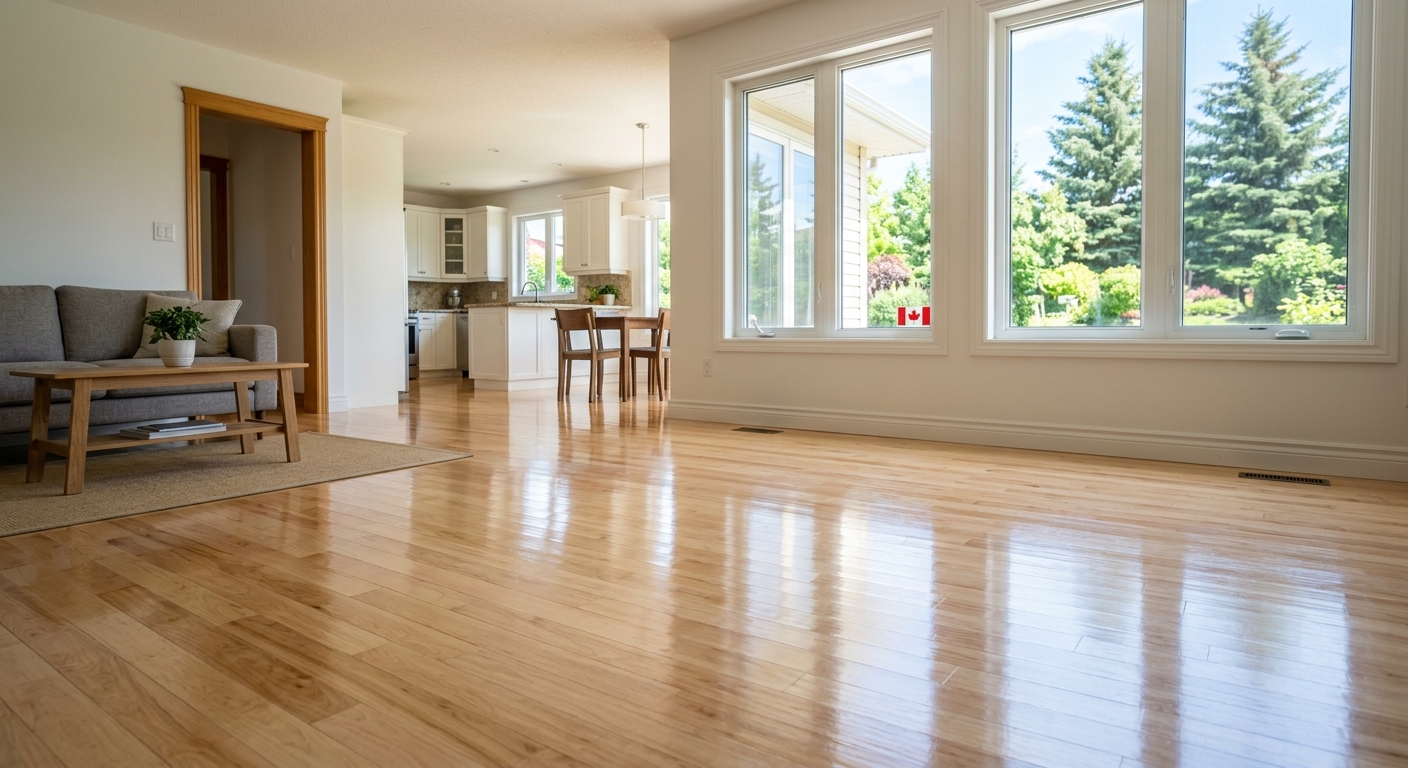
Flooring options and costs in Turner Valley
Turner Valley homeowners typically have a straightforward goal—choose flooring that looks good now and still holds up after a few winters—but the “right” material depends on local conditions. With many homes built before 1981 (33.0% of dwellings in the area profile), you’ll often find older subfloors, dated plywood, and uneven transitions that need levelling before new flooring can be installed. In practice, that prep work can add roughly $1,200–$3,000 to an average mid-sized project (often about $1–$3 per sq ft), and tile jobs can run higher if crack isolation or flattening is required. Meanwhile, Calgary’s dry, cold prairie climate brings large seasonal humidity swings, and basements can also see moisture migration through concrete. That’s why, below grade, contractors usually steer away from traditional ¾‑inch solid hardwood and toward engineered hardwood, luxury vinyl plank (LVP), or SPC—products that tolerate relative humidity changes better and perform more reliably in homes with in-floor heating.
Labour availability and install complexity also change the cost. Stair work, trim reinstallation, and removal/disposal of old flooring are common quote add-ons in communities around Turner Valley’s more established pockets, especially near the main commercial strip where many renovations involve tight access and frequent patching. Once you know which materials fit above-grade rooms versus basements, the next step is comparing realistic price bands—see the table below.
| Type |
Best Room |
Moisture Resistance |
Lifespan |
Price per sq ft |
| Solid hardwood (nail-down, above grade only) |
Living / dining (above grade) |
Low to moderate (needs humidity control) |
30+ years |
$8–$15 |
| Engineered hardwood (float or glue, above + on-grade) |
Living / dining, hallways |
Moderate to high (better dimensional stability) |
20+ years |
$9–$16 |
| Laminate (click-lock, above-grade) |
Bedrooms, living areas |
Moderate (not for long-standing moisture) |
15–20 years |
$3–$7 |
| Luxury vinyl plank / LVP (waterproof, any level) |
Kitchen, basement (finished) |
High to waterproof |
15–25 years |
$5–$10 |
| Porcelain / ceramic tile |
Bathrooms, entry, kitchen accents |
High (tile is water-resistant; grout/setting matter) |
25+ years |
$6–$12 |
| Carpet (broadloom or modular tile) |
Bedrooms |
Low (needs good drying and spot-cleaning) |
8–15 years |
$4–$9 |
Prices are estimates only and vary by project scope, site access and material selection.
What affects the price of flooring in Turner Valley
In Turner Valley and the wider Calgary region, it’s common to see quotes for the “same” floor vary by 30–50%. The biggest reason isn’t the finish—it’s what happens underneath and around it. Indoor humidity swings in our dry, cold prairie climate push solid materials to expand/contract, so installers often have to plan acclimation, humidity control, and subfloor requirements. Below grade, moisture migration through concrete means solid hardwood usually can’t be installed reliably; engineered hardwood and LVP/SPC are typically the safer options because they handle relative humidity changes better. Colder winters also make radiant heat compatibility a deciding factor—most solid hardwood is restricted over radiant systems, and some laminate choices require specific underlay and manufacturer approval.
Older housing stock adds another lever. Homes with older plywood or uneven concrete frequently need levelling, patching, or underlayment changes. Depending on how out-of-level the surface is, subfloor levelling can add roughly $1–$4 per sq ft to prep. For a practical example, if your living area is 500 sq ft, moving from “flat enough” to “needs levelling and feather finish” can shift the total by about $500–$2,000. Tile can compound the cost: porcelain often demands extra flatness and crack isolation measures if the base isn’t consistent.
Local market labour rates and demolition complexity also influence pricing. Projects with stair re-capping, trim reinstallation, or removal of old flooring generally cost more than direct-to-subfloor installs. On the material side, homeowners often balance budgets using the local bands: laminate/vinyl plank is commonly in the $3–$7 range, while hardwood and tile typically land higher—yet engineered and LVP can still be the better value when basement durability matters.
| Price Factor |
Why It Matters |
Cost Impact |
| Room area in sq ft |
Direct driver of material and labour quantities |
Lower for small rooms; higher margins for large installs |
| Subfloor condition |
Levelling or repair is often required for a flat finish |
Often adds $1–$4 per sq ft when out-of-flatness is significant |
| Moisture / below-grade install |
Solid hardwood is vulnerable; vapour management matters |
Can shift you to engineered hardwood, LVP, or SPC (+ cost vs laminate) |
| Material choice |
Solid vs engineered vs LVP vs tile have different tolerances |
Broad band differences (e.g., tile typically higher than LVP) |
| Removal and disposal of existing flooring |
Old underlay, glue, and prep can be labour-heavy |
Frequently increases total by a noticeable percentage vs. “new construction” |
| Stair nosing / transitions |
Stairs need special pieces and more cut labour |
Charged per step or per linear foot; can meaningfully add to labour |
| Radiant heat compatibility |
Restricts product options and underlay systems |
May increase material cost or rule out lower-end selections |
| Installation method |
Float vs glue-down vs nail-down affects prep and labour |
Glue-down and nail-down typically cost more when extra prep is required |
Permits & regulations in Alberta
In Alberta, installing new flooring on its own usually does not require a building permit. Replacing flooring (carpet, laminate, LVP/SPC, tile, or hardwood) is typically a non-permitted finish trade. That said, permits can become relevant when the flooring project includes associated work—especially where electrical or structural changes occur.
For example, you may need permits when a job includes electrical work connected to in-floor heating (adding or modifying heating circuits, thermostats, or related wiring), or when there’s moisture remediation that involves opening up assemblies and correcting subfloor conditions in a way that changes how the structure performs. Structural subfloor repair can also require additional approvals if the work crosses beyond typical patching (your contractor should advise you and confirm requirements before starting). In condominiums around Turner Valley and Calgary, the bigger compliance issue is often not permits—it’s the building’s sound-transmission rules. Hard flooring installed above grade in a unit can be restricted by condo corporation requirements on underlay and impact-sound outcomes (often expressed as STC/IIC targets).
Step-by-step, Turner Valley homeowners can verify a contractor’s credentials: (1) check the Alberta licence/registration status on the appropriate online government registry; (2) ask for a current certificate of insurance naming you as additional insured if possible, and confirm it covers flooring work and liability; (3) request proof of WSIB/WCB coverage (or an exemption letter if applicable) before work begins. Then, require a written scope that clearly states what’s included—underlay type, moisture mitigation steps, and disposal—so you’re not guessing mid-project.
Best flooring for each room in your Turner Valley home
Choosing flooring room-by-room is the quickest way to get a result that looks right and performs through Alberta’s seasonal swings. In Turner Valley living and dining spaces, engineered hardwood or high-quality laminate are common winners: they bring warmth underfoot while tolerating normal indoor humidity changes better than solid hardwood. For bedrooms, carpet is still a top comfort and sound-control option—especially in homes where the main level echoes during winter. However, carpet is less forgiving in the event of leaks, so keep it paired with good ventilation and prompt stain/soak response.
Kitchens in our climate often see tracked-in snow, salt, and quick spills; luxury vinyl plank (LVP) is popular because it’s waterproof and easier to maintain, while large-format porcelain tile is the go-to for homeowners who want maximum water resistance and durable cleaning. Basements (finished) are where many Turner Valley projects shift materials: LVP is usually the clear choice because it handles moisture vapour and below-grade installations far better than solid wood and most laminate. For bathrooms, porcelain or ceramic tile remains the safest plan since water exposure is constant. Also, radiant heat is increasingly used in Alberta new construction; if a room sits over in-floor heating, verify manufacturer compatibility before committing—some solid hardwood and cheaper laminate combinations can be limited or require specific acclimation and underlay.
Cost-wise, you don’t always need the highest band. For instance, if you compare tile at roughly $6–$12 per sq ft versus LVP at about $5–$10, tile often wins in bathrooms for long-term water resistance and crack-tolerant layout planning—while LVP usually offers better value for basements where moisture and vapour management matter most.
| Room |
Best Material |
Why |
Moisture Risk |
Price Band per sq ft |
| Living / dining room |
Engineered hardwood |
Warm look with better stability than solid in humidity swings |
Low to moderate (depends on humidification and seasonality) |
$9–$16 |
| Master bedroom |
Carpet or engineered hardwood |
Carpet adds comfort and sound absorption; engineered keeps a clean, durable finish |
Low |
$4–$14 |
| Secondary bedrooms |
Laminate or carpet |
Laminate holds up well for day-to-day life; carpet improves warmth |
Low |
$3–$9 |
| Kitchen |
Luxury vinyl plank (LVP) or porcelain tile |
Both are easy to clean; LVP is waterproof and fast to maintain |
Moderate (spills and tracked moisture) |
$5–$12 |
| Basement (finished) |
LVP (waterproof) / SPC |
Handles vapour and below-grade moisture conditions better |
Moderate to high (varies by foundation and drainage) |
$5–$10 |
| Bathroom |
Porcelain / ceramic tile |
Strong water performance when set over proper underlay and prep |
High |
$6–$12 |
How to choose a flooring contractor in Turner Valley
When you’re hiring in Turner Valley, the “best” contractor isn’t just the one with the lowest sticker price—it’s the one who can prove coverage, document the scope, and build a flat, durable installation in our dry-cold climate. Start by verifying Alberta licence/registration status on the applicable online registry, then request a current certificate of liability insurance (and confirm the effective dates cover your start and completion). Ask for proof of WSIB/WCB coverage—many homeowners skip this step, but it matters if someone gets hurt on-site. If the contractor says they’re covered through a subcontractor arrangement, get documentation that clearly identifies who holds coverage and what it covers.
Next, get 2–3 itemised, written quotes instead of a single “all-in” number. The quote should break out material and labour (including subfloor prep, underlay, acclimation steps where required, and waste factor), and it should list labour items like stair nosings and transitions. Read the exclusions carefully: is removal and disposal included? Are moulding/trim reinstalls included? Is levelling included only to a specified flatness requirement, or is it “as needed”? Confirm the warranty in writing: workmanship warranty length, who issues it, and whether it transfers if you sell your home. Payment scheduling should be sensible—never more than 10–15% upfront, and hold back a portion until completion and punch-list items are finished. Finally, insist on a written start date and a completion estimate tied to weather-dependent work (especially for materials that need acclimation).
- Licence/registration number shown on the quote and confirmed online before signing.
- Certificate of liability insurance requested and matches the work address and dates.
- WSIB/WCB clearance verified in writing (or valid exemption documentation).
- Itemised quote: materials, labour, underlay, levelling/patching, and disposal listed separately.
- Flatness/levelness expectations stated (especially for tile).
- Moisture plan documented for basements (vapour strategy, subfloor prep, and fasteners/adhesives).
- Stair work and transition pieces listed per step or per linear foot.
- Underlay specified by type for laminate/Vinyl, including any radiant heat requirements.
- Manufacturer warranty and installer workmanship warranty stated with timelines.
- Acclimation process described for hardwood/engineered products (where required).
- Payment schedule capped at 10–15% upfront; holdback reserved for punch list.
- Written timeline with start date and completion estimate, plus weather/material lead-time notes.
Red flags in Turner Valley: quotes that don’t explain subfloor prep; “solid hardwood in basements” promised without vapour/moisture conditions; no proof of WCB/WSIB or insurance; payment requests for most of the job up front; and vague scopes like “tile install as needed” without flatness or crack-isolation details.
Frequently asked questions — flooring in Turner Valley
What's the most durable flooring for pets and kids?
For pets and kids in Turner Valley, the most durable choices are usually waterproof LVP (or SPC) and quality porcelain tile. LVP is popular because it handles routine accidents, easier clean-up, and everyday scuffs better than carpet; it also tolerates Alberta’s indoor humidity swings better than solid hardwood. Porcelain tile is extremely impact-resistant and is a strong pick for high-traffic areas, though it’s less forgiving on comfort and can be harder to stand on. Carpet can still work in bedrooms for comfort, but it’s typically the least durable when you factor in stains and repeated spills. If you’re comparing budgets, LVP commonly falls around $5–$10 per sq ft, while tile is often around $6–$12—tile justifies itself when you want maximum cleanability and long service life.
How do I choose flooring for humidity in Turner Valley?
Because Turner Valley sits in a dry, cold prairie climate with big seasonal humidity swings, the key is matching the product to where moisture can reach and how the home is conditioned. For above-grade rooms, engineered hardwood usually performs better than solid hardwood because it’s more dimensionally stable when indoor humidity changes. For basements, humidity and vapour migration through concrete are common concerns; that’s why contractors often recommend waterproof LVP/SPC and avoid traditional solid wood and most laminate. A practical step is to pick a contractor who will document your subfloor type and any vapour management, and to keep indoor conditions consistent (reasonable humidity in winter). Given that many local homes are older (33.0% built before 1981), expect some subfloor repair or levelling—often adding about $1–$4 per sq ft—before you can lock in a long-lasting floor.
Do condos restrict hard flooring?
Yes—many condos in Alberta restrict hard flooring on upper floors, usually through the condo corporation’s rules on sound transmission rather than a building-permit requirement for the flooring itself. In practice, that means the board may require a specific underlay system under laminate, engineered hardwood, or tile to manage impact sound (often expressed through STC/IIC targets). Before installing hard flooring in a multi-unit building, ask for board approval in writing and follow the condo declaration. If you ignore these rules, you can face remediation requirements later, which is costly and disruptive. Turner Valley homeowners renovating within the Calgary region should also confirm how transitions and stair steps are handled, since underlay thickness and installation method can affect sound performance. Your contractor should be able to supply underlay specs and installation details that align with the building’s requirements.
How do I compare flooring quotes?
To compare quotes in Turner Valley fairly, you need the same scope details across all bids—otherwise price differences are often explained by missing prep or different product tiers. Ask for itemised pricing for materials and labour (not just a lump sum) and confirm what’s included for removal and disposal, subfloor levelling/patching, underlay, and transitions/stair nosings. For tile, flatness requirements matter a lot; make sure each quote addresses levelling and whether crack isolation is included. For basements, check whether moisture/vapour conditions are accounted for with the right product (often LVP/SPC) and subfloor prep steps. You can also compare apples-to-apples by aligning price bands: laminate/vinyl plank often lands around $3–$7 and LVP mid-range may be $5–$10, while tile commonly sits around $6–$12. If one quote is far lower, it usually omits something important.
Can I install flooring over existing tile in Turner Valley?
Sometimes, but it depends on the condition and height. In Turner Valley, installing new flooring over existing tile is only practical if the tile is solid, firmly bonded, and the surface is reasonably flat—otherwise you’ll need levelling, grinding, or full removal. LVP/SPC may be considered over tile when the floor meets flatness requirements and the system allows it, but you still must manage transitions and door clearance. Laminate can be more sensitive to unevenness, and tile-to-tile can introduce additional build-up that can cause threshold and trim issues. For hardwood, most installers do not recommend installing over tile because of moisture/flatness concerns and the required fastening/glue method. If you’re considering an overlay, ask your contractor to measure flatness and explain what underlay system they’d use and whether it meets manufacturer requirements for your chosen product.
What is the best flooring for a high-traffic area in Turner Valley?
For high-traffic areas—entries, hallways, and main living paths—durability and cleanability matter most. Typically, LVP/SPC and porcelain tile are the best long-term performers. LVP is waterproof, resists everyday scuffs, and is forgiving if snowmelt and salt are tracked in during winter. Porcelain tile is also excellent for wear and staining and can handle frequent mopping. Engineered hardwood can work well in above-grade high-traffic zones, but it’s not the first pick for basements, and it still benefits from entry mats and routine cleaning to protect the surface finish. If you’re working within common budget bands, you’ll often see LVP around $5–$10 per sq ft and tile around $6–$12. The “best” choice usually comes down to whether moisture exposure is likely—basements and near-entrance areas typically favour waterproof flooring.