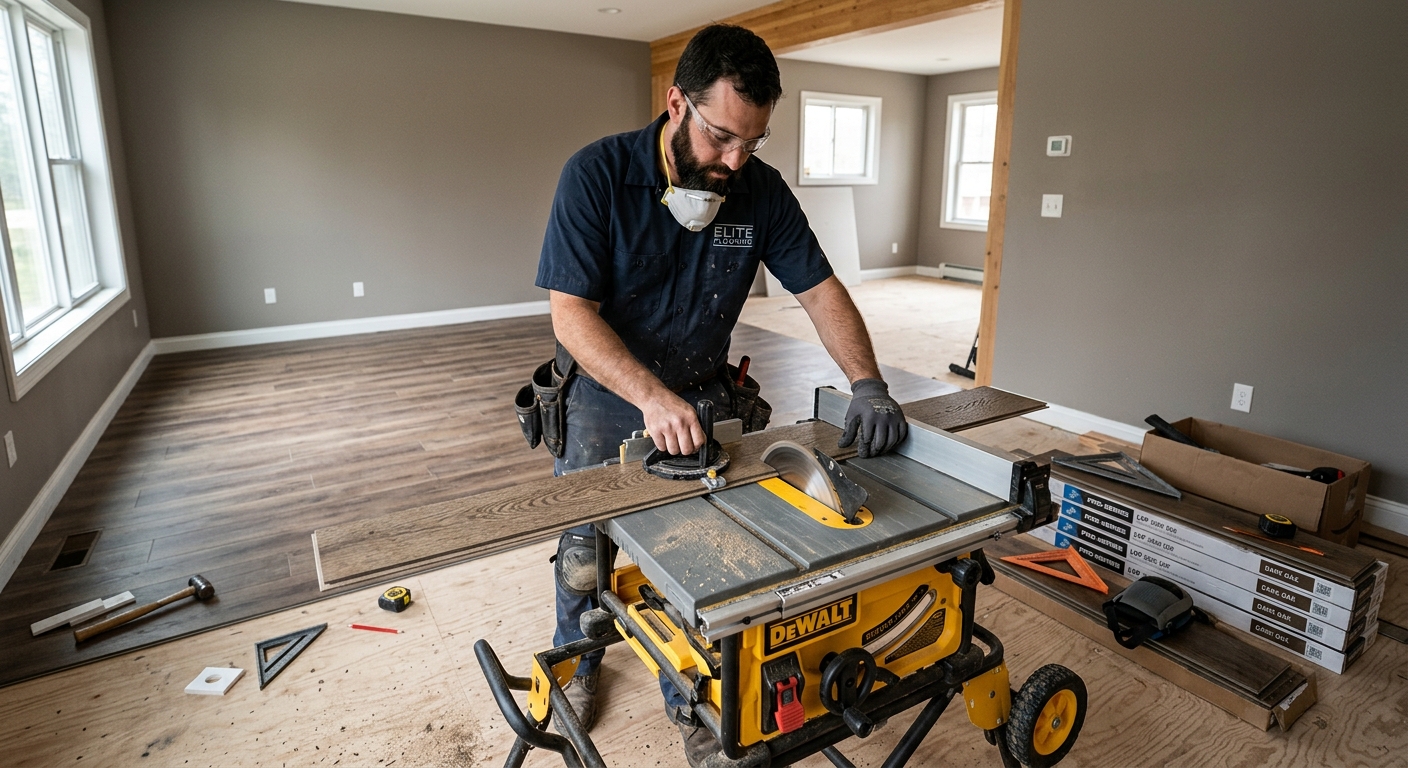
Flooring options and costs in Deep Cove
Flooring decisions in Deep Cove are shaped as much by moisture as by style. With the Deep Cove community sitting within the Lower Mainland–Southwest, you’re dealing with a wet, marine climate and indoor humidity swings—especially in winter and during shoulder seasons—so the same product can perform very differently from one home to the next. In the 2021 Census, Deep Cove’s population was 2,251 (Statistics Canada, 2021 Census), and like many older coastal areas, you’ll often find a mix of home ages and subfloor conditions. In practice, older housing stock commonly needs subfloor levelling or repair before new flooring can go down; budget roughly $1–$3 per sq ft for that step, and sometimes more if there’s moisture-impacted plywood or uneven concrete.
In Greater Vancouver, labour availability is strong, but rates are among the highest in Canada, so installation details matter—underlay, moisture barriers, transitions, and waste all move the total price. Basements and slab-on-grade areas in nearby communities often see moisture wicking through concrete, which is why we avoid solid hardwood below grade and steer most homeowners toward engineered wood or luxury vinyl plank (LVP). If your home uses radiant heating, that can also shift the best choices toward engineered wood, LVP, tile, and certain laminates rated for higher temperatures.
Demand is especially consistent around the Deep Cove Village and the slopes toward the waterfront, where many renovations involve entryways, main-floor living rooms, and finished basements. Next, use the comparison table to see how moisture resistance and typical pricing line up for common flooring types.
| Type |
Best Room |
Moisture Resistance |
Lifespan |
Price per sq ft |
| Solid hardwood (nail-down, above grade only) |
Living rooms, dining rooms, hallways |
Low to moderate (humidity-sensitive; not for basements) |
30+ years (when humidity is well-managed) |
$10 – $18 |
| Engineered hardwood (float or glue, above + on-grade) |
Main floors, bedrooms, above-grade offices |
Moderate to high (layered construction handles swings better) |
20–30 years |
$9 – $16 |
| Laminate (click-lock, above-grade) |
Secondary bedrooms, rec rooms (not in basements) |
Low to moderate (surface is wear-resistant; core can swell) |
10–25 years |
$4 – $10 |
| Luxury vinyl plank / LVP (waterproof, any level) |
Basements, kitchens, mudrooms |
High (waterproof; tolerates minor subfloor irregularities) |
15–25 years |
$5 – $12 |
| Porcelain / ceramic tile |
Bathrooms, kitchens, entries |
Very high (with proper underlayment and grout maintenance) |
25+ years |
$10 – $20 |
| Carpet (broadloom or modular tile) |
Bedrooms, stair landings |
Moderate (needs good drying; not for below-grade) |
8–15 years |
$4 – $9 |
Prices are estimates only and vary by project scope, site access and material selection.
What affects the price of flooring in Deep Cove
Even when two homeowners describe the “same” floor, quotes across the Lower Mainland–Southwest and the rest of British Columbia can differ by 30–50%. The biggest drivers are site conditions and how the contractor has to prepare the subfloor before installation. In the Deep Cove area, moisture and humidity swings are routine, so materials that can tolerate damp concrete or seasonal moisture—like engineered hardwood and LVP—often cost more upfront but can reduce expensive failures later. Labour is also a major factor: Greater Vancouver’s installation rates tend to be higher than many inland cities, and the trade may also spend extra time on levelling, moisture testing, and careful detailing around thresholds.
Technically, solid hardwood expands and contracts with humidity and should not be glued or floated over concrete; it also performs poorly in basements where moisture vapour can rise from slab-on-grade. That’s why a basement flooring scope often jumps into the LVP band (roughly $5–$12 per sq ft) instead of the solid hardwood band (roughly $10–$18). Colder inland regions can favour different radiant-heat-compatible materials, but in British Columbia many newer builds include radiant heating—this can rule out most solid hardwood and some laminate products that aren’t rated for higher slab temperatures.
In Deep Cove, two common examples that raise costs are: (1) removing and repairing uneven plywood before nailing or gluing, which can add about $1–$4 per sq ft; and (2) having to add a proper moisture barrier and underlayment system for high-humidity areas. Conversely, a smaller, clean-slab install with minimal transitions may land closer to the mid-range laminate/vinyl pricing.
| Price Factor |
Why It Matters |
Cost Impact |
| Room area in sq ft |
Material quantity and labour time scale directly with square footage. |
Typically the largest variable; can swing by thousands on larger projects. |
| Subfloor condition — levelling or repair needed |
Uneven plywood or damaged OSB/underlayment affects click systems, adhesives, and flatness requirements. |
Often adds roughly $1–$4 per sq ft in older homes. |
| Moisture / below-grade install — rules out solid hardwood |
Humidity and moisture vapour can cause cupping/gapping in solid wood and swelling in some laminate cores. |
Switching to engineered or LVP can keep risk down; total may rise or fall depending on prep. |
| Material choice — solid vs. engineered vs. LVP vs. tile |
Different cores, thickness, and wear layers change both material cost and install detail. |
Solid hardwood and tile usually sit higher (about $10–$20 per sq ft installed). |
| Removal and disposal of existing flooring |
Glue-down adhesive, underlay, and subfloor remnants can be labour-intensive. |
Can add several hundred to over a few thousand depending on scope. |
| Stair nosing / transitions |
Complex edges, custom nosing, and matching heights add material and workmanship time. |
Often charged per step or per linear foot; notable on split-level homes. |
| Radiant heat compatibility |
Not all products handle temperature changes and cycling safely. |
May require engineered wood/LVP or specific laminate ratings; can change both product and labour costs. |
| Installation method — float vs. glue-down vs. nail-down |
Flatness, adhesive steps, and acclimation differ by method and product system. |
Glue-down often costs more in labour; nail-down needs proper fastening conditions. |
Permits & regulations in British Columbia
In British Columbia, installing flooring itself typically does not require a building permit—whether you’re putting down carpet, laminate, LVP, tile, engineered hardwood, or solid hardwood above grade. However, associated work can trigger permit and safety requirements. Examples of work that may require permits include electrical work for in-floor heating (thermostats, wiring, and circuit changes), structural subfloor repair that involves significant framing changes, and any moisture remediation that requires prescribed steps beyond standard underlayment systems. If you’re upgrading radiant heating or modifying an existing electrical circuit, plan for electrical permitting through the appropriate channels.
Condominiums add a separate layer: even when flooring doesn’t require a permit, many buildings restrict or require specific underlay systems to manage sound transmission. STC/IIC requirements (as set out by the strata and building documents) often matter most on upper floors where hard surfaces can impact neighbours. Always review your condo declaration and request board approval in writing before installing hardwood or tile on above-grade floors in a multi-unit building.
To protect yourself in Deep Cove, verify your contractor’s British Columbia licence status (when applicable for the trade), confirm liability insurance, and ask for proof of WSIB/WCB coverage. You can check commonly used online registries for licence status, request a current certificate of insurance showing the effective dates and coverage limits, and ask for a clearance letter or current coverage confirmation from the appropriate workers’ compensation provider. Keep copies with your contract so you’re covered if subcontractors are involved.
Best flooring for each room in your Deep Cove home
Choosing the right floor in Deep Cove comes down to balancing moisture exposure, foot traffic, and comfort. For main living and dining areas, engineered hardwood or high-quality laminate are practical because they handle seasonal humidity swings better than solid wood while still giving you that “real wood” look. In a master bedroom, carpet is a comfortable, quiet option and helps with sound absorption, while engineered hardwood is a good upgrade if you prefer a hard surface and can keep indoor humidity stable. For kitchens, where spills and cleaning frequency are real, luxury vinyl plank (LVP) or large-format porcelain tile usually win—LVP is forgiving underfoot and water-resistant, while tile is extremely durable for wet messes.
Basements are where Lower Mainland–Southwest moisture rules your choices. If your basement is finished, LVP is the clear winner in most Deep Cove homes because it’s fully waterproof and can perform over slabs with moisture vapour concerns that solid wood and many laminates struggle with. Bathrooms should be porcelain or ceramic tile only, with correct underlayment and grout maintenance. If you have (or plan for) radiant heating, prioritise products rated for in-floor temperatures—this increasingly influences newer British Columbia builds and can limit solid hardwood and some laminate selections.
To see where the money is justified: if you’re replacing a basement floor, moving from a laminate option ($4–$10 per sq ft) to LVP (often $5–$12 per sq ft) can be the difference between recurring edge swelling callbacks versus a long-lasting waterproof install—especially when moisture vapour is present. Below is a room-by-room guide tailored to Deep Cove’s climate and typical renovation patterns.
| Room |
Best Material |
Why |
Moisture Risk |
Price Band per sq ft |
| Living / dining room |
Engineered hardwood |
Warm feel with better humidity tolerance than solid wood. |
Low to moderate (main-floor humidity swings) |
$9–$16 |
| Master bedroom |
Carpet or engineered hardwood |
Carpet adds comfort and sound dampening; engineered gives a harder, easier-to-clean surface. |
Low to moderate |
$4–$16 |
| Secondary bedrooms |
Carpet or laminate (rated for above-grade) |
Cost-effective comfort for everyday use; laminate can work if conditions stay dry. |
Low to moderate |
$4–$10 |
| Kitchen |
Luxury vinyl plank (LVP) or porcelain tile |
Easy cleanup and stronger performance around water and dropped items. |
Moderate (spills and frequent washing) |
$5–$20 |
| Basement (finished) |
Luxury vinyl plank (LVP) |
Waterproof core handles moisture vapour and below-grade conditions better than solid wood and most laminate. |
High (moisture vapour and seasonal humidity) |
$5–$12 |
| Bathroom |
Porcelain / ceramic tile |
Built for wet conditions with long service life when properly installed. |
Very high |
$10–$20 |
How to choose a flooring contractor in Deep Cove
In Deep Cove and the broader Lower Mainland–Southwest, good flooring work is as much about preparation as it is about product choice. Start by verifying the contractor’s standing and coverage. Ask for documentation for British Columbia licensing where applicable to their trade scope, a certificate of liability insurance (showing coverage amounts and that it’s active during your project dates), and proof of WSIB/WCB coverage for workers. How to check: request current certificates before work starts, verify dates and named insureds on the paperwork, and ask whether they use subcontractors—then ask for their coverage too. If they can’t provide clear documents, treat that as a serious warning sign.
Get 2–3 itemised written quotes (not lump sums) that break out labour, materials, underlay/moisture barriers, transitions/stair nosing, and removal/disposal. The scope should state what’s included—acclimation, subfloor levelling or repair, moisture testing (where needed), and whether plywood/underlayment prep is included. Ask if permits are handled for any associated electrical or heating work and confirm whether a timeline and start date are guaranteed or “estimated.”
Warranty matters: check both workmanship warranty length and what voids it (often product and subfloor conditions). Also clarify whether the manufacturer warranty is transferable to the next homeowner. Payment schedule should be sensible: never pay more than 10–15% upfront; use a holdback until completion and final walkthrough. Finally, insist on a completion estimate and start date in writing so you can plan around your home life during installation.
- Request licence/coverage details in writing (liability insurance and workers’ compensation).
- Confirm who supplies underlayment, moisture barriers, and transition trims (and brands/specs).
- Ask what’s included in subfloor prep: levelling, patching, flattening, and fastener checks.
- Ensure the quote lists removal and disposal of existing flooring and underlay.
- Verify they follow product acclimation requirements for engineered, laminate, and LVP.
- Confirm flatness targets before installation (especially for click-lock and tile).
- Check whether stair nosing and transitions are priced per step/linear foot.
- Ask how they handle uneven thresholds and door clearances.
- Get details on waste handling and cutting patterns (less waste = more accurate pricing).
- Review the workmanship warranty and whether it’s in your contract (not just a brochure).
- Use a payment schedule with a holdback after completion and punch-list items.
- Ask for a written start date, access schedule, and dust-protection plan.
Red flags to watch for in Deep Cove: they won’t show insurance or workers’ compensation proof; quotes are vague on moisture barriers/underlayment; they push for large upfront deposits (beyond 10–15%); they refuse to itemise labour vs materials; or they talk only in “per room” totals without measuring square footage and transitions.
Frequently asked questions — flooring in Deep Cove
What is the best flooring for a high-traffic area in Deep Cove?
For high-traffic areas in Deep Cove, I usually steer homeowners toward engineered hardwood or LVP depending on where the traffic is and how moisture-prone the room is. In main-floor living spaces (above grade), engineered hardwood is a strong balance of warmth and durability, often landing around the $9–$16 per sq ft range depending on thickness and wear layer. In entries, hallways, and especially basements, LVP tends to be the practical choice because it’s waterproof and tolerates minor subfloor movement better under marine humidity swings. If you’re comparing to laminate, remember that laminate’s click core can struggle if moisture vapour reaches it, even when the top surface looks fine. For best results, choose products that match your room’s moisture risk, and don’t skip proper underlayment and prep.
How do I prepare my subfloor before new flooring?
Subfloor prep is where many Deep Cove installs succeed or fail. First, the contractor should verify flatness and check for soft spots, squeaks, and loose subfloor layers. If there’s existing flooring, removal needs to clear old underlay and adhesive residue so the new system sits properly. For areas with marine humidity and possible vapour—especially on slabs or below grade—expect moisture barriers and, in some cases, levelling compounds or repairs before flooring goes down. Older homes frequently need levelling or repair that can add about $1–$4 per sq ft to the project, so it should be clearly written in your quote. Before install, ensure the space is acclimated and humidity conditions are appropriate for the specific product system, not “normal room temperature” guesswork.
Is cork or bamboo flooring a good choice in Deep Cove?
Cork can work well in Deep Cove for above-grade rooms because it’s comfortable and has some natural resilience, but it’s still sensitive to standing water and excessive moisture. Bamboo is a hardwood product, and in practice it behaves like solid or engineered wood depending on how it’s constructed; solid-style bamboo is typically not recommended for basements where moisture vapour can rise from concrete. If you’re considering these, the safest approach in British Columbia’s wet, marine climate is to choose engineered bamboo (if available) or keep cork/bamboo strictly to dry, above-grade areas with good indoor humidity control. For basements, LVP is usually the smarter move because it’s waterproof, while cork and bamboo—especially any product with fibre cores—can be at risk. If you want, tell me your room location (main floor vs basement), and I can suggest the best fit.
What is the difference between floating and glued-down flooring?
Floating floors “rest” on top of the underlayment and are not physically fixed to the subfloor—typical examples are click-lock laminate and many engineered hardwood installations. Floating installs rely on proper underlayment, flat subfloor conditions, and correct expansion gaps to handle seasonal movement. Glued-down flooring is bonded to the subfloor (commonly certain engineered hardwood systems and some specialty installations). Glue-down can provide a more solid feel, but it requires strict subfloor cleanliness, correct moisture conditions, and the right adhesive type. In Deep Cove, humidity swings mean you want a system that tolerates movement without trapping moisture. That’s one reason LVP (which is typically more forgiving) is often preferred for basements, while engineered wood selection depends heavily on whether it’s above grade and what the manufacturer allows.
What flooring holds up best to pets in a Deep Cove home?
For pets in Deep Cove, durability and scratch resistance matter, but so does moisture tolerance for any accidents. LVP is usually the top choice because it’s waterproof, easier to clean, and stands up better to minor spills and fast cleanups. Depending on brand and thickness, LVP commonly falls around the $5–$12 per sq ft range installed. Engineered hardwood can also hold up well with the right wear layer and surface finish, typically in the $9–$16 per sq ft range, but you must manage humidity and address spills quickly. Carpet is comfortable and hides scratches, yet it can be harder to recover from accidents if the area stays damp. For pets, choose products with robust wear layers, and use felt pads or nail trimming—most “damage” is really from claws plus grit tracked in during wet coastal weather.
How do I fix squeaky floors in my Deep Cove home?
Squeaks are usually a subfloor fastening issue—not a flooring surface problem. In Deep Cove homes, squeaks often come from loose plywood or movement between subfloor layers, sometimes worsened by seasonal humidity changes. Before replacing flooring, locate the noise: press and walk in sections, and ask the contractor to identify which area creaks most. Fixes often include tightening screws/fasteners into joists, adding new fasteners, or in some cases adding a repair layer—work that should be included in your prep scope if you’re planning new flooring. Once the subfloor is corrected, installation type matters: a well-prepped surface helps click-lock and floating floors sit without flexing, which reduces future squeaks. If you’re dealing with a basement slab area, squeaks are less common in the same way, and moisture conditions may drive the conversation toward LVP and proper underlay systems.