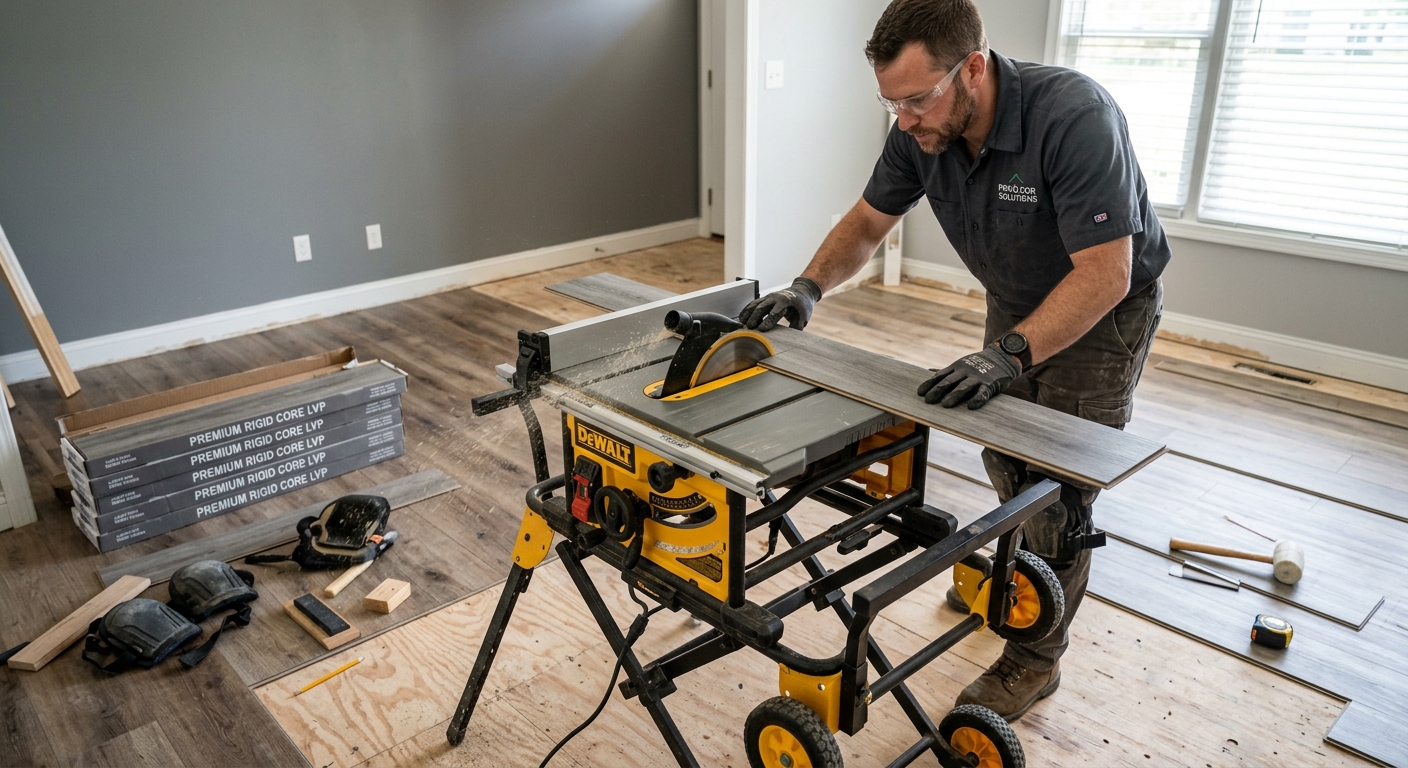
Flooring options and costs in Madeira Park
Madeira Park sits right in the Lower Mainland–Southwest, where a wet, marine climate and indoor humidity swings can change how your floors behave from winter to shoulder seasons. With a 2021 population of 3,039 (Statistics Canada, 2021 Census), we see a mix of longstanding neighbourhood homes and newer builds—so labour availability is generally good, but subfloor prep can be the difference between a fast install and a longer (and costlier) one. It’s also common to encounter older housing stock that wasn’t built for today’s flooring tolerances; uneven plywood or concrete often needs levelling, moisture barriers, and sometimes partial resurfacing, which typically adds roughly $1–$3 per sq ft to the project.
In areas along the Sunshine Coast corridor, that moisture behaviour matters: slab-on-grade and basement slabs can wick moisture upward, especially when indoor conditions fluctuate. That’s why we generally avoid solid hardwood below grade and recommend engineered wood or luxury vinyl plank (LVP) instead—these layered constructions tolerate humidity and minor temperature changes far better. If your home has radiant heating, the choice narrows further: engineered wood, many LVP lines, and tile tend to pair better than most solid hardwood or temperature-sensitive laminate.
For many homeowners, the local install rush shows up in the Madeira Park core and near the waterfront-adjacent streets, where renovations are common. Once we confirm your levelness, moisture readings, and heating setup, it becomes much easier to compare options side-by-side in a realistic budget range.
| Type |
Best Room |
Moisture Resistance |
Lifespan |
Price per sq ft |
| Solid hardwood (nail-down, above grade only) |
Main living areas above grade |
Low in basements; moderate above grade with humidity control |
25–60 years |
$9–$18 |
| Engineered hardwood (float or glue, above + on-grade) |
Living, dining, bedrooms |
Good; handles humidity swings better than solid |
20–40 years |
$9–$16 |
| Laminate (click-lock, above-grade) |
Secondary bedrooms, corridors |
Fair (avoid below-grade unless specifically rated) |
10–25 years |
$4–$10 |
| Luxury vinyl plank / LVP (waterproof, any level) |
Kitchen, basement (finished), main areas |
Very high; suitable for damp-leaning installs |
15–30 years |
$4–$10 |
| Porcelain / ceramic tile |
Kitchen, bathrooms, entries |
Very high (use proper underlayment and grout system) |
25–50 years |
$10–$20 |
| Carpet (broadloom or modular tile) |
Bedrooms, stairs for comfort |
Moderate; needs prompt drying if wet |
8–15 years |
$4–$8 |
Prices are estimates only and vary by project scope, site access and material selection.
What affects the price of flooring in Madeira Park
In Madeira Park and the wider Lower Mainland–Southwest, the same “square footage” project can land 30–50% apart across quotes because the hidden work differs: subfloor prep, moisture control, removal and disposal, and how well the product matches your temperature and humidity realities. In British Columbia generally, labour is also a major portion of the total cost—installers in the Greater Vancouver-influenced market tend to be in higher demand, which makes schedules and workmanship value matters.
Technically, indoor humidity swings are a top driver here. Solid hardwood expands and contracts with moisture levels, and it cannot be glued or floated over concrete the way engineered products can; in basements it also tends to perform poorly if moisture wicking is present. That’s why engineered hardwood and LVP (with waterproof cores) are usually the safer choices when you’re installing on-grade or over slab. If your home has radiant heating, it can further limit material options—solid hardwood often requires careful specification, while many LVP and tile systems handle radiant heat more reliably.
Older local housing stock frequently needs levelling or repair before flooring goes down. As a rule of thumb, that can add $1–$4 per sq ft depending on how far out-of-flat the subfloor is and whether resurfacing is required. A concrete example: moving from a budget click-lock laminate at about $4–$10 per sq ft to an engineered wood at about $9–$18 per sq ft can be worth it when your subfloor is only fair—engineered often tolerates installation conditions better and looks more stable over time. Another example: adding a proper moisture barrier over concrete for a basement LVP install is usually a smaller cost than replacing cupped solid hardwood after a winter humidity cycle.
| Price Factor |
Why It Matters |
Cost Impact |
| Room area in sq ft |
Larger areas increase material quantity and labour hours |
Direct multiplier; often the biggest driver |
| Subfloor condition — levelling or repair needed before install |
Uneven plywood or concrete can cause gaps, squeaks, and failed locking systems |
Typically adds roughly $1–$4 per sq ft |
| Moisture / below-grade install — rules out solid hardwood |
Concrete wicking and humidity swings can damage solid wood |
May require moisture mitigation and a different product |
| Material choice — solid vs. engineered vs. LVP vs. tile |
Different constructions handle humidity and temperature differently |
Shifts material bands (e.g., $4–$10 vs. $9–$18 vs. $10–$20) |
| Removal and disposal of existing flooring |
Tearing out old coverings and disposing of debris takes time and equipment |
Commonly adds a noticeable labour charge per job |
| Stair nosing / transitions — charged per step or per linear foot |
Transitions and stair details increase cutting, fitting, and trim work |
Often priced separately from “per sq ft” flooring |
| Radiant heat compatibility — limits material options |
Some products must be specified for radiant systems to avoid movement or damage |
May increase product cost or reduce available choices |
| Installation method — float vs. glue-down vs. nail-down |
Each method has different prep requirements and labour steps |
Labour and prep differences can move the total meaningfully |
Permits & regulations in British Columbia
In British Columbia, installing new flooring itself generally does not require a building permit. Where homeowners need to pay attention is when flooring work expands into electrical or structural territory. For example, if you’re adjusting or installing in-floor heating circuits, that electrical work can trigger electrical permit requirements. Likewise, moisture remediation might involve specialized work (and sometimes additional approvals) depending on how extensive it is, especially if it overlaps with plumbing, drainage, or subfloor structural repairs.
Condominiums are a different category. Even when no permit is required for the flooring, the strata corporation’s rules around sound transmission matter. Many buildings require specific underlay under hard-surface flooring to meet sound ratings (often discussed as STC/IIC targets). Before you install hardwood or tile in a multi-unit building, review the condo declaration and request written board approval—doing it “after the fact” can lead to delays or mandatory rework.
For contractor verification in Madeira Park, start with three checks: (1) British Columbia licence/registration status where applicable for the trade and company, (2) liability insurance certificate (COI) showing adequate coverage for your project, and (3) WSIB coverage information (or the appropriate provincial equivalent for your contractor’s work scope) confirming they’re properly covered for workers. Ask the contractor for the latest certificate, check expiry dates, and request a clearance letter if they provide one. For your peace of mind, keep copies of the insurance documents and any written approvals in your project file.
Best flooring for each room in your Madeira Park home
Madeira Park homes typically experience higher humidity swings than you’d see in much of Canada’s dry interior, and that’s why the “best” flooring is room-by-room. Living and dining areas need comfort, an inviting look, and enough stability to handle seasonal movement; engineered hardwood or a high-quality laminate works well here, provided the subfloor is level and acclimated. In the master bedroom, many homeowners prefer carpet for warmth and sound absorption—however, engineered hardwood is a strong alternative if you want a cleaner, allergen-friendly surface and you can manage indoor humidity.
In kitchens, the daily realities are water, steam and dropped items, so luxury vinyl plank (LVP) or large-format porcelain tile is the practical winner. LVP is forgiving if a spill lingers; tile is excellent where you want maximum water resistance and an easy-to-clean, grout-and-seal finish. Basements (finished) deserve special attention: LVP is usually the clear choice because it’s waterproof and tolerates moisture vapour better than solid wood and most laminates. For bathrooms, porcelain or ceramic tile is the safest bet.
Radiant heating is increasingly common in new construction in British Columbia, and it pairs best with engineered wood, tile, and many LVP products. Solid hardwood over radiant needs careful specification, so we often steer customers toward engineered when a system is already in place. If you compare budgets, moving from laminate at about $4–$10 per sq ft to engineered hardwood closer to $9–$18 per sq ft can be justified when your floors need better stability over time—especially if there’s any plan for on-grade zones or future humidity swings.
| Room |
Best Material |
Why |
Moisture Risk |
Price Band per sq ft |
| Living / dining room |
Engineered hardwood |
Warm look with better humidity tolerance than solid in Lower Mainland climates |
Low to moderate above grade (still plan for seasonal movement) |
$9–$16 |
| Master bedroom |
Carpet |
Comfort and sound absorption; hides minor subfloor variations |
Low (unless there’s an active leak or persistent dampness) |
$4–$8 |
| Secondary bedrooms |
Laminate (click-lock, rated for your conditions) |
Durable and family-friendly; easier maintenance than carpet |
Low above grade; avoid below-grade installs unless specifically rated |
$4–$10 |
| Kitchen |
Luxury vinyl plank (LVP) or porcelain tile |
LVP handles spills; tile gives maximum water resistance and easy cleaning |
Moderate to high (steam and spills) |
$10–$20 |
| Basement (finished) |
Luxury vinyl plank (waterproof) |
Best fit for slab-on-grade/moisture vapour realities common in the region |
High (moisture wicking and humidity swings) |
$4–$10 |
| Bathroom |
Porcelain / ceramic tile |
Non-porous performance with proper underlayment and grout |
High (direct wetting and steam) |
$10–$20 |
How to choose a flooring contractor in Madeira Park
Choosing the right contractor matters more in Madeira Park than in many inland areas because moisture and subfloor prep are often the deciding factors. Start by verifying British Columbia licence/registration where applicable for the contractor’s scope, then confirm liability insurance and worker coverage (WSIB/WCB coverage depending on the contractor’s setup). How to check: ask for a recent clearance letter or proof of coverage documents, and request a certificate of insurance that clearly lists your project address (or at least the class of work and effective dates). Don’t accept expired documents—check expiry dates and ensure the coverage matches the installation scope you’re hiring for.
Next, get 2–3 written, itemised quotes. You want a breakdown that separates labour from materials, and ideally specifies underlayment type, moisture barrier measures, levelling products, transition pieces, and stair details. Avoid “all-in” numbers that don’t explain exclusions: ask what’s not included (moving furniture, removing baseboards, subfloor repairs, underlay for floating floors, permit pull if required for heating upgrades, and disposal). Warranty matters too: request workmanship warranty length and whether it’s transferable if you sell your home.
For payment, never pay more than about 10–15% upfront, and hold back the remainder until the job is complete and you’ve confirmed the flooring is properly finished, cleaned, and meets the plan. Also insist on a start date and an estimated completion timeline in writing—local scheduling can be affected by weather and drying time for prep materials.
- Provide proof of insurance and worker coverage before work begins.
- Show you sample warranty terms in writing (workmanship and product).
- Explain how they’ll test/handle moisture on concrete or slab areas.
- Confirm the subfloor flatness and how levelling will be performed.
- List labour and materials separately (no vague “materials allowance”).
- Specify underlayment type for laminate/LVP and the reason for the choice.
- Detail removal and disposal scope (including nail-down staples, glue, or old underlay).
- Clarify transition methods (T-moulding, reducer strips, stair nosing).
- State what’s excluded: painting, trim repair, baseboard replacement, or drywall touch-ups.
- Confirm acclimation steps for wood products in a marine climate.
- Provide a clear payment schedule tied to milestones.
- Include a cleanup plan and final inspection process.
Red flags in Madeira Park: a contractor who won’t show insurance/coverage documents; quotes that don’t mention moisture barriers for concrete or basements; unclear responsibilities for subfloor levelling; refusing an itemised scope (especially around transitions and disposal); or promising “solid hardwood anywhere” without discussing humidity control and above-grade limits.
Frequently asked questions — flooring in Madeira Park
What is the best flooring for a high-traffic area in Madeira Park?
For high-traffic zones in Madeira Park—entries, hallways, and busy living rooms—the best balance is usually engineered hardwood or LVP, depending on your moisture exposure. Engineered hardwood offers a more natural floor feel and can handle day-to-day humidity changes far better than solid in our wet marine conditions, but it still needs a properly level subfloor. Waterproof LVP is often the most forgiving option where spills and damp shoes are common, especially near exterior doors or in homes with basement sections that sometimes run humid. If you’re budgeting, LVP often lands within the $4–$10 per sq ft band, while engineered hardwood commonly sits closer to the $9–$16 range (before site-specific levelling costs). Either way, the biggest determinant of long-term performance is subfloor prep and correct installation method.
How do I prepare my subfloor before new flooring?
Subfloor prep is the step that prevents future problems like squeaks, gaps, and clicking failures—especially in British Columbia where humidity swings can magnify small installation defects. The practical process is: (1) remove existing flooring and any old underlay/staples cleanly, (2) check flatness (low spots and high spots cause movement and wear), (3) repair any damaged plywood or concrete surface, and (4) address moisture. For concrete or slab-on-grade/basement areas, ask for moisture mitigation measures such as a proper moisture barrier system before LVP or engineered installs. For wood-based systems, ensure acclimation and leave required expansion gaps so the floor can move without cupping. If your subfloor is out of flat, levelling typically adds about $1–$4 per sq ft—often worth it compared to reinstalling later after gaps appear.
Is cork or bamboo flooring a good choice in Madeira Park?
Cork can work in Madeira Park when it’s from a reputable product line with stable backing and proper underlayment, but it’s not our first choice for below-grade areas. Cork is more forgiving than some woods, yet it can still be affected by persistent moisture vapour if the slab is wicking water. Bamboo’s performance depends heavily on construction and installation; it behaves like engineered wood more reliably than solid bamboo in humidity swings, but solid bamboo installed improperly on concrete or in basements can still suffer. In the Lower Mainland–Southwest wet marine climate, if you’re considering cork or bamboo, we generally recommend limiting it to above-grade rooms with good indoor humidity control and ensuring the subfloor is level and dry. If you need maximum moisture tolerance for basements, LVP usually provides better confidence within the $4–$10 per sq ft band.
What is the difference between floating and glued-down flooring?
Floating floors are installed with a click-lock or similar system, laid over an underlayment cushion without permanently bonding to the subfloor. Because they’re “free to move” slightly, they typically tolerate minor subfloor variations better than fully rigid systems—but they still require a level base to prevent joint stress. Glued-down flooring is bonded directly to the subfloor using manufacturer-approved adhesives. This can improve stability and reduce movement, which some homeowners prefer for noise and feel, especially with engineered products in the right specification. In Madeira Park’s humidity swings, the key is matching the product to the environment: engineered wood and LVP are often used because they handle moisture better than solid hardwood, and both can be installed float or glue depending on the line. For concrete or moisture-prone zones, your contractor’s method choice matters as much as the material.
What flooring holds up best to pets in a Madeira Park home?
For pets, the two biggest considerations are scratch resistance and moisture tolerance. LVP is usually the front-runner because it’s waterproof, easier to clean, and typically resists everyday spills better than carpet or laminate. High-quality laminate can also hold up well above grade, but it’s less forgiving if moisture gets through seams. If you want a warmer look, engineered hardwood can be a good option provided you protect it from prolonged moisture and use felt pads—our coastal humidity can make minor spills more impactful if they sit. In budget terms, LVP commonly fits in the $4–$10 per sq ft band, while engineered hardwood often costs closer to $9–$16 depending on the wear layer and grade. For best results, choose products rated for residential traffic and plan for proper subfloor prep so the floor doesn’t shift under active pets.
How do I fix squeaky floors in my Madeira Park home?
Squeaks are usually a fast diagnosis and a detailed fix: they come from movement between subfloor layers, worn fasteners, or gaps around joists/subfloor. Before installing new flooring, have the contractor locate the source—walking tests, probing, and checking for loose boards often pinpoint whether the squeak is in plywood, underlayment, or at nailed sections. In many cases in British Columbia homes, the fix is to re-secure loose subfloor panels with proper fasteners and/or add blocking, then flatten the surface. If the squeak is at older nail-down systems, removing the top layer and reworking the connections is more effective than “fixing after” with underlayment. Once the movement is corrected, new flooring installation (especially floating systems) performs much better. If you’re planning a renovation, it’s often cheaper to address squeaks during subfloor levelling than after the new floor is down.