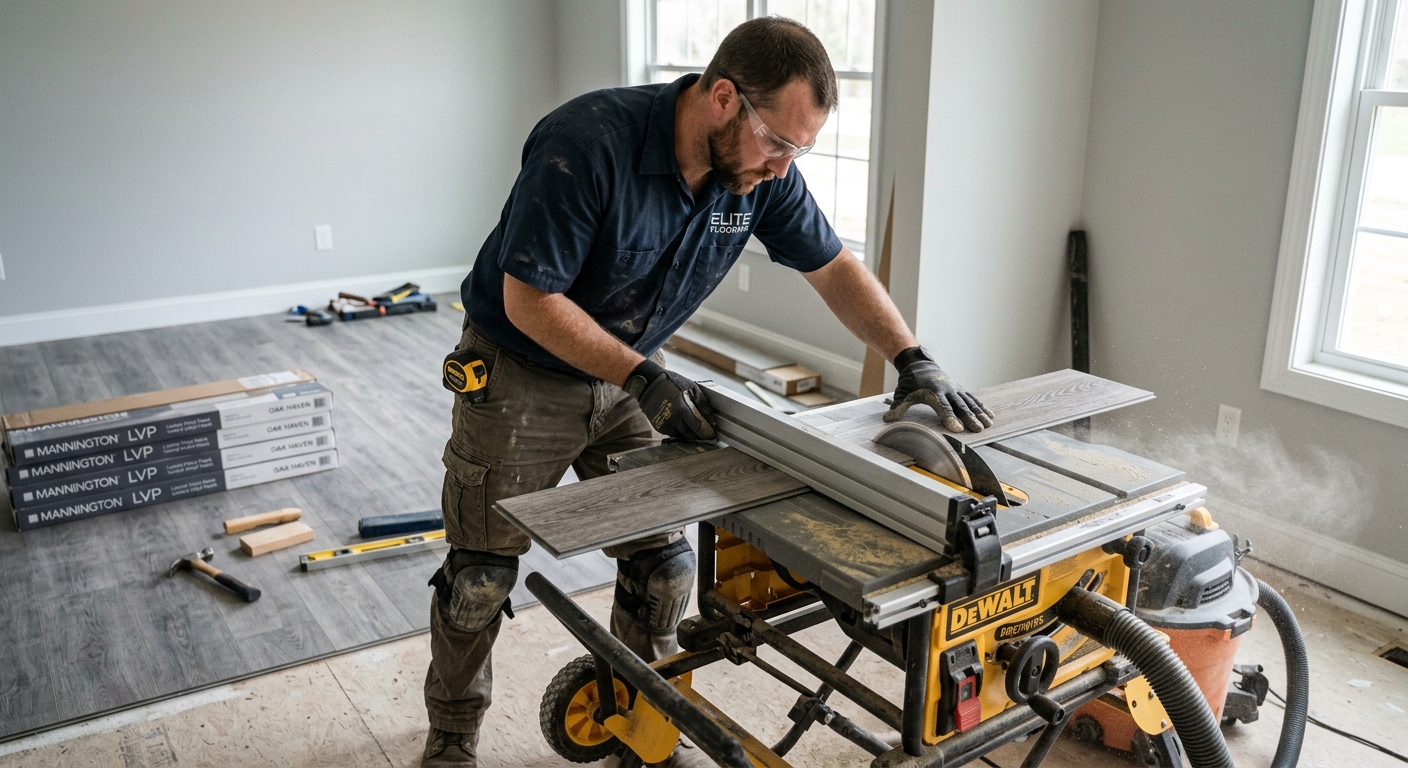
Flooring options and costs in East Gwillimbury
East Gwillimbury homeowners typically see flooring pricing land across a wide range because Toronto-area renovations don’t just replace finish materials—they often include the prep that older homes demand. With 34,637 residents in the community (Statistics Canada, 2021 Census), and a homeowner majority (84.2% of households own), many projects are full-room upgrades rather than small repairs. That matters because East Gwillimbury housing stock includes a large older segment: 27.9% of homes were built before 1981 (Statistics Canada, 2021 Census). In those properties, it’s common to budget for subfloor levelling, plywood replacement, or moisture mitigation before a new floor can be installed—work that can push costs up even when the chosen finish is “mid-range.”
Toronto-area indoor humidity swings also meaningfully affect material selection and therefore labour and material pricing. In seasonal transitions, solid hardwood expands and contracts with moisture; it’s especially risky over concrete or in basements. That’s why, in this market, engineered hardwood and luxury vinyl plank (LVP) are the go-to choices for most homes. Contractor availability can also influence pricing: flooring crews are busy during peak renovation months, and Toronto-area labour rates are generally higher than many other Canadian regions.
In East Gwillimbury—particularly around the Holland Landing and Warford area—flooring installs are in high demand because many families are updating older detached houses, upgrading finished basements, or improving kitchens to prepare for resale. Next, the table below compares typical options and what you can expect to pay per square foot.
| Type |
Best Room |
Moisture Resistance |
Lifespan |
Price per sq ft |
| Solid hardwood (nail-down, above grade only) |
Living / dining (above grade) |
Low to moderate; avoid basements and concrete |
25–50 years |
$9 – $18 |
| Engineered hardwood (float or glue, above + on-grade) |
Living / dining, bedrooms |
Moderate to high; handles typical humidity better |
15–30 years |
$9 – $16 |
| Laminate (click-lock, above-grade) |
Living areas, bedrooms |
Moderate; not a “flood-proof” product |
10–25 years |
$4 – $9 |
| Luxury vinyl plank / LVP (waterproof, any level) |
Kitchens, basements, main floors |
High; suitable for below-grade when installed correctly |
15–25 years |
$5 – $10 |
| Porcelain / ceramic tile |
Bathrooms, kitchens, entries |
Very high; resilient to spills and cleaning |
30–50 years (grout maintenance needed) |
$12 – $25 |
| Carpet (broadloom or modular tile) |
Bedrooms, stairs (comfort-focused) |
Low to moderate; moisture risk if damp underlay occurs |
7–15 years |
$4 – $8 |
Prices are estimates only and vary by project scope, site access and material selection.
What affects the price of flooring in East Gwillimbury
In East Gwillimbury, two homeowners can receive quotes for “the same floor” that differ by 30% to 50% once prep work and site conditions are counted. The Toronto region has both strong renovation demand and higher general construction wages, so labour often swings with schedule and complexity. On top of that, flooring pricing is highly sensitive to subfloor condition, waste/disposal, and how much levelling and moisture mitigation is required—especially in older detached housing where you may be dealing with older plywood layers, uneven joists, or prior moisture issues.
The key technical driver in this area is indoor humidity movement and below-grade moisture exposure. Solid hardwood expands and contracts with humidity, and it can’t be nailed down over concrete; it also performs poorly in basements where moisture vapour is more likely. Engineered hardwood is more dimensionally stable and is commonly used for above-grade installs, while LVP is engineered to handle waterproof, any-level applications. Colder periods in the region also push many clients toward radiant floor heating compatibility—this tends to favour engineered wood, tile, and certain LVP systems rather than traditional solid hardwood. When a home was built before 1981, you’re more likely to see levelling or repair needs; that prep commonly adds about $1 to $4 per sq ft, on top of your chosen finish. In a typical living room budget, the difference between laminate at roughly $4 – $9 and engineered options at closer to the $9 – $16 range may be justified if your contractor needs less remediation or if you want higher humidity tolerance for Toronto swings.
Concrete examples we see in East Gwillimbury: (1) a main-floor install over older subfloors often requires patching and smoothing, which increases labour hours; (2) a basement conversion from utility to finished space usually triggers moisture checks and a waterproof floor build-up approach, which makes LVP pricing more attractive than laminate. Those same conditions can raise total cost even when material stays “mid-range.”
| Price Factor |
Why It Matters |
Cost Impact |
| Room area in sq ft |
Drives both material quantity and labour time |
Direct: larger areas often reduce per-sq-ft labour but still add total cost |
| Subfloor condition — levelling or repair needed |
Older homes may need plywood replacement or smoothing compound |
Commonly adds about $1–$4 per sq ft in prep for older stock |
| Moisture / below-grade install — rules out solid hardwood |
Basements and slabs need waterproof or vapour-tolerant systems |
May shift you from solid to engineered/LVP; can add moisture mitigation steps |
| Material choice — solid vs. engineered vs. LVP vs. tile |
Different product prices and underlayment requirements |
Material band changes total budget substantially (e.g., tile vs. laminate) |
| Removal and disposal of existing flooring |
Hauling and potential subfloor damage from tear-out |
Can add a meaningful line item, especially for tile or glued-down surfaces |
| Stair nosing / transitions — charged per step or per linear foot |
Stairs and doorways require additional trim components |
Often increases cost more than homeowners expect |
| Radiant heat compatibility — limits material options |
Heat cycling affects expansion and adhesive choices |
May increase labour time for correct acclimation and product selection |
| Installation method — float vs. glue-down vs. nail-down |
Method affects labour, fasteners, and prep requirements |
Nail-down and glue-down typically require more skilled prep and labour |
Permits & regulations in Ontario
In Ontario, the flooring install itself usually does not require a building permit—you're typically swapping finishes over existing floors. However, related work can trigger permits and/or licensed trades requirements. For example, if you need structural subfloor repair that changes support elements, or if you’re adding moisture remediation that includes substantial under-slab or vapour barrier work, permits may be required depending on scope and how it’s executed. If your project involves radiant floor heating circuit work (or any electrical modifications connected to in-floor heating), that often requires electrical permitting and work by a qualified electrical contractor.
In condominiums, the corporation’s rules on sound transmission commonly matter as much as moisture. Many buildings specify underlay thickness/type and require that hard surface flooring meet acoustical expectations. Because of that, always review the condo declaration and request board approval in writing before installing hardwood or tile on upper floors.
To verify your contractor in East Gwillimbury, follow a simple step-by-step approach: (1) confirm they are properly licensed for the trade they’re performing (where applicable) and can provide their Ontario business details; (2) ask for a current certificate of liability insurance before work starts and ensure it includes general liability coverage suitable for renovations; (3) confirm WSIB/WCB coverage for their workers—request a clearance letter or proof of coverage; (4) verify the scope aligns with what’s written on the quote (including disposal and any permit-related allowances). Keep copies of these documents and don’t start until you’ve reviewed them.
Best flooring for each room in your East Gwillimbury home
Choosing the right flooring in East Gwillimbury is mostly about matching material behaviour to each room’s moisture exposure, traffic patterns, and comfort needs—then accounting for Toronto-area indoor humidity swings. For living and dining areas, engineered hardwood or a high-quality laminate can balance warmth and durability without the same movement risk as solid hardwood. In the master bedroom, many homeowners want comfort underfoot; carpet is still a top choice for sound absorption and warmth, while engineered hardwood works well if you’re managing humidity and maintaining proper room ventilation.
Kitchens are where LVP or large-format porcelain tile usually win. Spills, splashes, and frequent cleaning favour waterproof performance; LVP is a practical option when you want a softer step than tile. In basements, LVP is the clear winner for finished spaces: it’s fully waterproof, handles below-grade installs, and reduces the risk that moisture vapour will damage a wood surface. Bathrooms are porcelain or ceramic tile only—this is one area where waterproof grout systems and surface durability matter more than cost-per-sq-ft.
Radiant floor heating is increasingly popular in Ontario new builds and renovations. Heat cycling generally pairs better with engineered wood, tile, and selected LVP products than with traditional solid hardwood, because material layers and installation methods are designed to better manage expansion. For a quick budgeting reality check: moving from laminate around $4 – $9 to engineered at roughly $9 – $16 may be worth it if your contractor also plans minimal subfloor prep and you want better humidity stability across Toronto’s seasons.
| Room |
Best Material |
Why |
Moisture Risk |
Price Band per sq ft |
| Living / dining room |
Engineered hardwood or premium laminate |
Warm feel, good durability, and more stable than solid hardwood in humidity swings |
Low to moderate (controlled indoor humidity) |
$9 – $16 (engineered) or $4 – $9 (laminate) |
| Master bedroom |
Carpet or engineered hardwood |
Carpet improves comfort and sound; engineered gives a cleaner, quieter alternative |
Low (if no humidity source) |
$4 – $8 (carpet) or $9 – $16 (engineered) |
| Secondary bedrooms |
Carpet or LVP (if you want easier clean-up) |
Carpet balances comfort for kids; LVP can handle mess and moisture incidents |
Low to moderate |
$4 – $8 (carpet) or $5 – $10 (LVP) |
| Kitchen |
Luxury vinyl plank (LVP) or porcelain tile |
Waterproof/washable surfaces; reduces damage from spills and splashes |
Moderate to high |
$5 – $10 (LVP) or $12 – $25 (tile) |
| Basement (finished) |
Waterproof LVP |
Dimensionally stable for below-grade conditions and vapour tolerance |
High (moisture vapour risk) |
$5 – $10 |
| Bathroom |
Porcelain / ceramic tile |
Best-in-class water resistance and longevity with proper waterproofing under tile |
Very high |
$12 – $25 |
How to choose a flooring contractor in East Gwillimbury
Choosing the right flooring contractor in East Gwillimbury starts with proof and process, not just the lowest number. First, verify Ontario licensing/qualification where applicable for the type of work they do, then confirm their insurance and worker coverage. Ask for a certificate of liability insurance (dated and matching the company doing the job) and check that it’s active before work begins. For WSIB/WCB coverage, request a WSIB clearance letter or proof of coverage—if they can’t provide it, that’s a major risk for homeowners.
Next, get 2–3 written, itemised quotes that break out labour and materials. Ideally, compare them line by line: what underlay is included, whether levelling compound or plywood replacement is included, and what stair nosing and transition trim will cost. Look for exclusions (e.g., subfloor repairs not required unless discovered, or disposal not included). Confirm whether a permit is included if radiant heating wiring or electrical work is part of the scope. A good warranty should be in writing and specify workmanship coverage length and who covers what. Also confirm whether the product warranty is transferable to you.
On payment, never pay more than 10%–15% upfront. Hold back the remainder until completion and final walk-through. Ask for a start date and completion estimate in writing, and make sure the quote lists who supplies and installs any required underlayment and acclimation time.
- Ask for certificate of liability insurance and verify it covers renovation flooring work.
- Request WSIB/WCB clearance or proof of active coverage before they start.
- Confirm the scope includes subfloor levelling/repair or states what triggers extra charges.
- Get an itemised quote separating labour, materials, underlay, and trim/transitions.
- Ask whether removal and disposal of existing flooring is included.
- Verify underlay/thickness meets the product and condo sound requirements (if applicable).
- Confirm moisture testing plans for basements (and vapour mitigation steps where needed).
- Ask how they handle radiant floor heating compatibility and product selection.
- Clarify what “warranty” means—workmanship vs. manufacturer warranty.
- Ensure the warranty is documented and includes start/end dates.
- Use a payment schedule that keeps 10%–15% retainage until final sign-off.
- Get job timelines in writing, including delivery lead times for flooring and transitions.
In East Gwillimbury, concrete red flags include: crews that won’t provide insurance/WSIB proof; quotes that omit disposal or subfloor prep details; changing the quote verbally after materials are ordered; refusal to put scope and warranty terms in writing; and no clear plan for humidity, acclimation, or basement moisture conditions.
Frequently asked questions — flooring in East Gwillimbury
Engineered vs solid hardwood — what's the difference?
Solid hardwood is one continuous piece of wood and is most suitable for above-grade nail-down installs. Because it moves with humidity, it can be risky over concrete slabs and in basements—where moisture vapour is more common in the Toronto area. Engineered hardwood uses a plywood or composite core with a wood wear layer on top, which gives it better dimensional stability. In East Gwillimbury, that stability matters through seasonal humidity swings, especially in homes that were built before 1981 and may have older subfloor conditions. In terms of budgeting, solid often lands around $9 – $18 per sq ft, while engineered commonly falls closer to $9 – $16, with the “right” choice usually driven by room location (above grade vs basement) and your subfloor moisture reality.
Do I need to level my subfloor first?
Often, yes—especially in older East Gwillimbury homes where you may see uneven subfloor surfaces, loose plywood, or dips from prior repairs. Flooring can only look as straight as the surface beneath it. If a floor is installed over a wavy subfloor, you may get joint gaps in laminate/LVP, hollow spots in floating floors, or early wear in higher-end products. The practical approach is an initial inspection and measuring: your contractor should identify whether levelling compound is enough or if plywood replacement is required. That prep can be a major quote driver, frequently adding about $1 to $4 per sq ft depending on what’s found. Clarify in your quote whether subfloor levelling/repair is included or will be added later as an extra.
What's the most durable flooring for pets and kids?
For most households in Ontario—especially with active kids and pets—LVP is the most forgiving daily choice when installed correctly. It’s waterproof, handles frequent spills, and doesn’t suffer the same humidity or moisture vapour damage risks as solid wood. In Toronto-area homes where humidity swings are common, LVP also tends to be more predictable than laminate when accidents happen. If you prefer the look of wood, engineered hardwood can be durable too, but you still need to manage moisture and address any basement below-grade concerns. As a starting budget reference, LVP commonly sits around $5 – $10 per sq ft, while tile often costs more (about $12 – $25) but is extremely resistant to wear and cleaning. Your final answer should reflect where the pets spend time—basement vs main floor—and whether you expect wet messes.
How do I choose flooring for humidity in East Gwillimbury?
Humidity selection is where flooring brands and installation details matter most in East Gwillimbury. The Toronto region experiences indoor humidity swings across seasons, which can cause solid hardwood to expand/contract and develop movement-related issues if it’s not installed in the right environment. Solid hardwood is typically limited to above grade and usually isn’t the best call for basements or over concrete. Engineered hardwood is more stable for main floors, while luxury vinyl plank is specifically the practical “waterproof, any-level” solution for below-grade conditions. If radiant heat is planned, that can also limit options; in many renovations, engineered wood, tile, and select LVP systems are favoured over traditional solid wood due to expansion and heat cycling. In your quote, ask how the contractor will acclimate materials and what they’ll do if moisture is detected in a basement.
Do condos restrict hard flooring?
Often, yes. In Ontario condos, the corporation typically restricts or regulates sound transmission for hard flooring because it can impact neighbours below. That’s why condo boards commonly require specific underlay types and may require approval for the flooring system (and sometimes for the installation contractor). In practice, the rules can dictate acoustical performance targets (STC/IIC) and installation requirements, especially on upper floors. Before you buy materials, check the condo’s declaration documents and request written approval—don’t rely on a general understanding. Also remember that Toronto-area renovation timelines can be busy, so approval delays can affect your install date. If your quote is based on tile or engineered hardwood, ask whether the underlay you’re getting is the one the condo requires.
How do I compare flooring quotes?
Start by removing “apples to oranges.” Compare quotes line by line: labour, material grade/brand, underlay requirements, stair nosing and transitions, removal and disposal, and whether subfloor levelling or repairs are included. The biggest quote differences in East Gwillimbury usually come from prep and moisture mitigation, not the finished product alone—especially in older detached homes where subfloors often need work. Also confirm your contractor’s protections: ask for certificate of liability insurance and proof of WSIB/WCB coverage before signing. Look for a workmanship warranty (length and what it covers) and confirm whether the manufacturer warranty transfers to you. Finally, keep payment reasonable: don’t exceed 10%–15% upfront and hold back until completion. If one quote lands near the low end of a band (for example $4 – $9 for laminate/LVP-type ranges) but omits disposal or levelling, it may not be a true comparison.