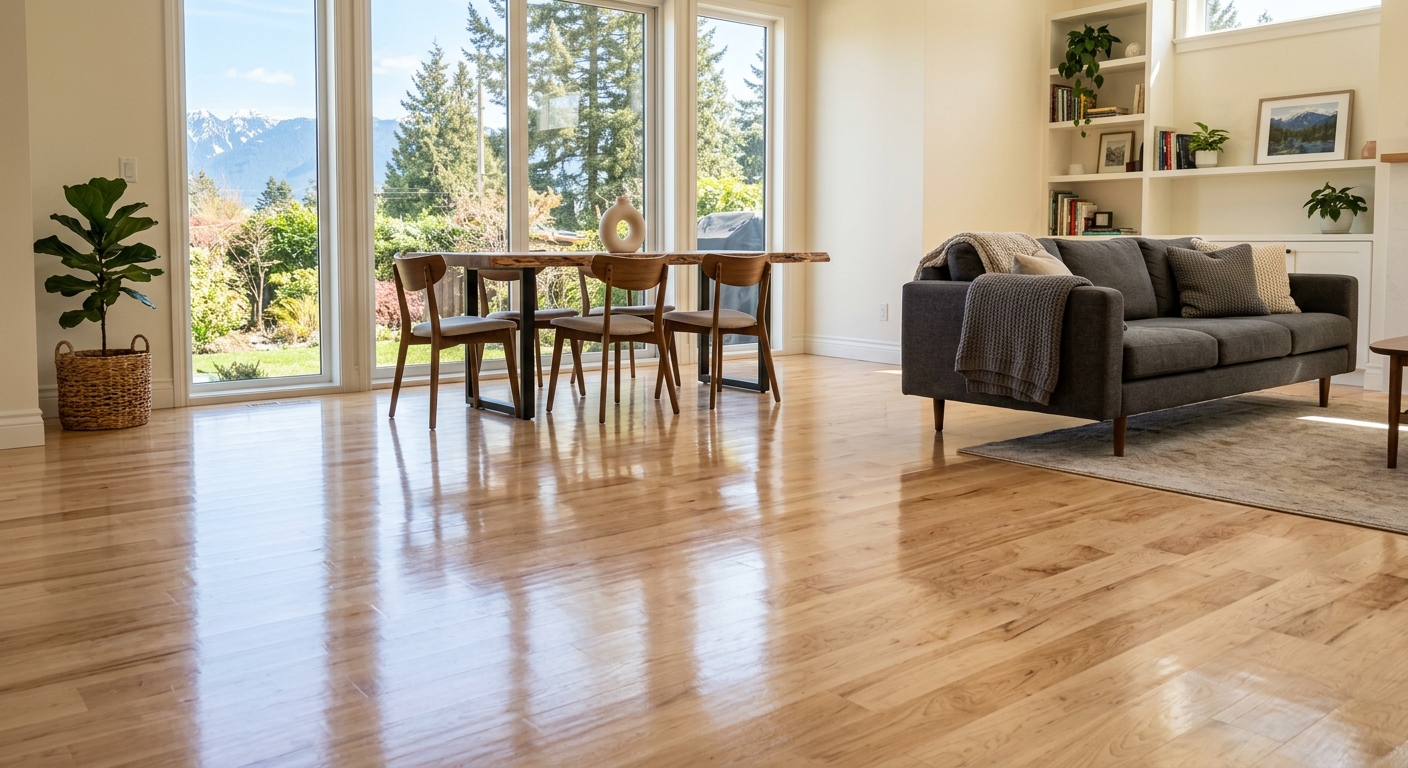
Flooring options and costs in Shaganappi
In Shaganappi, your flooring choice starts with what the home can handle—especially because Calgary-area winters and shoulder seasons swing indoor conditions more than many people expect. With a 2021 population of 1,765 in the Shaganappi profile (Statistics Canada, 2021 Census), you’ll usually have enough local contractor availability, but job timing and scheduling can still change quickly during peak renovation months.
Cost also reflects the kind of housing you’re working with. In older Calgary stock, many basements and main floors weren’t built for today’s tighter underlayment systems or flatness standards. That’s why levelling and prep are common: in practice, older subfloors often require additional smoothing, patching, or even repair of plywood, which can add roughly $1–$4 per sq ft depending on how out-of-level the area is. Because Calgary is a dry, cold prairie climate with big seasonal humidity swings, basements frequently see moisture migration through concrete, even when the basement doesn’t feel “wet.” For that reason, contractors in the Shaganappi area tend to steer homeowners toward engineered hardwood, luxury vinyl plank (LVP) or SPC, and porcelain/ceramic tile where appropriate—rather than traditional ¾-inch solid hardwood.
You’ll also notice particular demand in established pockets around the neighbourhood core, where many homes are older and turnover renovations are frequent. If you’re planning a whole-main-floor update, the prep work and material stability considerations below help explain why bids can differ—so use the table as a pricing baseline for your comparison.
| Type |
Best Room |
Moisture Resistance |
Lifespan |
Price per sq ft |
| Solid hardwood (nail-down, above grade only) |
Living / dining (dry zones) |
Low–medium (humidity sensitive; avoid basements) |
25–60 years |
$8–$15 |
| Engineered hardwood (float or glue, above + on-grade) |
Living / dining, main bedrooms |
Medium–high (better with humidity swings) |
20–40 years |
$9–$14 |
| Laminate (click-lock, above-grade) |
Bedrooms, hallways, living areas |
Medium (water-resistant but not “floodproof”) |
10–25 years |
$4–$7 |
| Luxury vinyl plank / LVP (waterproof, any level) |
Kitchen, main areas, basements |
High (waterproof; handles vapour better) |
15–25 years |
$5–$9 |
| Porcelain / ceramic tile |
Bathrooms, entryways, kitchens |
Very high (with proper membrane + grout) |
25+ years |
$6–$12 |
| Carpet (broadloom or modular tile) |
Bedrooms |
Low (not for wet zones) |
8–15 years |
$4–$8 |
Prices are estimates only and vary by project scope, site access and material selection.
What affects the price of flooring in Shaganappi
In Shaganappi and the broader Calgary market, it’s common to see quote differences of 30–50% for what sounds like the “same” job. The biggest driver isn’t usually the shiny part—it’s what happens under the surface: prep, flatness, moisture mitigation, and how the installer plans for your home’s seasonal movement. Calgary and surrounding communities sit in a dry, cold prairie climate, so indoor humidity swings can cause solid hardwood to expand and contract noticeably. That technical constraint changes both material selection and labour method, and it can quickly move you from a $8–$15 hardwood band into an engineered or LVP approach that tolerates movement better.
Below grade is another big cost lever. Basements in Airdrie, Cochrane, Okotoks and Rocky View County often see moisture migration through concrete; the same risk shows up across the Calgary region. For that reason, solid hardwood is typically a poor fit for basements and some on-slab installs, while LVP/SPC is costed more confidently as a waterproof option. Flooring quotes also vary with how much levelling is needed for older housing stock. In practice, subfloor levelling or repair is frequently budgeted to add about $1–$4 per sq ft, with the higher end when plywood is uneven, seams are high, or transitions between rooms don’t line up.
Concrete examples from Shaganappi installs: (1) a 600 sq ft main floor with aged plywood often needs more labour time to feather- and patch-prepare for tile flatness, pushing tile closer to the $6–$12 band rather than the low end; (2) a basement slab with humidity concerns may add membrane/prep time, but shifting to LVP can still be cheaper overall than trying to engineer a solid hardwood solution for a concrete environment.
| Price Factor |
Why It Matters |
Cost Impact |
| Room area in sq ft |
More square footage means more labour hours, trim cuts and material yield planning |
Directly scales total cost; small projects feel higher per sq ft due to minimum charges |
| Subfloor condition |
Levelling or repair needed before install affects time, materials and risk of failure |
Often adds roughly $1–$4 per sq ft depending on how uneven/aged the surface is |
| Moisture / below-grade install |
Solid hardwood can’t be glued or floated over concrete and humidity migration can damage it |
May shift you to engineered hardwood or waterproof LVP/SPC; can add moisture prep steps |
| Material choice |
Solid vs. engineered vs. LVP vs. tile have different system requirements and labour complexity |
Hardwood band ($8–$15) vs. vinyl/plank band ($3–$7) vs. tile band ($6–$12) changes the baseline |
| Removal and disposal of existing flooring |
Demolition adds labour and disposal fees; old adhesives can be labour-intensive |
Can add a significant line item, especially with thick glue-down materials |
| Stair nosing / transitions |
Stairs require more precise material fitting and finishing; transitions prevent trip hazards |
Usually charged per step or per linear foot; increases total cost on multi-level homes |
| Radiant heat compatibility |
Colder regions often use in-floor heating, which can rule out some solid hardwood and parts of laminate |
May require engineered products or specific underlay systems; can limit lower-cost choices |
| Installation method |
Float vs. glue-down vs. nail-down changes tooling, cure times, and failure risk |
Glue-down and nail-down often add labour complexity; can affect warranty compliance |
Permits & regulations in Alberta
In Alberta, the act of installing flooring itself usually does not require a building permit. Where projects can trigger permits is the “associated work” that accompanies the flooring—particularly when you’re changing structure, correcting moisture problems, or tying into electrical systems.
Typically no permit: replacing finished flooring surfaces (carpet, LVP/SPC, laminate, engineered hardwood, and tile) when you’re not altering load-bearing structure; installing standard underlay and spacers; reinstalling trim and baseboards as part of a flooring scope.
Work that may require permits: structural subfloor repair (for example, replacing significant sections of joists or correcting framing issues), moisture remediation that involves engineered drainage or significant concrete treatment strategies, and any electrical work related to in-floor heating circuits (or any new wiring). In condos, even if a permit isn’t required for the flooring itself, the condominium corporation’s rules may restrict flooring types and underlay to protect sound transmission.
Step-by-step verification for a Shaganappi homeowner: (1) ask for the contractor’s Alberta business licence information when applicable and verify identity; (2) request a certificate of insurance showing general liability, and ensure the coverage matches your job value; (3) ask for WSIB/WCB clearance or proof—then confirm the document is current; (4) for condos, get written approval from the board before installing hardwood or tile on upper floors; and (5) confirm in writing whether disposal, subfloor prep, and any moisture-related remediation are included.
Best flooring for each room in your Shaganappi home
Choosing flooring in Shaganappi is about matching product stability to how each space behaves in Calgary’s climate—dry/cold winters, humidity swings, and frequent below-grade moisture migration through concrete. In living and dining areas, I usually recommend engineered hardwood or a high-quality laminate: they give you warmth and a more “natural” feel than vinyl, while handling seasonal movement better than solid hardwood. For master bedrooms, comfort and quiet matter; carpet is a strong option for sound absorption and underfoot softness, while engineered hardwood is a good upgrade if you want a harder surface.
Kitchen floors take the most abuse from water and daily spills, so luxury vinyl plank (LVP) is a practical choice because it’s waterproof and installs over many subfloor situations more safely than solid wood. Large-format porcelain tile is also excellent in kitchens when the subfloor is flat and the installer uses the right setting and crack isolation approach.
Basements in the Calgary region are where waterproof performance wins: LVP is usually the clear winner because it tolerates moisture vapour and typical in-slab conditions better than solid wood and most laminate. Bathrooms should be porcelain or ceramic tile only, with proper membranes and grout selection.
If you have radiant heat, focus on compatibility—this is increasingly common in Alberta builds, and it can rule out most solid hardwood. For a quick reality check: if you compare a main floor upgrade at about 600 sq ft, choosing LVP at roughly $5–$9 per sq ft instead of hardwood at $8–$15 can free up budget for better levelling/prep, which often pays off more than upgrading the finish alone.
| Room |
Best Material |
Why |
Moisture Risk |
Price Band per sq ft |
| Living / dining room |
Engineered hardwood |
Warm feel with better humidity tolerance than solid wood |
Low (stay in controlled indoor conditions) |
$9–$14 |
| Master bedroom |
Carpet or engineered hardwood |
Carpet adds comfort and sound control; engineered keeps it easy to clean |
Low |
$4–$14 |
| Secondary bedrooms |
Laminate (click-lock) or carpet |
Laminate balances durability with affordability; carpet is best for noise reduction |
Low |
$3–$8 |
| Kitchen |
Luxury vinyl plank (LVP) or porcelain tile |
Water resistance for spills; LVP is forgiving, tile is long-life and easy to sanitize |
Medium (spills and cleaning) |
$5–$12 |
| Basement (finished) |
LVP (waterproof) or SPC |
Handles concrete-related moisture vapour risk better than solid wood/laminate |
High |
$5–$9 |
| Bathroom |
Porcelain / ceramic tile |
Best long-term performance with water exposure when installed with the right system |
Very high |
$6–$12 |
How to choose a flooring contractor in Shaganappi
Start with verification in Alberta: ask the contractor for (1) their insurance certificate (general liability) and confirm it’s active for the project period; (2) proof of WSIB/WCB coverage or clearance; and (3) the licence/registration details you can reasonably request for their business in Alberta. For most homeowners, the practical workflow is simple: request documents, check the issue date/validity, and keep copies for your records. If a contractor hesitates or provides vague screenshots, that’s a major signal.
Next, get 2–3 itemised written quotes. You want a breakdown that separates labour, material, and prep items (like levelling compound, patching, underlayment, transition strips, and disposal). Avoid lump-sum proposals that don’t clearly list what’s included. Read the scope: is subfloor levelling included up to a stated flatness tolerance? Is permit work included if you’re doing associated electrical or structural repair? Is old flooring removal and hauling included, or will they charge that separately on site?
Warranty matters in Calgary’s climate. Ask for (a) workmanship warranty length and what it covers, (b) the manufacturer warranty details and exclusions (especially around moisture), and (c) whether the warranty is transferable if you sell your home. For payment, don’t pay more than 10–15% upfront; hold back until the job is complete and you’ve confirmed transitions, stair finishing, and baseboard/trim reinstatement. Finally, get a start date and completion estimate in writing so the schedule doesn’t drift during the cold-season window when moisture control and cure times can affect workflow.
- Ask for proof of WSIB/WCB coverage and confirm current clearance status.
- Verify general liability insurance and that the coverage amount matches your project scale.
- Request a fully itemised quote (labour, materials, underlay, prep, transitions, disposal).
- Confirm what happens if the subfloor is worse than expected (change order limits).
- Get the flatness/levelness standard they’ll meet, especially for tile.
- Ask who supplies and sets transition pieces, reducers, and stair nosing.
- Confirm underlay and moisture barriers that match product specs (especially LVP over basements).
- Ensure disposal is included or priced separately with a clear line item.
- Read the exclusions in the workmanship warranty (buckling, gaps, water damage claims, etc.).
- Check if warranty coverage is transferable and how it’s documented.
- Review the payment schedule—avoid large upfront deposits; hold back until completion.
- Get a written start date and completion timeframe, plus cleanup expectations.
Red flags I see in the Shaganappi area: (1) quotes that won’t specify underlayment/moisture details, (2) refusal to provide insurance/WSIB/WCB clearance documentation, (3) “we’ll figure it out later” language about levelling and transitions, (4) payment requests that exceed 10–15% upfront, and (5) no clear written scope for stairs or trim reinstallation—those omissions often become the expensive surprises.
Frequently asked questions — flooring in Shaganappi
What is the difference between floating and glued-down flooring?
In Alberta, “floating” typically means planks click together (laminate) or are installed to sit over an underlay without being fastened to the subfloor. “Glued-down” means boards are bonded directly to the subfloor (often engineered hardwood options), which can improve stability but requires the right adhesive and surface prep—especially important in Calgary’s humidity swings. In Shaganappi, the practical difference is how the system tolerates moisture and movement: floating floors rely on a controlled expansion gap and proper underlay, while glued-down installs demand a flatter, well-prepared substrate to prevent hollow spots and joint failure. For basements, floating engineered products are sometimes used (depending on the manufacturer), while solid hardwood is usually a poor fit on concrete. If you’re comparing budgets, remember that engineered at roughly $9–$14 per sq ft often costs more than laminate at $3–$7, but it can reduce call-backs tied to seasonal movement.
What flooring holds up best to pets in a Shaganappi home?
For pets in Shaganappi, the “best” choice is usually the one that’s both durable and manageable when accidents happen. Waterproof luxury vinyl plank (LVP/SPC) is often top-tier because it resists spills and cleanup—useful during Calgary’s dry-cold season when floors still face daily wear. If you’re considering budget options, laminate in the $3–$7 band can work, but it’s not as forgiving if water gets into seams. Engineered hardwood can also perform well with the right finish and quick spill response, but it still isn’t as forgiving as waterproof vinyl in a basement. For heavy traffic and claws, look for wear layers or thicker cores, and plan trims/transitions so pets don’t catch edges. Carpet can be comfortable, especially for bedrooms, but it’s the most sensitive to urine or repeated moisture; it’s best when you’re ready for frequent deep cleaning and fast stain treatment.
How do I fix squeaky floors in my Shaganappi home?
Squeaks usually come from movement between subfloor layers, joists, or fasteners—so the first step is diagnosing where the sound originates. In many older Calgary homes, the issue is loose subfloor screws/nails or worn spots in plywood/OSB. Before any flooring replacement, a contractor may need to remove a small section, then re-secure panels and correct gaps. If you’re planning to install new flooring anyway, it’s often best to address squeaks during prep so the finished floor doesn’t hide an unresolved problem. Be cautious: installing new click-lock floors over severe squeaks can lead to noise amplification. If you’re also dealing with flatness, levelling compounds can help smooth surfaces, but they won’t stop structural movement. In short, squeak repair is usually labour-intensive but straightforward—especially when compared with the cost of redoing a tile or hardwood install that was built on a moving base.
What is luxury vinyl plank and is it worth it in Shaganappi?
Luxury vinyl plank (LVP) is a multi-layer flooring product designed to be water-resistant or waterproof, with a wear layer on top and a stable core beneath. In Shaganappi and across Calgary’s dry, cold prairie climate, LVP is popular because it handles humidity swings better than solid hardwood and it’s the safer choice over concrete slabs where below-grade moisture vapour migration can occur. That matters because basements often see conditions that challenge wood and many laminate systems. LVP also typically offers a quicker install timeline, especially when the subfloor is only mildly uneven. It’s “worth it” when you value durability and forgiveness—particularly in kitchens and finished basements. If you’re comparing numbers, LVP often lands around the $5–$9 per sq ft range, while solid hardwood is commonly in the $8–$15 band; for many homeowners, the stability and moisture performance reduce the risk of costly callbacks.
How much does flooring cost in Shaganappi?
Flooring costs in Shaganappi depend on material type and how much prep your home needs, especially in older Calgary housing where subfloors may require levelling or repair. As a baseline, solid hardwood is commonly estimated in the $8–$15 per sq ft band, while laminate or vinyl plank is often budgeted in roughly $3–$7 and $5–$9 ranges respectively. Tile frequently sits around $6–$12 per sq ft depending on format and complexity. But don’t overlook prep: older subfloors can add roughly $1–$4 per sq ft for levelling/patching, and removal/disposal can be a meaningful add-on. If you’re upgrading an average-sized area, those prep and transition costs are where quotes can diverge by 30–50%. For an accurate number, request an itemised quote that separates labour, materials, underlay/moisture barriers, levelling, stair work, and disposal rather than relying on a single all-in figure.
Hardwood vs laminate vs vinyl plank — which is best?
There isn’t one “best” for every Shaganappi home—there’s the best match to your moisture risk and how your household lives day to day. Solid hardwood (above grade only) is beautiful and long-lasting, but Calgary’s humidity swings can be hard on it, and basements are generally not a fit for solid wood. Laminate is usually the most budget-friendly path (often $3–$7), but it’s water-resistant rather than truly waterproof, so it’s less forgiving in kitchens and if moisture migration is a concern. Luxury vinyl plank (LVP/SPC) often wins in Alberta because it’s waterproof or highly water-resistant, handles below-grade conditions far better, and works well where humidity and concrete vapour are part of the reality—particularly in finished basements. If you’re choosing between them, think about the room: bedrooms and living areas can handle hardwood/laminate, but kitchens and basements typically justify vinyl. For households with pets and spills, vinyl plank at about $5–$9 per sq ft often offers the best risk-to-cost balance.