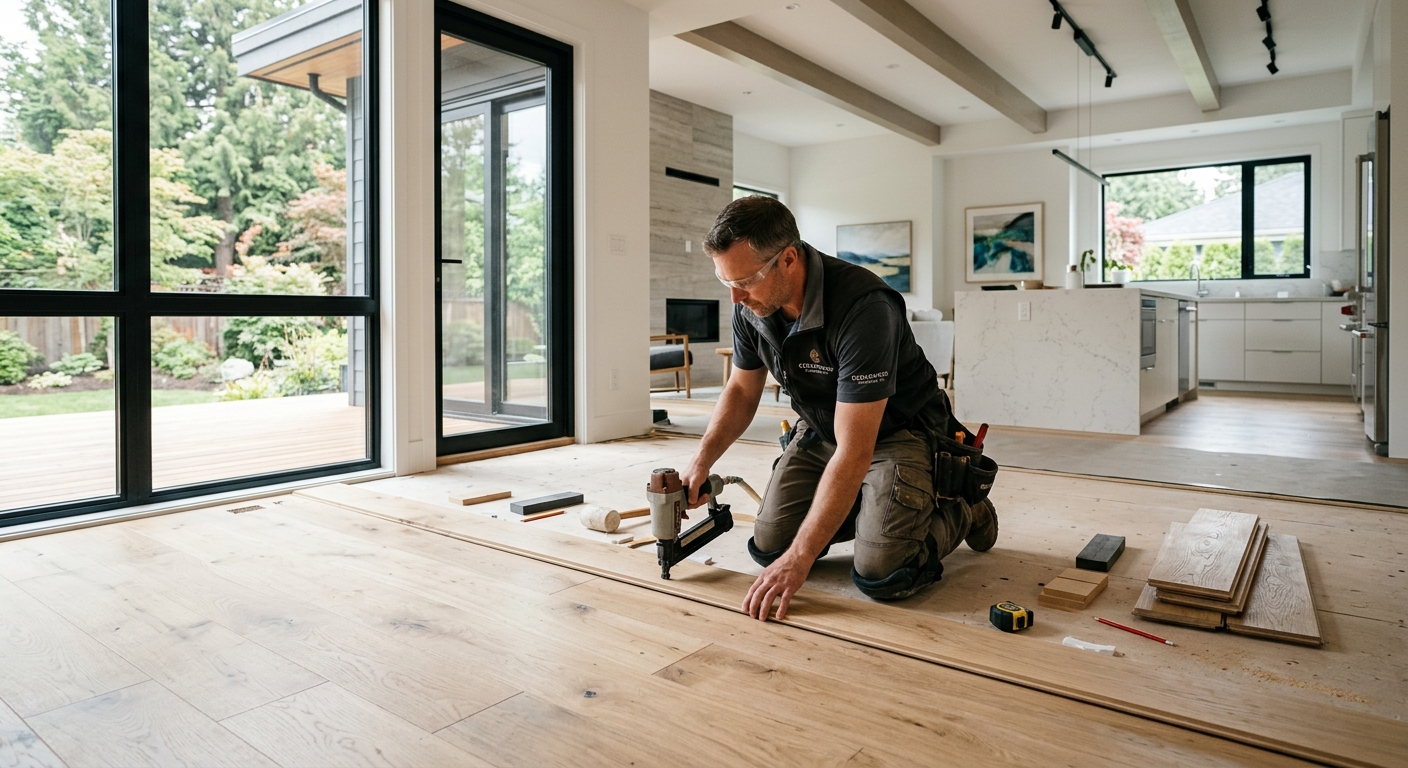
Flooring options and costs in Stony Plain
Stony Plain homeowners usually have two priorities when choosing new flooring: comfort in cold winters and durability through humidity swings, especially where basements can be damp. With 22.1% of local homes built before 1981 (Statistics Canada, 2021 Census), many jobs start with the less-visible work—levelling, patching, or replacing damaged subfloor sections—because older plywood or particleboard can be uneven. In practice, that prep commonly adds about $1.50–$4.00 per sq ft before you even lay the new material. Another practical reality: 73.0% of households are homeowners (Statistics Canada, 2021 Census), so replacements are frequent and contractors are busy responding to a steady mix of main-floor upgrades and finished-bsmnt turnarounds.
In the Edmonton economic region, pricing often sits in the mid range nationally, but the technical requirements can push costs up when moisture testing, underlayment selection, and floor levelling are needed. Below-grade spaces rarely suit solid hardwood because it can expand/contract with indoor humidity and is not designed for typical basement moisture conditions. Instead, engineered wood and luxury vinyl plank (LVP) are widely used because their layered construction tolerates seasonal movement better. LVP is also commonly selected for radiant-heated areas where compatible product specs are followed.
If you’re in a mature neighbourhood like Glen Allan (or similar older, established pockets across Stony Plain), expect higher demand for engineered wood and waterproof LVP—driven by mixed basement performance and uneven subfloors. Use the table below to compare typical material price ranges and the moisture tolerance you can realistically expect.
| Type |
Best Room |
Moisture Resistance |
Lifespan |
Price per sq ft |
| Solid hardwood (nail-down, above grade only) |
Main living areas (no basements) |
Low to moderate (humidity sensitive) |
25–50 years |
$10–$25 |
| Engineered hardwood (float or glue, above + on-grade) |
Main floor, hallways, stairs (if detailed) |
Moderate (better with humidity swings) |
20–35 years |
$9–$20 |
| Laminate (click-lock, above-grade) |
Living rooms, bedrooms |
Low to moderate (not for wet basements) |
10–25 years |
$4–$8 |
| Luxury vinyl plank / LVP (waterproof, any level) |
Kitchen, bathrooms, basement (finished) |
High (waterproof core) |
15–25 years |
$4–$10 |
| Porcelain / ceramic tile |
Kitchen, bathrooms, entries |
Very high (with proper underlayment) |
30+ years |
$5–$15 |
| Carpet (broadloom or modular tile) |
Bedrooms, stairs |
Low (needs dry subfloor) |
7–15 years |
$4–$8 |
Prices are estimates only and vary by project scope, site access and material selection.
What affects the price of flooring in Stony Plain
In Stony Plain, the same flooring “category” can come in 30–50% apart depending on site conditions and how a contractor scopes the job. That difference is often driven by preparation (levelling/patching), moisture control decisions, and labour complexity—not just the material you see on day one. In Edmonton-area homes, indoor humidity swings and the common reality of basement moisture mean solid hardwood is frequently limited to above-grade installs. Solid wood expands and contracts with humidity; if you try to float or glue it over concrete, it also violates typical product performance expectations, and it can cup or gap over time. For that reason, engineered wood and LVP are priced and specified more often for Stony Plain projects because their layered construction and stable cores better tolerate the seasonal movement you get in our climate.
Cold winters also make radiant-compatible choices more common. When in-floor heating is present, LVP (and many engineered hardwood lines) tends to be selected because it can sit over heating systems when installed to manufacturer specs. Older housing stock—like the 22.1% of homes built before 1981 (Statistics Canada, 2021 Census)—often needs subfloor levelling or repair. Preparation alone can add roughly $1.50–$4.00 per sq ft, which is a huge swing on a 500 sq ft project.
Two common Stony Plain examples: (1) a 650 sq ft main-floor install may look “laminate at $4–$8/sq ft,” but if the subfloor needs levelling and underlayment upgrades, the effective cost rises quickly; (2) a basement that’s not fully dry pushes many homeowners away from solid hardwood and laminate toward waterproof LVP—even if LVP isn’t the cheapest line item, it reduces the likelihood of early buckling or repeat work.
| Price Factor |
Why It Matters |
Cost Impact |
| Room area in sq ft |
Material usage and labour time scale with size, plus waste factor |
Direct driver across both materials and install hours |
| Subfloor condition |
Uneven floors require levelling, patching, or additional underlayment |
Often about $1.50–$4.00 per sq ft added prep |
| Moisture / below-grade install |
Basements can hold vapour; products must tolerate it (solid hardwood usually doesn’t) |
May replace cheaper options with engineered/LVP or add moisture control layers |
| Material choice |
Solid hardwood, engineered wood, LVP, and tile have very different material and accessory costs |
Hardwood and tile typically push budgets above laminate/LVP bands |
| Removal and disposal of existing flooring |
Demo time, hauling, and handling old adhesives or underlayment layers |
Can add a noticeable labour premium depending on complexity |
| Stair nosing / transitions |
Stairs and transitions require extra pieces and precise finishing |
Charged per step or per linear foot; can add hundreds to the project |
| Radiant heat compatibility |
Only certain products/underlays can tolerate in-floor heating temperatures |
May limit choices and influence underlayment selection |
| Installation method |
Float vs glue-down vs nail-down affects labour time and subfloor prep needs |
Can shift labour costs up or down even with similar material prices |
Permits & regulations in Alberta
In Alberta, flooring installation by itself generally does not require a building permit. Most everyday projects—like replacing carpet, laying laminate, installing LVP, or installing engineered/solid flooring above grade—are typically straightforward from a permit standpoint. Where permits can come up is when flooring work intersects with electrical, structural, or in-floor systems.
Work that may require a permit includes electrical-related components: for example, modifications to circuits for electric radiant heat, or adjustments tied to in-floor heating equipment. If you’re dealing with structural subfloor repair that changes load paths (uncommon for typical flooring replacement), that can also trigger additional compliance requirements. In condominiums, the bigger constraint is often not “permits” but the condo corporation’s rules on sound transmission. Upper-floor hard flooring may require specific underlay and must align with the building’s sound criteria.
For Stony Plain homeowners, verify your contractor before work starts. Step by step: (1) check the contractor’s Alberta licence/credentials through the relevant provincial licensing information on the appropriate online registry; (2) request a current certificate of liability insurance and confirm it’s active for the project dates; (3) ask for proof of WSIB/WCB coverage (or confirm the coverage status in writing). A proper clearance or clearance letter should match the company name on the contract. For condos, request written board approval and the product/underlay details before installing any hard surface flooring.
Best flooring for each room in your Stony Plain home
Choosing the right flooring by room is the fastest way to avoid expensive mistakes in Stony Plain. Living and dining areas see heavy daily traffic but usually sit above grade, so homeowners commonly choose engineered hardwood or high-quality laminate for a balance of warmth and durability. In bedrooms, carpet is often best for comfort and sound absorption, particularly where you want a softer feel and reduced echo.
In the kitchen, spills and frequent wet-mopping are normal. That’s why luxury vinyl plank (LVP) or large-format porcelain/ceramic tile is popular—both handle water exposure better than solid hardwood and many laminate products. For basements (finished), LVP is the clear winner in most Stony Plain homes because it’s waterproof and tolerates typical below-grade moisture vapour conditions. Solid wood and many laminate floors can fail sooner in these settings due to humidity-driven movement and moisture sensitivity.
Bathrooms should be porcelain or ceramic tile only, with proper wet-area detailing. If you have radiant heat, product compatibility matters: LVP and many engineered wood systems are typically radiant-compatible when installed to the manufacturer’s temperature and underlayment requirements. This reduces the risk of gapping or damage during winter heating demand.
Where price differences become justified: say you compare laminate at roughly $4–$8/sq ft versus LVP at about $4–$10/sq ft. If the alternative is risking a basement replacement, the modest material premium for waterproof LVP can be the cheapest option over time—especially in older homes where moisture is more likely.
| Room |
Best Material |
Why |
Moisture Risk |
Price Band per sq ft |
| Living / dining room |
Engineered hardwood |
Warm look with better humidity tolerance than solid wood |
Low (above grade) |
$9–$20 |
| Master bedroom |
Carpet or engineered hardwood |
Carpet adds comfort and sound reduction; engineered keeps a cleaner look |
Low |
$4–$20 |
| Secondary bedrooms |
Carpet or laminate (higher-grade) |
Comfort underfoot; laminate can handle normal household wear when installed well |
Low |
$4–$8 |
| Kitchen |
LVP or large-format porcelain tile |
Easy cleaning and strong water resistance for spills and daily traffic |
Moderate (incidental wetting) |
$4–$15 |
| Basement (finished) |
LVP (waterproof) |
Best tolerance for below-grade moisture vapour and seasonal indoor swings |
High |
$4–$10 |
| Bathroom |
Porcelain / ceramic tile |
Meets wet-area needs; long service life with proper installation |
Very high |
$5–$15 |
How to choose a flooring contractor in Stony Plain
Picking the right flooring contractor matters in Stony Plain because so much of your result depends on prep work—levelling, moisture handling, and transitions. Start by verifying Alberta coverage: (1) request proof of the contractor’s Alberta licence/credentials (where applicable) and confirm the details on the contract match the business you’re paying; (2) ask for a current certificate of liability insurance showing active coverage; (3) confirm WSIB/WCB coverage and request proof in writing. This protects you if someone is injured on site and helps ensure the company is operating properly.
Next, get 2–3 itemised written quotes that separate labour and materials. You want to see line items for demo/removal, subfloor levelling/patching, underlayment, transitions, stair nosing, and installation. Avoid “lump sum only” quotes unless the scope is extremely clear. Read the scope carefully: what’s excluded (e.g., hauling, floor flattening beyond a set tolerance, moving appliances), is permit work included if required, and is disposal included?
For warranty, ask what the workmanship warranty length is and whether it’s transferable if you sell the home. Also confirm the product’s manufacturer warranty conditions—especially for moisture-related claims in basements. Keep payment practical: never pay more than about 10–15% upfront; use a holdback until the work is complete and inspected. Finally, insist on a written start date and a completion estimate tied to weather and material lead times.
- Ask for proof of liability insurance before signing anything.
- Confirm WSIB/WCB coverage status in writing (not just verbally).
- Request 2–3 itemised quotes with separate labour and materials.
- Verify the scope includes removal and disposal of existing flooring.
- Confirm subfloor levelling/patching is included, and state the tolerance they’ll reach.
- For basements, ask how they handle vapour/moisture control and what product is used.
- Get a written plan for transitions and stair nosing (charged per step/linear foot).
- Ask what underlayment is included (and why) for your specific product and radiant situation.
- Confirm whether the crew will protect vents, walls, and finished surfaces during install.
- Request the warranty terms in writing: workmanship + product manufacturer coverage.
- Set a payment schedule with a holdback until final inspection is complete.
- Get start/completion dates and a contingency plan for material delays.
Red flags I commonly see in Stony Plain: (1) no written scope (only a price), (2) refusing to show insurance/coverage documents, (3) skipping subfloor moisture talk when you’re installing in a basement, (4) pressure to pay most of the job upfront, and (5) vague warranty language like “we stand behind it” without timelines or exclusions.
Frequently asked questions — flooring in Stony Plain
Hardwood vs laminate vs vinyl plank — which is best?
In Stony Plain, the “best” choice depends on where you’re installing and how moisture behaves. Solid hardwood is beautiful but typically best for above-grade rooms only because it’s humidity sensitive; basements often cause problems in mature neighbourhood housing stock. Laminate at roughly $4–$8/sq ft is a budget-friendly option for living areas when the subfloor stays dry, but it’s not ideal for recurring basement vapour or wet-mopping. Luxury vinyl plank (LVP) usually wins for mixed conditions because it’s waterproof and handles Edmonton-region humidity swings better—its typical material band is about $4–$10/sq ft. If you want a long-term look with better tolerance than solid, engineered hardwood is often the compromise.
What flooring is best for a Stony Plain basement?
For most Stony Plain basements, LVP is the practical best choice because it’s waterproof and tolerant of common below-grade moisture vapour conditions. In older homes—where 22.1% were built before 1981 (Statistics Canada, 2021 Census)—it’s especially common to see uneven slabs, older underlay, or intermittent dampness. Solid hardwood often isn’t recommended for these conditions because it can expand/contract and isn’t designed for typical basement moisture. Laminate can also be risky if moisture gets into the system at the edges. If you want a “wood look,” engineered can work in some cases, but it still depends on dryness and the contractor’s moisture-handling approach. For many homeowners, paying within the LVP band (about $4–$10/sq ft) is cheaper than dealing with early replacement.
Can I install hardwood over concrete?
It depends on the type of wood and the installation method, but you should be cautious. In general, nail-down solid hardwood is not the right approach over typical concrete because it needs a proper nailed subfloor and isn’t designed for concrete slab conditions. Even when someone suggests it, humidity and slab moisture can lead to gapping or cupping. If you want a hardwood look over concrete, engineered hardwood is usually the better choice, because many products are designed to be installed on-grade with the right underlayment or glue-down system. In basements, “concrete over vapour” conditions are the bigger issue, which is why LVP often becomes the safer waterproof selection. A qualified contractor should assess moisture, check flatness, and match the method to the manufacturer’s spec before any wood goes down.
How long does flooring installation take?
For Stony Plain homes, most timelines come down to surface prep and the number of transitions (hallways, doorways, and stairs). A small room (for example, a bedroom or entry) can often be completed in about a day once the subfloor is ready. Whole-main-floor installs frequently take several days, especially if levelling/patching is required—remember that older homes are more likely to need it, and that added prep can add days. Basements can be longer because moisture control and underlayment details matter, and because demo/removal can uncover surprises. Tile generally takes more time due to layout and curing considerations. If radiant heating is involved, your installer needs to confirm compatibility and follow temperature guidelines. Always request an estimated start date and completion schedule in writing before work begins.
What flooring works with radiant heat?
Radiant-compatible flooring options are typically those that the manufacturer explicitly approves for in-floor heating use. In the Edmonton-area climate, contractors commonly recommend LVP and many engineered hardwood systems over radiant heat because they’re designed to tolerate temperature changes when installed to spec. Most tile systems are also a strong choice for radiant heating since they conduct heat well. Laminate can work only if the specific product is rated for radiant applications and the recommended underlayment is used—otherwise the insulating effect can reduce performance or void warranty. In Stony Plain, make sure your quote identifies whether you have hydronic or electric radiant heat and includes the product’s radiant approval details. That’s how you protect the installation and avoid warranty headaches later.
Engineered vs solid hardwood — what's the difference?
Solid hardwood is one piece of wood (or a single lumber layer) and is typically installed nail-down over a suitable subfloor. Because it responds strongly to humidity, solid hardwood is usually limited to above-grade installations in Stony Plain where moisture and humidity can be controlled. Engineered hardwood is made of a layered wood core with a real hardwood face, which helps it stay more dimensionally stable through seasonal indoor swings. That stability is why engineered is often a better fit than solid for homes with occasional basement humidity or for installations near exterior walls. In practice, homeowners often compare engineered within the typical higher range (often around $9–$20/sq ft) against solid hardwood (often around $10–$25/sq ft for material). The right pick depends on your room location, slab/subfloor conditions, and the installer’s moisture and flatness prep.