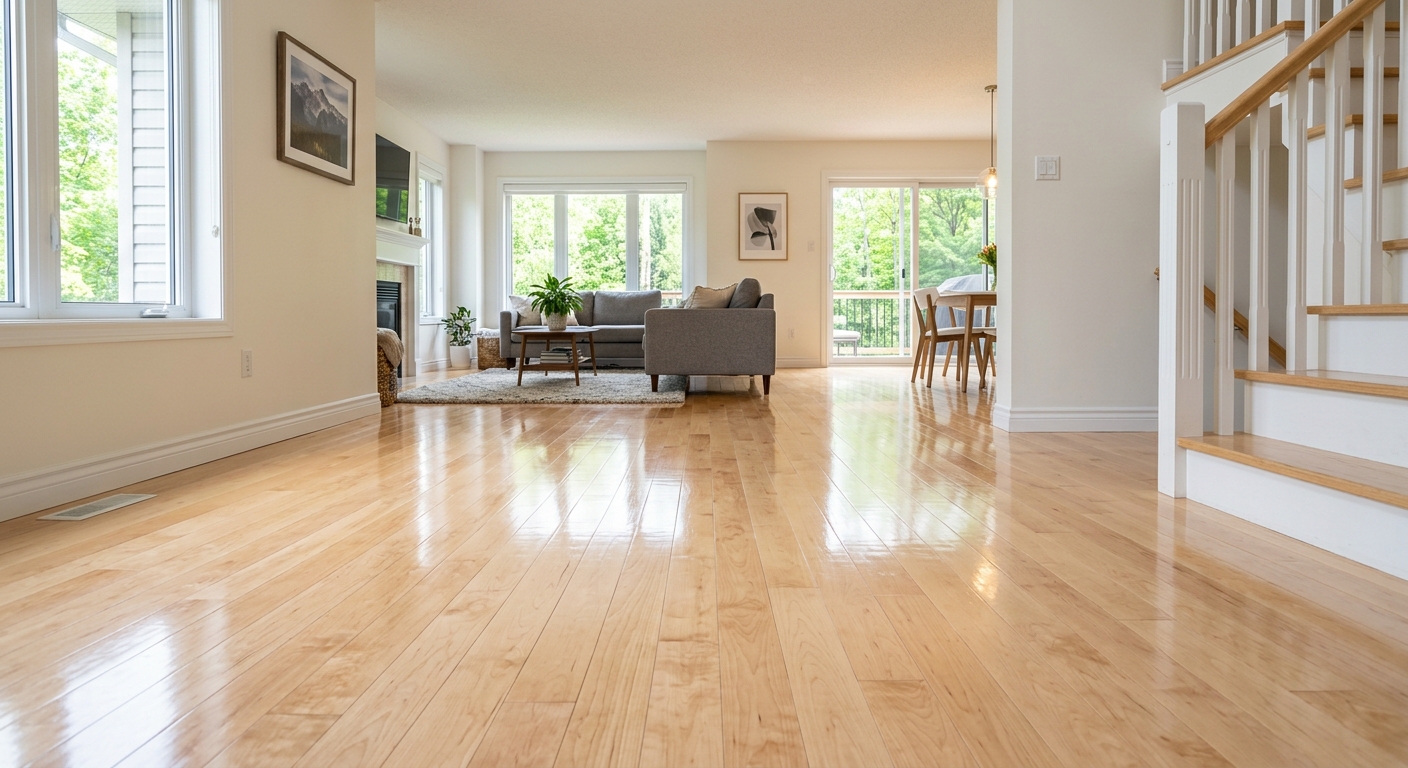
Flooring options and costs in Victoria West
Victoria West homeowners usually start with what feels right underfoot, then quickly land on what works with the local weather and older housing stock. With a population of 8,365 in the area (Statistics Canada, 2021 Census), demand is steady, and trades are often busiest in neighbourhood pockets like James Bay adjacent corridors and the walkable service lanes around downtown Victoria West. On Vancouver Island and the Coast, indoor relative humidity can drift outside the ideal 35–55% range, and that’s one reason subfloors and materials need to handle expansion and contraction without cupping or gapping. In older homes, it’s also common to find uneven plywood or patchy concrete—subfloor levelling and repair often becomes a line item before any floor goes down, which can easily add about $1–$3 per sq ft depending on how much correction is needed.
Prices also vary because contractor availability and scheduling affect labour rates, and coastal moisture conditions push many households toward dimensionally stable products. For below-grade spaces and damp basements, engineered hardwood and luxury vinyl plank (LVP) are usually the practical choices over solid hardwood. For main floors, solid hardwood is still a strong option where conditions are stable, but it’s not our go-to on concrete slabs. Because colder stretches on the Island and the rise of electrically heated homes are common, radiant-compatible flooring (LVP, many laminates, tile, and many engineered woods) has become a frequent request. Use the table below to compare typical installed price ranges before you book measurements in Victoria West.
| Type |
Best Room |
Moisture Resistance |
Lifespan |
Price per sq ft |
| Solid hardwood (nail-down, above grade only) |
Living rooms, hallways (stable moisture) |
Low to moderate (humidity-sensitive; avoid basements and concrete) |
25–60 years |
$9 – $18 |
| Engineered hardwood (float or glue, above + on-grade) |
Main floors over wood subfloors or properly prepped concrete |
Moderate to high (layered core manages humidity better) |
20–40 years |
$10 – $16 |
| Laminate (click-lock, above-grade) |
Bedrooms, offices (dry conditions) |
Low to moderate (water-resistance varies by core and underlayment) |
10–25 years |
$5 – $10 |
| Luxury vinyl plank / LVP (waterproof, any level) |
Kitchen, entry, finished basement |
High (waterproof cores handle spills and vapour risk better) |
15–25 years |
$6 – $12 |
| Porcelain / ceramic tile |
Bathrooms, kitchens, laundry, foyers |
Very high (properly installed with correct membranes) |
30–50+ years |
$12 – $25 |
| Carpet (broadloom or modular tile) |
Bedrooms, stairs, rec rooms |
Low to moderate (can hold moisture if ventilation is poor) |
8–15 years |
$4 – $9 |
Prices are estimates only and vary by project scope, site access and material selection.
What affects the price of flooring in Victoria West
Two quotes for the “same” flooring can differ by 30–50% across Vancouver Island and the Coast because Victoria West projects don’t happen on ideal subfloors, and coastal conditions change the prep work that’s required. Labour availability and scheduling also matter: when crews are booked, timelines can shift, and that often affects how a job is staged (especially if there’s levelling, dust control, or multiple trades involved). On Vancouver Island, the indoor humidity swing you feel near windows and exterior walls can push solid hardwood to react, so many homeowners choose engineered hardwood or LVP to reduce callbacks. That shift alone can change what’s included in your quote.
Technically, humidity and below-grade moisture are the key drivers. Solid hardwood expands and contracts with humidity and can’t be glued or floated over concrete reliably—so it’s a poor fit for basements and for chronic moisture risk. Engineered hardwood and luxury vinyl plank handle humidity better; LVP is typically waterproof and performs well on any level when installed with proper underlayment and moisture management. Colder pockets and electrically heated homes also favour radiant-compatible options, which usually rules out most solid hardwood and some laminate products. Meanwhile, older Victoria West housing stock frequently needs levelling or repair; that commonly adds about $1–$4 per sq ft before flooring install.
Concrete examples from Victoria West: if you’re replacing carpet in a 450 sq ft living/dining area, the floor base prep may be minimal, keeping you closer to the $5–$10 laminate/vinyl plank range. But if the same footage sits over uneven plywood or has damaged underlayment, levelling can add several dollars per sq ft—making engineered hardwood at roughly $9–$16 feel more “expensive” even though it may include more stability benefits for humidity. In a basement, tile and LVP usually win on practicality—while solid hardwood often requires extra moisture controls or simply isn’t recommended.
| Price Factor |
Why It Matters |
Cost Impact |
| Room area in sq ft |
More square footage increases material quantities and install labour time |
Direct: 100 sq ft can swing a total by hundreds, especially with tile or stairs |
| Subfloor condition — levelling or repair needed before install |
Uneven plywood, patchy concrete, or loose subfloors require correction |
Often adds $1–$4 per sq ft depending on severity |
| Moisture / below-grade install — rules out solid hardwood |
Condensation and vapour can damage moisture-sensitive flooring types |
May switch you to engineered hardwood or LVP, changing material costs |
| Material choice — solid vs. engineered vs. LVP vs. tile |
Different wear layers, cores, and installation systems vary in price and complexity |
Can shift you across $4–$9 carpet, $5–$10 laminate/vinyl, or $12–$25 tile bands |
| Removal and disposal of existing flooring |
Tearing out old floors adds labour; disposal fees can apply |
Commonly adds a noticeable per-room total, especially with underlay glued down |
| Stair nosing / transitions — charged per step or per linear foot |
Stairs and transitions take extra detailing and matching |
Can add hundreds in homes with multiple landings |
| Radiant heat compatibility — limits material options |
Heat transfer needs specific underlay and floor construction tolerances |
May add approved underlayment or limit cheaper material choices |
| Installation method — float vs. glue-down vs. nail-down |
Method affects labour hours, substrates, and adhesive prep |
Glue-down and nail-down can cost more than floating, depending on prep |
Permits & regulations in British Columbia
In British Columbia, the flooring installation itself typically does not require a building permit. However, associated work can trigger permitting—especially when you’re changing building systems. For example, structural subfloor repair, moisture remediation that involves major substrate replacement, or any work that impacts in-floor heating circuits may require electrical permits (or involve work that must be done by appropriately registered trades). If you’re adding or modifying radiant heat controls or wiring, that’s the point where permits and electrical safety requirements can come into play. In condominiums, the bigger “rule” is usually the building’s own bylaws and sound-transmission requirements: many buildings enforce specific underlay types for hard flooring to protect lower units, and they may require board approval before work starts.
Step-by-step in Victoria West: first, ask your contractor for their British Columbia licence information (where applicable to their trade scope) and confirm it matches the company you’ll be dealing with on site. Second, request a certificate of liability insurance and verify the coverage limits are appropriate for flooring work and any subcontractors. Third, ask for confirmation of coverage for workplace safety—WSIB/WCB clearance (or the equivalent documentation the employer provides). Finally, in condos, request board approval in writing and keep copies of the approval, product specs, and underlayment plan. This keeps the project moving and protects you if a neighbour complaint or inspection comes up mid-install.
Best flooring for each room in your Victoria West home
Choosing the right flooring in Victoria West is less about trends and more about humidity tolerance, traffic patterns, and comfort. In living and dining rooms, engineered hardwood or high-quality laminate is a common balance: it delivers a warmer feel than tile while handling normal day-to-day humidity better than solid hardwood. For bedrooms, carpet remains a favourite in British Columbia because it feels great underfoot and helps with sound. In main kitchens, luxury vinyl plank (LVP) is often the best value—water resistance makes day-to-day spills and coastal moisture swings easier to manage. If you prefer a premium look, large-format porcelain tile also works well in kitchens, but expect a higher installed cost due to prep, layout, and grout detailing.
For basements (finished), LVP is usually the clear winner on Vancouver Island because it’s waterproof and more tolerant of vapour and below-grade conditions. Solid hardwood and many laminates can struggle if moisture management isn’t perfect. In bathrooms, stick with porcelain or ceramic tile; it’s designed for wet areas when installed with the right membrane and proper sealing. More homeowners are also asking about radiant heat compatibility in rooms with in-floor heating—most LVP, many laminates, tile, and many engineered woods can work with radiant systems when installed with the correct underlayment and temperature controls.
Example: upgrading a 300 sq ft living area from laminate (often in the $5–$10 per sq ft band) to engineered hardwood (often landing around $9–$16 installed) may be justified if you want longer service life and better stability through humidity swings—especially near exterior walls.
| Room |
Best Material |
Why |
Moisture Risk |
Price Band per sq ft |
| Living / dining room |
Engineered hardwood |
Comfort and warmth with better stability than solid in coastal humidity |
Moderate (humidity swings near windows) |
$9 – $16 |
| Master bedroom |
Carpet or engineered hardwood |
Carpet adds comfort and sound control; engineered holds up well in daily humidity |
Low to moderate |
$4 – $16 |
| Secondary bedrooms |
Laminate (quality click-lock) or carpet |
Budget-friendly durability and easy cleaning; carpet softens foot traffic |
Low |
$5 – $12 |
| Kitchen |
Luxury vinyl plank (LVP) or porcelain tile |
LVP handles spills; tile resists moisture and wipes clean |
Moderate (spills and steam) |
$6 – $25 |
| Basement (finished) |
LVP |
Waterproof core and better tolerance for below-grade vapour conditions |
High |
$6 – $15 |
| Bathroom |
Porcelain / ceramic tile |
Built for wet areas; durable when sealed and properly membrane’d |
Very high |
$12 – $25 |
How to choose a flooring contractor in Victoria West
Start by verifying your contractor’s credentials before you pay for materials. In British Columbia, flooring often involves trades working on or around moisture management and subfloor correction, so ask for their certificate of liability insurance and confirm they’re insured for the work they’ll perform. Then request proof of WSIB/WCB coverage (or the employer clearance documentation they provide) to confirm workers are covered on the job site. If the scope includes electrical work for radiant heating controls, make sure the electrician is properly authorized for that portion.
Next, get 2–3 itemised written quotes. “Itemised” matters: you want a labour line and a materials line, including underlayment, patch/level products, removal and disposal, and any transitions or stair nosing. Avoid lump-sum-only quotes that don’t explain what’s excluded (for example: dust containment, subfloor moisture testing, or whether levelling is included beyond minor smoothing). Confirm whether disposal is included and if any permits are required for associated electrical or structural repairs.
Warranty should be specific. Ask for the workmanship warranty length and whether it’s transferable if you sell your home. Separate that from the product/manufacturer warranty and confirm the installation requirements that keep that warranty valid (like approved underlay for radiant heat compatibility). On payment schedule, never pay more than 10–15% upfront; hold back a portion until the final inspection and cleanup are complete. Finally, get your start date and completion estimate in writing so your family can plan around coastal-season schedules and subfloor prep time.
- Confirm liability insurance certificate and ensure it covers the specific scope (labour on your address).
- Request WSIB/WCB clearance documentation before work begins.
- Get a written quote with itemised labour and materials (not just “installed price”).
- Ask if subfloor levelling/repair is included, and define what happens if it’s worse than expected.
- Verify moisture testing or moisture-management steps are discussed for basements and slabs.
- Confirm radiant heat compatibility: approved underlayment and temperature control plan.
- Check disposal: what’s removed, how it’s transported, and whether fees are included.
- Budget for transitions: ask pricing per linear foot and per stair step if stairs are involved.
- Inspect the warranty details: labour term, product term, and exclusions.
- Agree on a payment schedule with a holdback until job completion.
- Confirm schedule commitments in writing (start date and target completion date).
- Request references from similar Victoria West projects (older homes, humidity-sensitive installs).
Red flags I commonly see with flooring contractors in Victoria West: quotes that aren’t itemised, no discussion of moisture/subfloor conditions, vague warranty wording, promises that contradict manufacturer installation requirements (especially for radiant heat), and contractors asking for large upfront payments without a signed scope and schedule.
Frequently asked questions — flooring in Victoria West
What flooring works with radiant heat?
In British Columbia (including Victoria West), radiant heat compatibility is about the whole system: the floor covering, the underlayment, and how the radiant is managed. In general, LVP, many laminates, tile, and many engineered hardwood products are compatible when installed with manufacturer-approved underlayment and temperature limits. Solid hardwood is often restricted because moisture and heat movement can create gapping or cupping if the product and install method aren’t within strict tolerances, and it’s typically not recommended over concrete slabs with radiant circuits unless the spec allows it. A good contractor will ask whether your radiant is electric or hydronic and will follow the product’s installation instructions. As a budgeting reference, LVP often lands in the $6–$12 per sq ft band installed, while tile may be more like $12–$25 per sq ft depending on prep and layout.
Engineered vs solid hardwood — what's the difference?
Solid hardwood is one piece of wood (installed typically nail-down over an appropriate above-grade subfloor). Engineered hardwood uses layered wood construction with a real hardwood veneer on top. In Victoria West’s coastal humidity, engineered hardwood usually handles expansion and contraction more consistently than solid because the layered structure reduces movement. That’s why engineered is commonly chosen for on-grade installations and sometimes over properly prepped concrete, while solid is usually reserved for stable main-floor conditions. Longevity can be excellent with both, but solid’s performance depends heavily on consistent indoor humidity and proper subfloor conditions. If your home has a basement with moisture risk or a concrete slab, engineered hardwood is often the safer “wood look” option to avoid issues. Budget-wise, engineered often sits around $9–$16 per sq ft installed, while solid commonly ranges $9–$18 per sq ft depending on the plank and labour complexity.
Do I need to level my subfloor first?
In Victoria West, it’s very common to need subfloor prep before installing new flooring—especially in older homes where plywood may be wavy, or concrete may be uneven. Whether you “need” levelling depends on the existing floor flatness, but contractors should measure before they recommend a system. Small low spots can often be corrected with patch/skim products, while larger dips, loose underlayment, or significant deflection may require more labour and materials. Levelling is a major reason quotes can differ by 30–50% for the same room. Practically, plan for an extra $1–$4 per sq ft for levelling/repair when the substrate isn’t ready, particularly if you’re moving to tile or locking down more demanding materials. If you’re considering LVP, engineered hardwood, or laminate, ask how they’ll address flatness standards and whether it’s included in the written scope.
What's the most durable flooring for pets and kids?
For pets and kids in Victoria West, durability means impact resistance, scratch resistance, and how the floor handles spills without swelling. Luxury vinyl plank (LVP) is often the top practical choice because it’s typically waterproof and more forgiving if something is dropped or a spill happens near sinks or during coastal humidity swings. High-quality LVP in the $6–$12 per sq ft band installed can outperform many laminates in moisture tolerance. If you want a premium, porcelain or ceramic tile is extremely durable too (often $12–$25 per sq ft installed), but it’s harder underfoot and can be noisier unless you plan sound control. Carpet can be comfortable for kids, but it’s less durable long-term with pets unless you’re diligent about cleaning and moisture. For the best results, ask your contractor about wear layer thickness for LVP, and ensure the underlayment and subfloor are prepped so the floor doesn’t flex.
How do I choose flooring for humidity in Victoria West?
Humidity choice is one of the biggest decision points on Vancouver Island and the Coast because indoor relative humidity can fluctuate beyond the ideal range, and older housing can have vapour pressure issues. For Victoria West, the rule of thumb is: solid hardwood is moisture-sensitive and is usually best for stable above-grade rooms. Engineered hardwood and LVP handle humidity swings better; LVP is typically waterproof and is the preferred option for basements or rooms with chronic dampness. Laminate can work in dry rooms, but it’s not always the best choice where moisture vapour is a concern, especially if seams can be stressed. If your home has a basement or concrete slab, prioritizing engineered or LVP helps protect your investment and reduces the chance of gapping or cupping. Budget-wise, engineered hardwood commonly lands around $9–$16 per sq ft installed, while LVP often sits in the $6–$12 band—frequently making LVP both the practical and cost-effective option when moisture risk is real.
Do condos restrict hard flooring?
Yes—condos in British Columbia often restrict or regulate hard flooring because of noise transmission. Even when flooring installation itself typically doesn’t require a permit, building corporations can enforce rules related to sound transmission (STC/IIC ratings). In practice, that means you may need a specific underlay for hardwood or LVP, and you may need board approval before work starts. For Victoria West condo owners, the most important step is to review the condo declaration and ask for the approval process in writing. Provide product details (floor type, underlayment spec, and installation method) so the corporation can confirm it meets their requirements. Skipping this can lead to stop-work orders or costly rework after the fact. If your contractor is experienced locally, they should help you assemble documentation for the board. This is another reason itemised quotes matter—underlay selection can change both price and compliance.