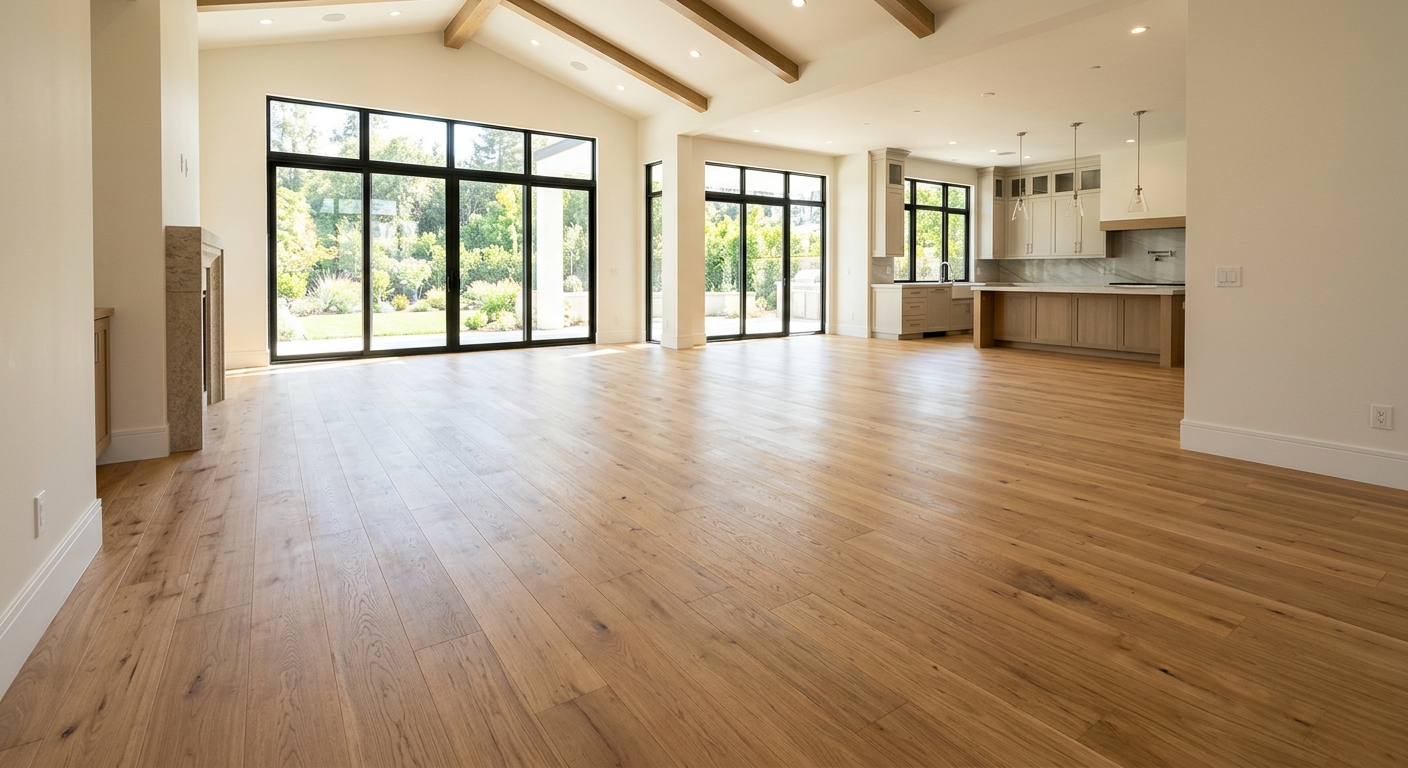
Flooring options and costs in Walnut Grove
In Walnut Grove, homeowners usually start by weighing which flooring can handle Lower Mainland–Southwest conditions without surprises. With a population of 25,683 (Statistics Canada, 2021 Census), the area sees steady turnover of older homes and busy renovations, particularly in family-friendly pockets where school schedules and daily traffic make durable floors a priority. Cost swings in this region are largely tied to the reality that many existing subfloors—often plywood over older joists or concrete slab-on-grade—aren’t perfectly flat. In practice, that means levelling and patching can be a real line item, and it’s common to see roughly $1–$3 per sq ft added just to get the base ready. Lower Mainland humidity swings also play a role: during wetter winter and shoulder seasons, moisture vapour can move through slab concrete, so contractors generally avoid solid hardwood below grade. That’s also why labour demand stays high around Fraser Highway and the surrounding Walnut Grove residential blocks—crews are frequently booked for multi-room installs where timing matters.
Because Greater Vancouver labour rates are among the highest in Canada, your “same room” price can still vary depending on how much preparation is needed and how complex the install is. The good news is you still have several strong options: solid hardwood performs best above grade with correct gaps and humidity control; engineered hardwood and LVP handle dampness far more confidently; and tile is the most forgiving where water is expected. Below is a practical comparison of typical price ranges you’ll see for materials and installation scope in Walnut Grove, followed by how to interpret those numbers.
| Type |
Best Room |
Moisture Resistance |
Lifespan |
Price per sq ft |
| Solid hardwood (nail-down, above grade only) |
Living / dining |
Moderate when above grade and humidity is controlled; not recommended below grade |
25–50 years |
$9–$18 |
| Engineered hardwood (float or glue, above + on-grade) |
Living / dining, bedrooms (not bathrooms) |
High—built to tolerate normal indoor humidity swings and on-grade conditions |
20–35 years |
$9–$16 |
| Laminate (click-lock, above-grade) |
Bedrooms, hallways |
Low to moderate—good for spills on the surface, but not for persistent moisture |
10–25 years |
$4–$10 |
| Luxury vinyl plank / LVP (waterproof, any level) |
Kitchen, basement (finished) |
Very high—waterproof core handles vapour and minor subfloor imperfections better |
15–25 years |
$5–$12 |
| Porcelain / ceramic tile |
Bathrooms, entry, kitchen |
Very high—excellent against water and easy cleaning |
25–50 years |
$10–$20 |
| Carpet (broadloom or modular tile) |
Bedrooms, stairs (for comfort) |
Low to moderate—protect from moisture and manage humidity to avoid odours |
8–15 years |
$6–$12 |
Prices are estimates only and vary by project scope, site access and material selection.
What affects the price of flooring in Walnut Grove
In Walnut Grove and the wider Lower Mainland–Southwest, you can easily see the same flooring concept quoted 30–50% apart across British Columbia. The reason is rarely “brand mark-up”—it’s usually preparation, subfloor correction, and how the contractor handles moisture risk and transitions. For example, a solid hardwood install above grade can look straightforward, but Lower Mainland humidity swings can make installers more cautious with acclimation, expansion gaps, and careful layout around doorways. Below grade, moisture vapour wicking through concrete becomes the deciding factor: solid hardwood can expand and contract with humidity and generally can’t be glued or floated over slab the way engineered wood or LVP can. In colder inland pockets (and where in-floor radiant heating is present in newer builds), material selection can also change, because many solid hardwood and some laminate products aren’t rated for higher surface temperatures.
Older regional housing stock is another cost driver. It’s common to find uneven plywood, patchwork repairs, or concrete that needs flattening, so levelling and repair often adds roughly $1–$4 per sq ft to the final ticket. In one Walnut Grove scenario, moving from a basic laminate plan (say $4–$10 per sq ft) to LVP (within the $5–$12 range) may cost only a bit more on paper, but the bigger savings comes from skipping complicated moisture mitigation on the slab. Conversely, upgrading from engineered hardwood at around the $9–$16 range to solid hardwood can raise costs when the job requires extra attention to flatness and humidity control, and it’s typically restricted to above grade. Finally, labour availability in the Lower Mainland can matter: more complex stair work and transitions can push labour hours higher, and that’s where quotes diverge quickly.
| Price Factor |
Why It Matters |
Cost Impact |
| Room area in sq ft |
Materials and labour scale directly with total square footage, including cuts and waste |
Higher area typically reduces waste per sq ft, but labour still increases overall |
| Subfloor condition — levelling or repair needed before install |
Uneven surfaces require patching or flattening for click-lock, floating, and plank installs |
Often adds roughly $1–$4 per sq ft depending on scope and materials |
| Moisture / below-grade install — rules out solid hardwood |
Lower Mainland moisture vapour can move through slab concrete, affecting wood stability |
May increase cost via moisture barrier prep; solid hardwood below grade is typically avoided |
| Material choice — solid vs. engineered vs. LVP vs. tile |
Different products handle humidity and surface temp differently, changing install method and underlay |
Shifts you across common local bands (hardwood $9–$18, LVP/laminate $4–$12, tile $10–$20) |
| Removal and disposal of existing flooring |
Demo time, haul-away and subfloor cleanup can be a large labour component |
Can add a significant line item in multi-room renovations, especially if old underlay is stuck down |
| Stair nosing / transitions — charged per step or per linear foot |
Stairs require extra labour for finishing edges, matching heights, and safe treads |
Costs can rise fast if you’re doing staircases plus multiple room transitions |
| Radiant heat compatibility — limits material options |
Surface temperature can affect expansion/contraction, adhesive selection and warranty terms |
May add cost by steering toward engineered wood, LVP, tile, or higher-rated laminate |
| Installation method — float vs. glue-down vs. nail-down |
Method dictates materials (adhesives/underlay) and labour time and quality control |
Glue-down and nail-down often take longer; floating typically costs less when subfloors are good |
Permits & regulations in British Columbia
In British Columbia, installing new flooring itself typically does not require a building permit. What can trigger permits is the related work around the flooring—especially if you’re touching electrical systems or correcting building components. For example, moisture remediation that involves engineered structural repairs, in-floor heating work, or changes tied to an electrical circuit can require electrical permits. If you have radiant heating and you’re modifying or extending circuits (not just replacing the flooring surface), confirm requirements with your electrician and contractor before the job starts.
Condominiums add an extra layer: the corporation’s by-laws and sound-transmission rules (often using STC/IIC expectations) can restrict underlay choices and sometimes limit certain hard-surface installations on upper floors. In practice, you’ll want written confirmation of approved underlay and installation approach before anyone lays engineered hardwood, laminate, tile, or LVP in a multi-unit building. Always request approval in writing and keep the email trail.
To protect yourself in Walnut Grove, verify three things before signing: (1) the contractor’s British Columbia licence or registration status (check the relevant provincial registry online), (2) liability insurance—ask for a current certificate of insurance showing you’re named as additionally insured where applicable, and (3) WSIB/WCB coverage—request proof of clearance or current coverage documentation. If they can’t provide these documents promptly, that’s a strong sign you should keep shopping.
Best flooring for each room in your Walnut Grove home
Picking the right flooring in Walnut Grove comes down to moisture exposure, foot traffic, and comfort—especially because the Lower Mainland–Southwest climate brings indoor humidity swings. Living and dining rooms tend to be best with engineered hardwood or high-quality laminate: they give you warmth and a cleaner look than carpet while coping better with normal seasonal movement. In master bedrooms, carpet is still a comfort winner for sound and underfoot feel, but engineered hardwood is also a practical upgrade if you want an easier-clean surface. For kitchens, choose luxury vinyl plank (LVP) or large-format porcelain tile. Those surfaces handle splashes and cleaning routines well, and LVP is forgiving if the subfloor isn’t perfectly flat.
Basements are where the decision matters most. In Walnut Grove, many slab-on-grade areas see moisture vapour wicking through concrete in wet seasons, and solid wood plus most laminates can struggle. LVP is the clear choice for finished basements because it’s waterproof and installed to tolerate minor subfloor imperfections and humidity. Bathrooms should be porcelain or ceramic tile only, with proper waterproofing details at transitions and around wet-area penetrations. If you’re installing over radiant heat (common in newer builds), engineered wood, LVP, and tile are typically the safer pathways; solid hardwood needs very careful specification and isn’t always the best fit.
Example: if you’re budgeting around $9–$16 per sq ft for engineered hardwood versus $10–$20 for tile, it’s usually not worth paying for tile everywhere—tile shines where water is expected (bathrooms and often kitchen backsplashes/entries), while engineered wood or LVP delivers the best balance of comfort and durability for daily living.
| Room |
Best Material |
Why |
Moisture Risk |
Price Band per sq ft |
| Living / dining room |
Engineered hardwood |
Warm look with better stability through Lower Mainland humidity swings than solid |
Low to moderate (controlled indoor conditions) |
$9–$16 |
| Master bedroom |
Carpet or engineered hardwood |
Carpet offers comfort and sound control; engineered wood is easier to maintain |
Low (unless damp storage or poor ventilation) |
$6–$12 (carpet) or $9–$16 (engineered) |
| Secondary bedrooms |
High-quality laminate or engineered hardwood |
Good value for family use; holds up to typical day-to-day traffic |
Low (manage spills promptly) |
$4–$10 (laminate) or $9–$16 (engineered) |
| Kitchen |
LVP or large-format porcelain tile |
LVP is forgiving for water and everyday cleaning; tile is the most water-resistant |
Moderate to high (spills, sink activity) |
$5–$12 (LVP) or $10–$20 (tile) |
| Basement (finished) |
LVP (waterproof) |
Handles moisture vapour and below-grade conditions far better than solid wood or most laminates |
High (seasonal humidity and slab vapour risk) |
$5–$12 |
| Bathroom |
Porcelain / ceramic tile |
Best long-term performance with water exposure when installed with proper details |
Very high (direct and splash water) |
$10–$20 |
How to choose a flooring contractor in Walnut Grove
Choosing the right contractor in Walnut Grove starts with verifying the basics—because the “small” items (coverage gaps, no insurance, missing moisture prep) can become expensive after installation. Ask for their proof of British Columbia licensing/registration status (depending on the work they perform), a current certificate of liability insurance, and confirmation of WSIB/WCB coverage. Where to look: request the certificate of insurance directly (or an updated COI), and ask for evidence of WSIB/WCB clearance so you know you’re not taking on risk as the homeowner. Reputable firms provide these without pushing back.
Next, get 2–3 itemised written quotes. You want labour and materials broken out line-by-line, not a single lump sum that hides prep scope. Confirm what’s included: subfloor levelling or patching, moisture barrier/underlay type, stair nosing and transitions, and whether removal/disposal of existing flooring is included. Also clarify if permits are handled (where applicable for electrical or radiant work) and whether the quote assumes moving appliances or protecting cabinets.
Warranty matters too. Ask for the workmanship warranty length, the product manufacturer warranty terms, and whether warranties are transferable if you sell your home. For payment schedule, never pay more than about 10–15% upfront; hold back a portion until completion and final walkthrough. Finally, ask for a written timeline with a start date and realistic completion estimate—Lower Mainland schedules can shift, but you should still get a planned schedule in writing.
- Ask who will be on-site daily and whether they sub-contract the install.
- Confirm they will acclimate wood products onsite (engineered/solid) per manufacturer requirements.
- Verify moisture testing approach for basements (slab condition, vapour control plan).
- Require an itemised quote for underlay, adhesives, leveling compounds and transitions.
- Check that stair labour and stair nosing are priced per step or per linear foot, not “included” loosely.
- Make sure waste factor and cut allowances are clearly stated.
- Confirm underlay type for laminate and sound requirements for condo work.
- Request details on transitions at doorways, hallways and between different floor heights.
- Ask how they protect door jambs, drywall edges and railings during install.
- Get the cleanup plan: vacuuming, haul-away, and final debris removal.
- Confirm warranty claim process and what documentation you must keep.
- Agree on a payment schedule aligned to milestones, not just “half now.”
Red flags to watch in Walnut Grove: (1) they won’t provide insurance/coverage documentation, (2) they dismiss basement moisture concerns without a vapour plan, (3) they quote solid hardwood below grade or over slab without a humidity and moisture strategy, (4) they avoid a written itemised scope (especially removal, levelling and underlay), and (5) they demand large upfront deposits or won’t hold a completion holdback.
Frequently asked questions — flooring in Walnut Grove
Hardwood vs laminate vs vinyl plank — which is best?
In Walnut Grove and the Lower Mainland–Southwest, the “best” choice depends on moisture and level (especially whether you’re above grade or dealing with slab vapour). Solid hardwood is a beautiful option for living and dining when installed above grade with proper expansion gaps, but it’s generally not the right call for basements. Laminate (click-lock) can be a cost-effective look for bedrooms and hallways, typically sitting in the $4–$10 per sq ft range, but it’s more vulnerable to sustained moisture. Luxury vinyl plank (LVP) is usually the safest all-around product: it’s waterproof and handles humidity better, which is why it’s a common pick for kitchens and finished basements. In local budgeting terms, LVP often lands in the $5–$12 per sq ft range and can save money when subfloor prep for moisture mitigation is simpler than with wood.
What flooring is best for a Walnut Grove basement?
For most Walnut Grove basements, LVP is the top recommendation. The Lower Mainland–Southwest climate can create indoor humidity swings, and slab-on-grade areas often see moisture vapour wicking through concrete in wet seasons. That’s exactly where solid hardwood struggles: it expands and contracts with humidity and isn’t suited to below-grade moisture conditions. Engineered hardwood can work on grade in many cases, but for true below-grade spaces with moisture risk, LVP’s waterproof core and tolerance for vapour typically makes fewer assumptions. If you’re comparing prices, you might see engineered wood in the $9–$16 per sq ft band while LVP often falls in $5–$12 per sq ft—so LVP isn’t only more practical, it can reduce cost by avoiding extra moisture remediation steps. A good contractor will also confirm subfloor flatness and specify the correct underlay/adhesive method.
Can I install hardwood over concrete?
In British Columbia, the answer is “sometimes, but it depends on the product and the moisture conditions.” Solid hardwood is typically a difficult fit over concrete because it’s designed to nail down over a suitable above-grade subfloor system; it generally performs poorly in basement scenarios where moisture vapour passes through slab. Engineered hardwood is the product that’s more commonly used when you have concrete, because it’s built in layers and can be installed in configurations that handle humidity better (float or glue-down depending on the manufacturer’s instructions and your floor system). Before installing any wood over concrete in Walnut Grove, ask the contractor how they’ll address slab moisture—what vapour barrier or prep they’ll use—and whether they’ll do a moisture plan that aligns with the flooring warranty. If radiant heat is present, you’ll also need a product rated for those temperatures.
How long does flooring installation take?
Typical installation timelines in Walnut Grove vary by room count, removal scope, subfloor levelling needs and whether stairs/transitions are involved. As a realistic example, a single-room install (like living/dining) often takes about 1–3 days on-site after measurements and delivery, while multi-room jobs can be longer due to acclimation, layout planning, and transition detailing. If your subfloor requires levelling or repair—common in older Lower Mainland–Southwest homes—that can add several days for prep and cure time, and it also affects dust control and cleanup. Removing existing flooring and disposing of it can add time too. If radiant heat is part of the scope, coordinating product ratings and install method can also extend scheduling. The best contractors provide a written start date, a completion estimate, and a milestone plan for removal, subfloor prep, install and final trim.
What flooring works with radiant heat?
Radiant heat compatibility is a big deal in British Columbia new builds and renovations, especially when a system warms the slab or floor surface. In Walnut Grove, contractors generally steer customers toward materials that tolerate temperature changes without excessive expansion/contraction. Engineered hardwood is often a good fit when the product is rated for radiant heat and the installation instructions are followed. LVP and porcelain tile are also commonly used because they handle heat cycling well and don’t suffer the same humidity-driven movement issues as solid hardwood. Laminate can work too, but only if it’s explicitly rated for radiant heat. The key is matching the flooring product rating, underlayment (if any), and the radiant heat system’s expected operating temperature, then following the manufacturer’s install requirements. Solid hardwood over radiant systems is possible in certain specifications, but it needs careful product selection and tighter humidity control.
Engineered vs solid hardwood — what's the difference?
Solid hardwood is a single piece of wood, usually installed nail-down above grade. It looks excellent and can last decades, but it’s sensitive to humidity swings—especially in Lower Mainland homes where indoor humidity can change through winter and shoulder seasons. That sensitivity is why solid hardwood is typically restricted to above-grade areas and not recommended for basements. Engineered hardwood is made of multiple layers (a real-wood top layer bonded to stable backing layers). That construction helps it tolerate normal humidity movement better and makes it more practical for on-grade and certain concrete subfloors (when installed according to the manufacturer’s method and warranty requirements). In Walnut Grove pricing terms, engineered hardwood frequently lands in the $9–$16 per sq ft band while solid hardwood is commonly seen in the $9–$18 range. The “right” choice is usually dictated by where you’re installing—basement vs main living—and whether moisture and radiant heat are part of the plan.