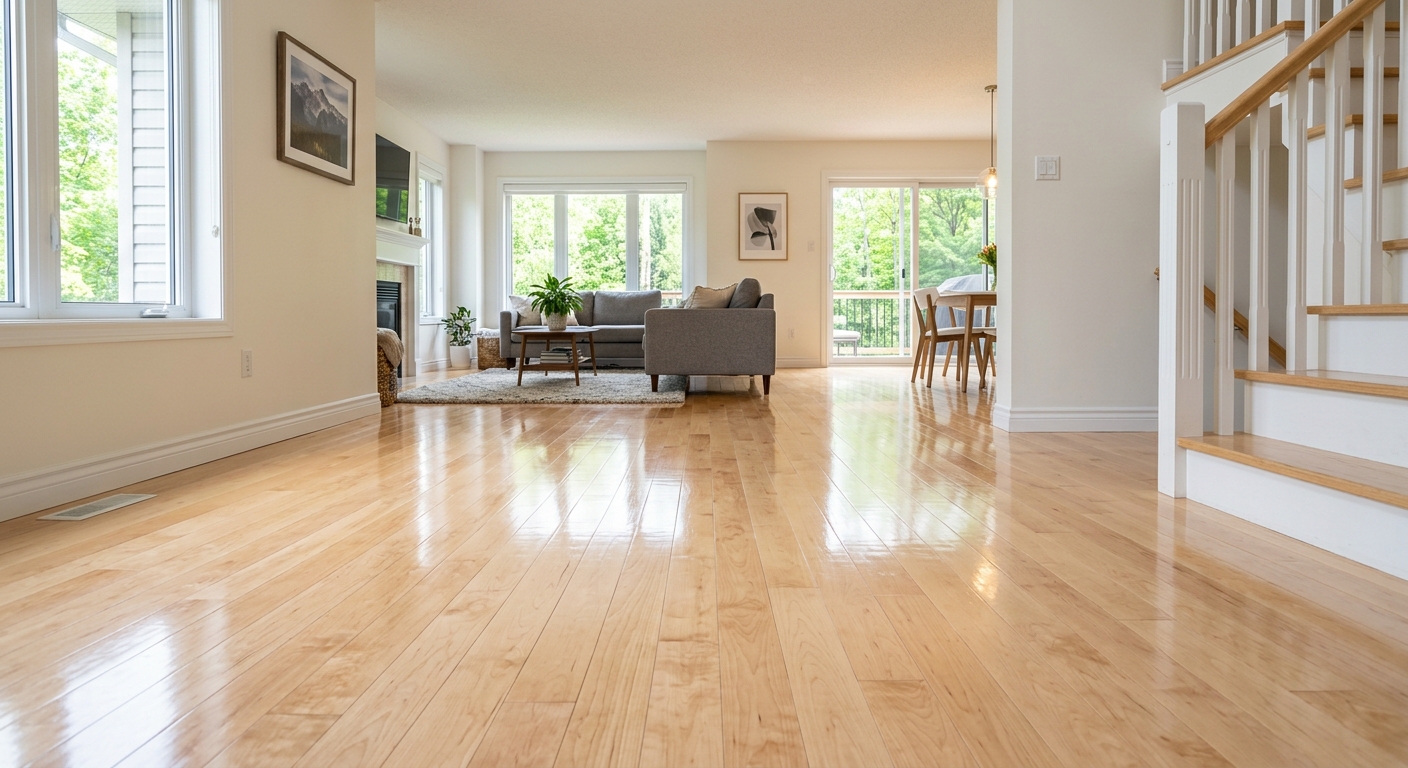
Flooring options and costs in Banbury-Don Mills
In Banbury-Don Mills, the big story behind flooring pricing is the seasonal swing in indoor humidity: winter dryness followed by warmer, damp stretches can stress some materials more than others. With a population of 27,695 people (Statistics Canada, 2021 Census), the Toronto-area renovation market stays active, which supports a steady pool of installers—but it can also tighten availability during peak spring and early summer. That demand is one reason labour-heavy projects (removal, levelling, stairs and transitions) often land higher than the same material installed in slower regions.
Local housing stock also plays a role. Many homes in this part of Toronto are older, and it’s common to find subfloor unevenness or damaged underlayment that must be corrected before you can lay a floating floor or glue a system—often adding a meaningful prep cost even when you choose mid-range flooring. Toronto-area homes frequently require levelling, plywood replacement, or moisture mitigation before new flooring goes in; that prep can push the budget up even when the finished floor choice is laminate or vinyl. When you’re working on an older infill or a renovated home near Don Mills Road or the surrounding neighbourhood blocks, it’s not unusual for the quote to change after the contractor verifies flatness and moisture conditions on-site.
Below is a realistic range of typical supply-and-install pricing for Banbury-Don Mills, then we’ll break down what drives those numbers in your specific project.
| Type |
Best Room |
Moisture Resistance |
Lifespan |
Price per sq ft |
| Solid hardwood (nail-down, above grade only) |
Living / dining |
Low to moderate (needs stable humidity) |
25–60 years (condition dependent) |
$9 – $18 |
| Engineered hardwood (float or glue, above + on-grade) |
Living / dining, bedrooms |
Moderate to high (more stable than solid) |
20–40 years |
$9 – $17 |
| Laminate (click-lock, above-grade) |
Living areas, hallways |
Moderate (water spills still need prompt cleanup) |
10–25 years |
$4 – $9 |
| Luxury vinyl plank / LVP (waterproof, any level) |
Kitchen, finished basement |
High to very high (waterproof core) |
15–25 years |
$5 – $11 |
| Porcelain / ceramic tile |
Kitchen, bathroom |
Very high (handled well with proper waterproofing) |
30+ years |
$12 – $25 |
| Carpet (broadloom or modular tile) |
Bedrooms, stairs |
Low (needs careful moisture control) |
8–15 years |
$5 – $11 |
Prices are estimates only and vary by project scope, site access and material selection.
What affects the price of flooring in Banbury-Don Mills
In Banbury-Don Mills and the wider Toronto area, you can see the same type of floor quoted anywhere from 30% to 50% different across projects and contractors. The material may be similar, but the labour and “hidden” prep work often diverge—especially in homes where moisture mitigation, subfloor levelling, or plywood replacement is required before the finished floor can perform as intended. Toronto-area humidity swings also influence product choice: solid hardwood expands and contracts with humidity, so it’s a harder sell for basements and concrete slabs. Engineered hardwood and luxury vinyl plank (LVP) are typically far more forgiving for below-grade and high-humidity installations, which is why they show up so often in Toronto renovations.
Colder snaps in this region also matter. If you’re adding radiant floor heating (increasing in new builds and custom projects), it changes the allowable material systems. Many traditional solid hardwood installs are either not recommended over radiant heat or require strict manufacturer limits; engineered hardwood and certain tile and vinyl systems are commonly paired instead. Older regional housing frequently needs subfloor levelling or repair, which often adds $1 to $4 per sq ft before the new flooring even starts going down. For example, a job that’s “just” $9 to $12 per sq ft for engineered hardwood can climb toward the higher end of the band once levelling, underlayment upgrades, and moisture checks are included.
Practical examples from Banbury-Don Mills: (1) a 600 sq ft main level that’s out of flat by more than manufacturer tolerances may require self-levelling compound or plywood replacement—this adds labour and disposal; (2) a basement with past seepage or higher vapour drive often rules out solid hardwood and can push you toward LVP at the $5 to $11 per sq ft band because it tolerates moisture better and performs well below grade.
| Price Factor |
Why It Matters |
Cost Impact |
| Room area in sq ft |
More footage increases materials, waste factor, and labour hours. |
Higher total cost; per-sq-ft can drop slightly at scale. |
| Subfloor condition |
Levelling and repair are required for warranty-grade installation. |
Can add $1 – $4 per sq ft in typical Toronto-area prep. |
| Moisture / below-grade install |
Determines whether solid hardwood is even a safe option. |
Often shifts you to engineered wood or LVP; solid may be removed from the scope. |
| Material choice |
Solid vs engineered vs LVP vs tile have different tolerances and labour demands. |
Solid hardwood and tile typically cost more; LVP/laminate are usually lower. |
| Removal and disposal of existing flooring |
Old flooring, nails, and underlay add extra time and hauling. |
Can increase the quote by several dollars per sq ft depending on thickness and debris. |
| Stair nosing / transitions |
Transitions and stair components are labour-intensive and require matching profiles. |
Charged per step or linear foot; can noticeably add to total. |
| Radiant heat compatibility |
Limits what can be installed and how it must be acclimated. |
May steer you to engineered hardwood/tile/vinyl and add verification steps. |
| Installation method |
Float, glue-down and nail-down each have different labour and substrate requirements. |
Glue-down and nail-down generally take more site prep and time. |
Permits & regulations in Ontario
In Ontario, installing new flooring as a finish generally does not require a building permit. If your job is limited to removing existing flooring and installing new carpet, laminate, vinyl plank, engineered hardwood, or tile over a sound substrate, contractors typically proceed without pulling a permit. The key caveat in Banbury-Don Mills is when the scope expands beyond “finishes” into electrical, structural, or moisture remediation work that affects systems.
What typically DOES require a permit: electrical work tied to radiant floor heating (new circuits, wiring changes, or modifications to an existing in-floor heating control system). If you’re replacing or adding electrical components for a heated floor, that’s the usual trigger for electrical permitting requirements. What typically does NOT: pulling up existing flooring, levelling a subfloor with patching compound (as part of flooring prep), installing underlayments, nailing down solid hardwood above grade where allowed by the product, and standard tile installation where you’re not altering plumbing or structural systems.
In condos, another layer applies: sound transmission rules. Many corporations restrict hard flooring on upper floors or require specific underlay and installation methods to meet sound criteria (STC/IIC). Always request written board approval if your unit is in a multi-unit building and you plan to install hardwood or tile.
To verify your contractor for Ontario work: (1) confirm they have the right licensing and business registration, if applicable for their specific trades; (2) request a certificate of insurance (liability) and verify it’s current; (3) ask for WSIB/WCB clearance where relevant for the contractor’s work. In practice, you’ll typically check their online licence/business registration details first, then verify the COI dates, and finally obtain a clearance letter or confirmation for coverage status.
Best flooring for each room in your Banbury-Don Mills home
Choosing the right flooring for Banbury-Don Mills comes down to moisture behaviour, daily traffic, and comfort—because Toronto-area homes experience indoor humidity swings that can cause cupping, gapping, or joint separation in moisture-sensitive products. Living and dining areas are where engineered hardwood shines: it delivers the look of wood with better dimensional stability than solid hardwood, which is especially helpful if the house sees seasonal humidity variation. For bedrooms, homeowners often prefer carpet for comfort and sound absorption—useful on second floors in family living.
Kitchens need water tolerance and easy cleaning. Luxury vinyl plank (LVP) is a strong choice because many products are waterproof at the core and handle splashes and mopping better than laminate. If you love a “forever” surface, large-format porcelain tile is also excellent, but it comes with a higher installed price and requires proper subfloor flatness for grout stability. For finished basements, LVP is usually the clear winner in this region: it’s designed for below-grade installs and stands up to moisture vapour issues that can ruin solid hardwood and many laminate installs.
Bathrooms should be porcelain or ceramic tile (with appropriate waterproofing practices where required). If you have radiant floor heating in a new custom build or you’re adding it during renovation, engineered hardwood, tile, and certain vinyl systems are commonly compatible, while traditional solid hardwood is more often limited due to expansion and heat-cycle considerations. As a cost reality check: upgrading a main floor from laminate in the $4 to $9 per sq ft band to engineered hardwood closer to the $9 to $17 per sq ft band can be justified when you want wood feel and longer service life—especially if your subfloor needs some prep and you’d rather invest once into a system that tolerates local humidity better.
| Room |
Best Material |
Why |
Moisture Risk |
Price Band per sq ft |
| Living / dining room |
Engineered hardwood |
Warm look, better stability for Toronto’s humidity swings than solid. |
Medium (humidity-driven movement) |
$9 – $17 |
| Master bedroom |
Carpet or engineered hardwood |
Carpet adds comfort and sound; engineered wood keeps it cleaner and brighter. |
Low to medium (mostly humidity, not spills) |
$5 – $17 |
| Secondary bedrooms |
Laminate or carpet |
Laminate is durable for day-to-day wear; carpet improves underfoot comfort. |
Low |
$4 – $11 |
| Kitchen |
Luxury vinyl plank (LVP) or porcelain tile |
LVP handles splashes; tile offers long-term water resistance and easy cleaning. |
High (spills, mopping, dishwasher/sink leaks) |
$5 – $25 |
| Basement (finished) |
LVP (waterproof) |
Built for below-grade installs and moisture vapour realities better than solid wood. |
High (vapour and occasional seepage history) |
$5 – $11 |
| Bathroom |
Porcelain / ceramic tile |
Most moisture-resistant finish option; holds up to cleaning and wet conditions. |
Very high |
$12 – $25 |
How to choose a flooring contractor in Banbury-Don Mills
To pick the right flooring contractor for a Banbury-Don Mills project, start with verification, not promises. In Ontario, ask for proof of liability insurance and evidence of WSIB/WCB coverage where applicable to the contractor’s work. How to check: (1) request a current certificate of insurance and confirm the coverage dates and that it includes flooring installation activities; (2) ask for WSIB/WCB clearance documentation (not just a verbal statement); (3) verify licensing/business registration details where relevant using their public online listings before you sign anything. If you’re installing over radiant heat, hard-surface floors or tile, also confirm they install the specific product system you selected and follow the manufacturer’s substrate and humidity/acclimation requirements.
Get 2–3 itemised written quotes. A solid quote breaks out labour and materials separately (not just a single lump sum), lists underlayments or vapour barriers, and includes line items for levelling, plywood replacement, removal and disposal, stair nosing and transitions. Read the scope carefully: what’s excluded (baseboards, drywall patching, trim reinstall), does the price include permit pulls if electrical radiant heating is part of your plan, and is disposal/hauling included? Verify warranty terms: workmanship warranty length, manufacturer/product warranty details, and whether the warranty is transferable to the homeowner. For payment, never pay more than 10%–15% upfront; use a holdback until the job is complete and punch-list items are addressed. Finally, obtain a written start date and completion estimate.
- Request itemised labour/material breakdown (not just one number).
- Confirm subfloor testing or flatness prep plan before pricing engineered wood/tile.
- Ask whether moisture mitigation is included if moisture tests show elevated readings.
- Get disposal/hauling included in writing if you want it handled.
- Specify underlayment/vapour barrier product and thickness in the quote.
- Confirm stair nosing, thresholds and transitions are quoted per step/linear foot where applicable.
- Ask about acclimation requirements for wood and engineered products.
- Verify liability insurance and WSIB/WCB clearance documentation.
- Check warranty paperwork before work starts (who honours it and what’s covered).
- Use a payment schedule with 10%–15% maximum upfront and a holdback on completion.
- Ensure the quote includes protection (plastic, plywood) during demolition and install.
- Get start/completion timing in writing, including sequencing for multi-room projects.
Red flags to watch in Banbury-Don Mills: they won’t provide insurance/coverage documents; their quote ignores subfloor prep or flatness without seeing the site; they push for a large upfront payment or cash-only; they can’t clearly state who handles warranty claims; or they give “no exclusions” wording while refusing to put scope details in writing.
Frequently asked questions — flooring in Banbury-Don Mills
What flooring works with radiant heat?
For Banbury-Don Mills homes with in-floor radiant heating, the safest choices are materials designed to tolerate heat cycling and controlled subfloor temperatures. In practice, homeowners often pair radiant heat with porcelain/ceramic tile, engineered hardwood, and certain LVP systems that explicitly state radiant compatibility in the manufacturer instructions. Traditional solid hardwood is usually more restricted because it can react to expansion and the heat profile—especially if the system runs hotter than recommended. Before you buy, ask your contractor to confirm compatibility in writing for the exact product line (not just “the category”). If subfloor moisture or levelling isn’t addressed, radiant systems can still expose weaknesses over time, so insist on testing and proper prep as part of the scope.
Engineered vs solid hardwood — what's the difference?
Solid hardwood is one piece (or one uniform wood layer) and is typically installed nail-down above grade only. It’s more sensitive to indoor humidity swings, which matter in Toronto-area homes where seasons shift indoor moisture levels. Engineered hardwood is built with a plywood-like core and a hardwood wear layer, so it’s generally more dimensionally stable for the same environment. That stability is why many Banbury-Don Mills homeowners choose engineered when they want “real wood” look but still need a system that handles daily humidity changes better. In pricing, both can fall in the hardwood range—solid often lines up with roughly $9 to $18 per sq ft, while engineered commonly lands in the $9 to $17 per sq ft range depending on thickness, wear layer, and install method.
Do I need to level my subfloor first?
Often, yes—especially if you’re installing engineered hardwood, laminate, or tile. A floor can look fine at first glance, but most manufacturers require a certain degree of flatness to prevent joint separation, squeaks, or cracked grout. In older Banbury-Don Mills homes, it’s common to find dips, ridges, or damaged subfloor layers that must be corrected before installation. If moisture readings or underlayment condition are an issue, levelling may include plywood replacement or patching, not just a thin skim coat. Budget-wise, typical Toronto-area prep can add about $1 to $4 per sq ft when levelling or repair is needed, which is why itemised quotes matter. The right contractor will do a site check and propose the right prep method for your exact substrate.
What's the most durable flooring for pets and kids?
For pets and kids in Banbury-Don Mills, durability usually means resisting scratches, dents, and moisture mishaps—especially near entrances, kitchens and finished basements. Luxury vinyl plank (LVP) is often the practical winner because many waterproof products handle spills and cleanups easily and stand up well to day-to-day impact. If you want a lower-maintenance, high-durability surface, porcelain/ceramic tile is also excellent in kitchens and bathrooms, though it’s harder underfoot. Carpet can be comfortable and sound-absorbing, but it’s generally less ideal for heavy accidents unless you choose a stain-resistant solution and are prepared for faster cleaning. If you’re comparing typical cost bands, LVP commonly lands in the $5 to $11 per sq ft range, while tile often starts around $12 per sq ft and climbs higher depending on format and layout.
How do I choose flooring for humidity in Banbury-Don Mills?
Toronto-area humidity swings are the reason many homeowners in Banbury-Don Mills steer toward more stable flooring systems. Solid hardwood can expand and contract noticeably, so it’s risky for basements and not ideal over concrete; it also needs stable indoor conditions. Engineered hardwood is the compromise many people choose because it handles humidity better than solid while still offering a wood look. For high-risk areas (like basements or rooms where moisture history exists), luxury vinyl plank is specifically suited for below-grade and moisture-vapour realities because the core is designed for waterproof performance. Laminate is more mixed—fine for many above-grade rooms when spills are cleaned quickly, but it’s not a “true water” solution. The best step is to test moisture and confirm installation suitability with your contractor before you buy.
Do condos restrict hard flooring?
Yes, many condos in Ontario restrict or regulate hard flooring because of sound transmission. In Banbury-Don Mills, if you’re in a multi-unit building, your condo corporation’s rules can require specific underlay and installation practices to meet sound criteria (often referenced as STC/IIC performance). Some buildings require board approval before installation of hardwood or tile on upper floors, while others allow it only with approved products and detailed proof of sound mitigation. Before you sign a contract, ask for the condo’s written flooring rules and request approval in writing when required. Your contractor should be able to recommend underlay and installation methods that match the product requirements. This is especially important for engineered hardwood and tile because improper underlay choices can lead to compliance issues and costly redo work.