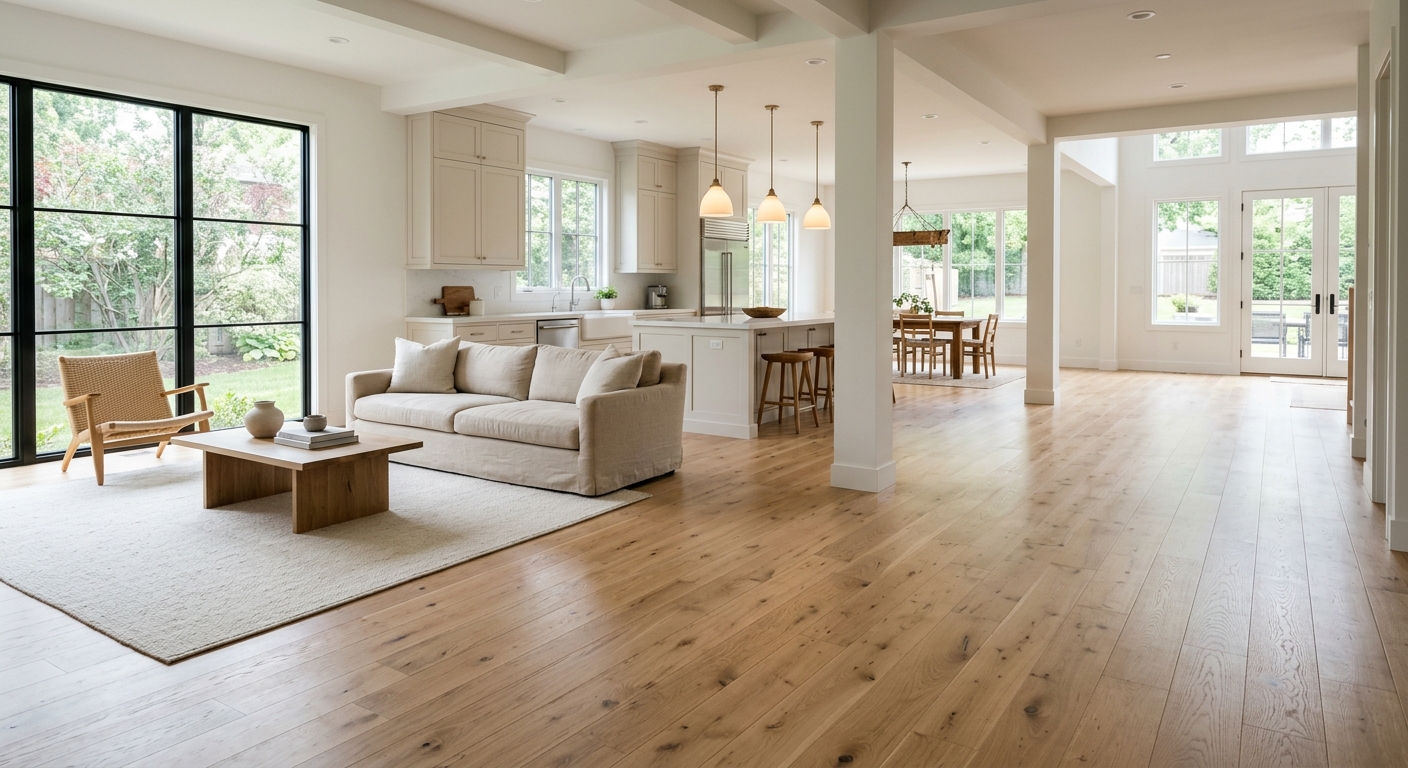
Flooring options and costs in Bayview Village
Bayview Village homeowners typically shop with one goal in mind: a floor that looks sharp for years and doesn’t get damaged by Toronto’s seasonal swings. With a Bayview Village population of 21,396 (Statistics Canada, 2021 Census), there’s steady demand from local renovations and move-ins, which keeps crews busy and can influence turnaround times. Many surrounding homes built in earlier decades also see wear that shows up before you even pick a material—subfloor levelling, old patch repair, and moisture mitigation are common prep steps in the GTA and can add a meaningful line item even when the finished flooring is mid-range.
In this part of the Toronto area, indoor humidity can swing noticeably across seasons, and that affects installation tolerances. Solid hardwood is beautiful, but it expands and contracts with humidity; it’s also risky over concrete and in basements, where moisture vapour is harder to control. That’s why engineered hardwood and luxury vinyl plank (LVP) are often the practical choice, especially for condos and newer infill builds where owners want dimensional stability. If radiant floor heating is present (more common in newer custom builds), it pairs better with engineered wood, tile, and certain vinyl products than with traditional solid hardwood.
Contractors in areas like Bayview Village’s Bayview Avenue corridor see particularly strong demand for repairs and replacement in living levels—because that’s where families notice floor noise, wear, and comfort first. Use the ranges below as a starting point, then we’ll narrow the best option to your exact rooms and subfloor condition.
| Type |
Best Room |
Moisture Resistance |
Lifespan |
Price per sq ft |
Price Range |
| Solid hardwood (nail-down, above grade only) |
Living / dining (above grade) |
Low–Medium (humidity-sensitive; avoid basements) |
25–60 years |
$9–$18 |
$9,000–$18,000 |
| Engineered hardwood (float or glue, above + on-grade) |
Main floor & bedrooms |
Medium–High (better dimensional stability) |
20–40 years |
$10–$16 |
$10,000–$16,000 |
| Laminate (click-lock, above-grade) |
Bedrooms, hallways |
Medium (sealed surface; sensitive to standing water) |
10–25 years |
$4–$9 |
$4,000–$9,000 |
| Luxury vinyl plank / LVP (waterproof, any level) |
Kitchen & basement (finished) |
High (waterproof core when installed correctly) |
15–30 years |
$5–$9 |
$5,000–$9,000 |
| Porcelain / ceramic tile |
Bathrooms & kitchens |
Very High (non-porous; grout needs care) |
30+ years |
$12–$25 |
$12,000–$25,000 |
| Carpet (broadloom or modular tile) |
Bedrooms |
Low–Medium (not for basements without controls) |
7–15 years |
$5–$11 |
$5,000–$11,000 |
Prices are estimates only and vary by project scope, site access and material selection.
What affects the price of flooring in Bayview Village
In Bayview Village (Toronto economic region), two quotes for the “same-looking” floor can still differ by 30–50% because the pricing details live in the prep work and install method—not just the material brand. Toronto-area renovation demand also tightens scheduling, and that can change labour availability and crew time. On top of that, many homes in the GTA were built across a wide range of decades, and older subfloors often need correction before any premium finish goes down—especially when you’re covering cracked tile, mismatched plywood, or uneven concrete.
Technically, Toronto’s indoor humidity swings are a daily reality for flooring systems. Solid hardwood expands and contracts with moisture, so it can’t be glued or floated over concrete and it performs poorly in basements. Engineered hardwood and luxury vinyl plank handle humidity and below-grade applications far better, which reduces the risk of failures that lead to expensive rework. In colder Toronto seasons, many owners also ask about radiant floor heating; that typically steers choices toward engineered wood, tile, and some vinyl products, while most traditional solid hardwood is a tough fit due to heat and expansion considerations.
Cost shifts come from local conditions, too. For example: if your main floor needs levelling, that’s commonly an add of roughly $1–$4 per sq ft depending on what’s wrong (high spots, delamination, or damaged plywood). If you’re moving from wall-to-wall carpet, disposal and prep dust control can be another meaningful line item. And if you’re installing over concrete with moisture mitigation required, you may see the quote land closer to higher-end bands like $9–$18 per sq ft for hardwood-like results or lean toward LVP at $4–$9 per sq ft where stability is the priority. In Bayview Village, those technical choices often matter more than the brand name.
| Price Factor |
Why It Matters |
Cost Impact |
| Room area in sq ft |
Material quantity, layout time, and labour hours scale directly with area. |
Higher area often reduces waste percentage; small rooms can cost relatively more per sq ft. |
| Subfloor condition |
Levelling, patching, or replacing plywood changes prep time and materials. |
Often adds about $1–$4 per sq ft when correction is needed. |
| Moisture / below-grade install |
Rules out solid hardwood; may require vapour mitigation and stricter prep. |
Can add $2–$6 per sq ft in mitigation and extra system steps. |
| Material choice |
Different floors have different underlay, thickness, and labour complexity. |
Hardwood and tile typically land in higher bands; LVP/laminate trend lower (using $4–$9 vs. $9–$18 and $12–$25 banding). |
| Removal and disposal of existing flooring |
Old flooring, tack strip, adhesive, and debris disposal drive labour time. |
Often adds a noticeable labour line item; can be minimal for carpet in good condition, higher for tile/adhesive. |
| Stair nosing / transitions |
Stops, reducers, and stair labour are charged per step or per linear foot. |
Can add several hundred to over a thousand dollars depending on complexity. |
| Radiant heat compatibility |
Heat and expansion require specific product allowances. |
May limit your choices and shift you to engineered wood/tile/vinyl that supports cycling. |
| Installation method |
Float vs. glue-down vs. nail-down changes time, tools, and tolerances. |
Nail-down and glue-down usually cost more than simple click-lock; exact impact depends on subfloor. |
Permits & regulations in Ontario
In Ontario, the flooring installation itself typically does not require a building permit. However, certain related work can trigger permit or code requirements—especially when you touch electrical systems, structural elements, or moisture remediation methods that involve more than cosmetic patching. For example, if your project includes adding or relocating in-floor radiant heating circuits, electrical work must follow the applicable electrical permitting pathway. Similarly, if you’re doing deeper subfloor repairs that affect structure (like replacing significant sections of joists or correcting major deflection), permits or inspections may come into play depending on scope and how it’s classified.
In condominiums around Bayview Village and the wider Toronto area, the bigger “rule” is usually the building’s condominium corporation. Sound transmission requirements (STC/IIC targets) and required underlay products can restrict what you can install on upper floors. Even if flooring doesn’t need a permit, condo approval often does—so request written board approval before installing engineered hardwood, laminate, or tile over shared structures.
To protect yourself, verify three things step-by-step: (1) licensing/credentials for the contractor through the appropriate Ontario online resources for trades (if applicable for your scope), (2) liability insurance—ask for a current certificate of insurance naming you where required and showing coverage limits, and (3) WSIB/WCB coverage for the contractor and any listed subcontractors. Request documentation before scheduling, and confirm the coverage dates match the installation window. If a contractor can’t provide these documents up front, treat it as a red flag and get another quote.
Best flooring for each room in your Bayview Village home
Choosing the right material in Bayview Village is about matching the floor to real day-to-day conditions: sunlight, indoor humidity swings, water exposure, and the likelihood of temperature changes—especially in basements and over concrete. In living and dining areas, engineered hardwood or a high-quality laminate gives warmth without as much risk as solid wood when humidity shifts. For master bedrooms, carpet is still one of the best comfort plays: it absorbs sound, feels warm underfoot, and performs well for everyday traffic. If you prefer a hard surface, engineered hardwood is generally the safer “hard” choice than solid hardwood.
Kitchens need a floor that can handle spills and frequent cleaning. Luxury vinyl plank (LVP) with a waterproof core is often the most forgiving option in Ontario homes that experience seasonal wet weather tracking in from the outside. Porcelain or ceramic tile is also excellent for kitchens due to water resistance and long-term durability, and it’s a great match where owners are already comfortable with underfoot hardness. Bathrooms should stick to porcelain/ceramic tile only, because the waterproofing expectations are higher and grout care is manageable with proper sealing.
For a finished basement, LVP is usually the clear winner in Bayview Village: it’s designed for below-grade moisture vapour and can be installed where solid wood and most laminate systems struggle. Carpet in basements is higher risk unless the space is dry, well-ventilated, and humidity-controlled. If you’re installing over radiant floor heating, engineered wood, tile, and some LVP systems generally work better than traditional solid hardwood because of expansion and heat-cycling considerations.
Example: upgrading a main-floor install from laminate around $4–$9 per sq ft to engineered hardwood often lands in the $9–$18 band. The extra cost is justified when you want a more natural look and longer service life, and when your subfloor is stable enough to support the installation method.
| Room |
Best Material |
Why |
Moisture Risk |
Price Band per sq ft |
| Living / dining room |
Engineered hardwood |
Warm look, better stability under humidity swings than solid; comfortable for daily traffic. |
Low–Medium (manage indoor RH) |
$9–$18 |
| Master bedroom |
Carpet (or engineered hardwood if preferred) |
Comfort and sound control; less show-through of minor subfloor irregularities than hard surfaces. |
Low (avoid damp basements) |
$5–$11 |
| Secondary bedrooms |
Laminate or engineered hardwood |
Durable, family-friendly options; laminate can be cost-effective if subfloor is solid and dry. |
Low (above-grade) |
$4–$16 |
| Kitchen |
Luxury vinyl plank (LVP) or large-format porcelain tile |
Handles spills and frequent cleaning; LVP is forgiving while tile is long-life and easy to disinfect. |
Medium–High (spills and wet-mopping) |
$5–$25 |
| Basement (finished) |
Luxury vinyl plank (waterproof) |
Best match for below-grade moisture vapour and Toronto’s damp-season conditions; less risk of cupping than solid. |
High (below grade) |
$5–$9 |
| Bathroom |
Porcelain / ceramic tile |
Non-porous surface and water-friendly performance; long service life when installed with correct underlayment and grout practice. |
Very High |
$12–$25 |
How to choose a flooring contractor in Bayview Village
Picking the right flooring contractor in Bayview Village means verifying proof—not promises. Start with Ontario compliance basics: ask for their liability insurance certificate and confirm the effective dates align with your install. For worker protection, request documentation showing WSIB/WCB coverage (or the appropriate proof of coverage status) for the contractor and any sub-trades they use. If you’re booking a project that includes electrical work for radiant heating, make sure the right qualified trade is involved and that the permit-related steps (if applicable) are handled correctly.
Next, get 2–3 itemised written quotes. You want a labour + materials breakdown, not just a lump sum. Ask what’s included: removal of existing flooring, subfloor levelling/repairs, underlayment supply, stair nosings, mouldings, transitions, and debris disposal. Clarify whether the contractor includes subfloor moisture mitigation or levelling only “if found necessary,” and how changes are priced if they uncover extra work once demolition starts.
Warranty matters for both workmanship and product. Confirm the workmanship warranty length (and what voids it), whether it’s transferable to future owners, and the scope of the manufacturer warranty. For payment scheduling, a solid rule of thumb is to avoid paying more than 10–15% upfront; hold back a portion until the job is complete and final cleanup is done. Finally, request a start date and completion timeline in writing, including when measurements are complete and when materials will be ordered—Toronto renovation demand can affect lead times.
- Ask for their liability insurance certificate and verify coverage limits before signing.
- Request proof of WSIB/WCB coverage status (and confirm it covers any subcontractors).
- Use itemised quotes: labour, subfloor prep, underlay, transitions, trim, and disposal should be separate lines.
- Confirm exclusions in writing (e.g., moisture remediation, plywood replacement, or subfloor flattening requirements).
- Ask whether permits are included if your scope touches electrical or structural repairs.
- Get a written install method for your flooring (float, glue-down, nail-down) and how they prepare the substrate.
- Ensure they list the exact product (brand, model, thickness, wear layer, and underlay specs if applicable).
- Verify warranty details: workmanship warranty term, manufacturer warranty conditions, and transferability.
- Review the project schedule: measurement day, material ordering window, start date, and completion date.
- Confirm payment terms: keep upfront payments to about 10–15% and hold back until completion.
- Ask about protection during the job (floor protection, dust control, and cleaning at the end).
- Check that they’ll address transitions and stair nosings with a clear per-step or per-linear-foot line item.
Red flags in the Bayview Village market: vague quotes that don’t list subfloor prep, refusing to show insurance/coverage documents, promising “no moisture checks needed” for basements, asking for most payment upfront, or starting without a written scope that clearly states what’s included for disposal and transitions.
Frequently asked questions — flooring in Bayview Village
How do I prepare my subfloor before new flooring?
Before new flooring in Bayview Village, the subfloor usually needs to be flat, sound, and dry enough for the installation system. For hard-surface floors, contractors typically check for high spots, low areas, and loose or squeaky sections—then they level or repair as needed. If you’re installing over concrete, moisture mitigation may be required depending on conditions; solid hardwood is especially sensitive to moisture and is not a good fit over concrete. For older GTA homes, it’s also common to replace damaged plywood patches or do targeted levelling before installation. Plan for dust control and expect that prep can add cost (often roughly $1–$4 per sq ft) even when the finished material choice is mid-range—like laminate in the $4–$9 per sq ft band.
Is cork or bamboo flooring a good choice in Bayview Village?
Cork and bamboo can be appealing for comfort and appearance, but Bayview Village’s humidity swings mean you have to be selective about construction and installation method. Cork is generally more dimensionally forgiving than some natural woods, but it still needs a stable subfloor and controlled indoor conditions—especially if there’s any risk of below-grade moisture. Bamboo varies by product quality and can be more sensitive to moisture than homeowners expect, so it’s best for above-grade areas where you can maintain normal humidity. For basements, LVP is usually safer because it’s designed for below-grade installs. If you’re considering cork or bamboo, ask for the exact product specs, installation requirements, and whether they’re rated for Ontario’s temperature and humidity cycles.
What is the difference between floating and glued-down flooring?
Floating floors (commonly click-lock laminate and many engineered hardwood installs) don’t get bonded to the subfloor. Instead, the boards lock together and the system relies on underlay and the room’s temperature/humidity stability. Glued-down floors bond directly to the substrate, which can improve stability on some surfaces, but it demands careful subfloor preparation and correct adhesive selection. In Bayview Village, floating installations can be a great fit for above-grade projects where the subfloor is flat and dry, and they’re often faster to install. Glued-down methods can be better for certain engineered products, but they’re more sensitive to subfloor moisture and flatness. Either way, quotes should spell out the install method and underlay or adhesive system—don’t assume they’re the same.
What flooring holds up best to pets in a Bayview Village home?
For pets, the “best” floor is usually the one that balances scratch resistance, cleanability, and moisture tolerance. Many Bayview Village households do well with luxury vinyl plank (LVP) because it’s waterproof and easy to clean after accidents; it also tends to handle the daily wear that comes with paw traffic better than carpet. Choose thicker LVP and confirm its wear layer rating. Laminate can work too if it’s installed carefully and kept away from standing water, but basements and high-spill areas are where LVP earns its keep. Hardwood can look fantastic, but solid hardwood is riskier in high humidity areas and over concrete, and nail-down floors can be less forgiving if your pet messes aren’t cleaned promptly. If you want one practical band to start from, LVP often sits in the $4–$9 per sq ft range, depending on product quality.
How do I fix squeaky floors in my Bayview Village home?
Squeaks usually come from movement between floorboards and joists, not from the finish surface itself. In Bayview Village homes—especially those built decades ago—squeaks are often linked to loose subfloor fasteners, gaps, or movement caused by uneven support. The right fix is to address the structure beneath: re-fastening subfloor boards, adding correct shims where needed, or replacing damaged sections. Sometimes levelling during prep also reduces squeaks because it eliminates small deflection points. Be cautious with “surface fixes” like adding underlay without structural corrections; that can quiet minor issues, but it won’t stop movement at the joist. If you’re installing engineered hardwood or laminate over a squeaky area, ask the contractor to evaluate and include subfloor repair in the quote where warranted.
What is luxury vinyl plank and is it worth it in Bayview Village?
Luxury vinyl plank (LVP) is a multi-layer synthetic floor with a wear layer on top and a stable core underneath. In Bayview Village, it’s often worth it because Toronto-area indoor humidity swings and damp-season conditions can challenge natural wood and some laminate systems. LVP is typically waterproof, and many products are specifically designed for any level, including below-grade basements—where moisture vapour is a frequent concern. That stability reduces the risk of cupping or gapping that can happen with solid hardwood. Cost-wise, LVP usually falls in the $4–$9 per sq ft band (materials and typical installs vary by brand and thickness), which can be a better value than moving up into the $9–$18 per sq ft hardwood band when you also need moisture-proof performance. It’s especially strong in kitchens and finished basements—just make sure the subfloor prep and installation method are correct for your product.