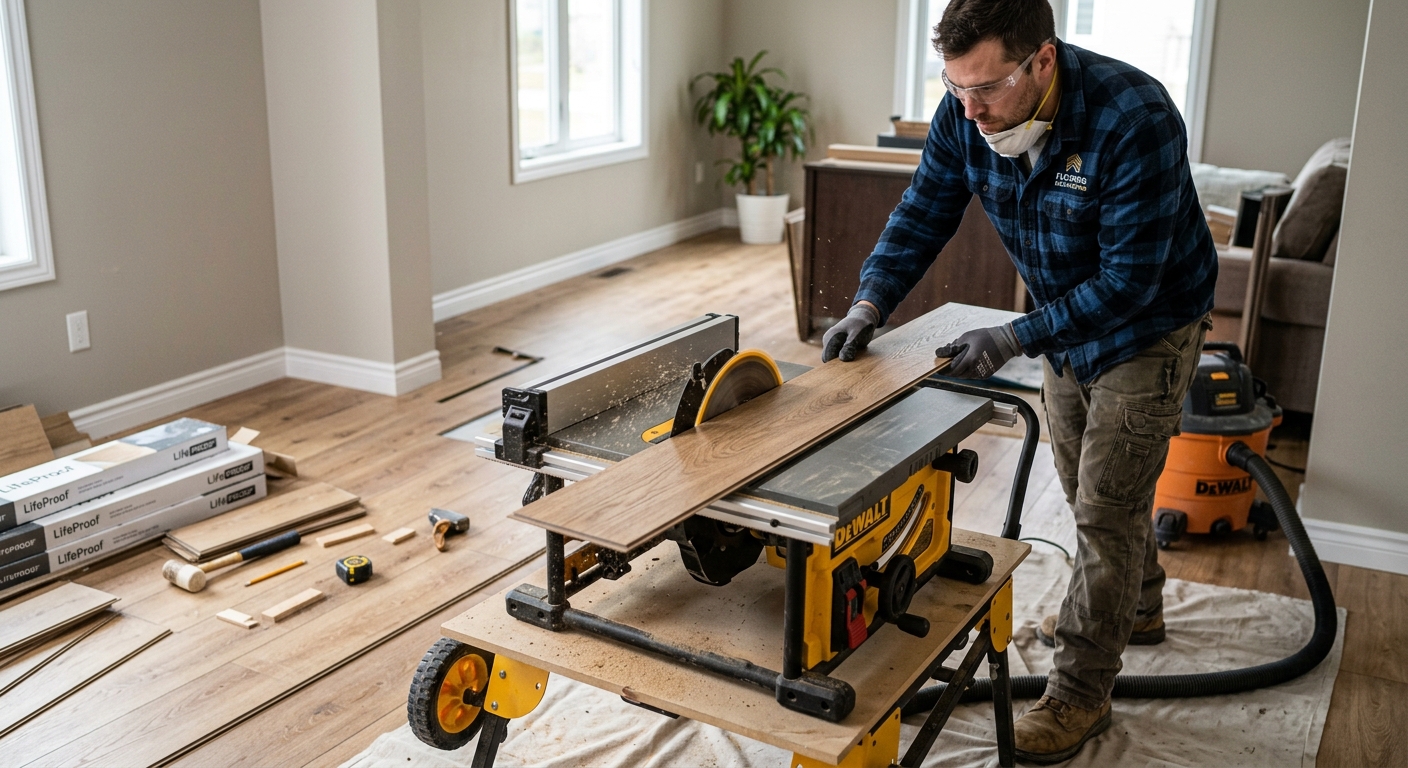
Flooring options and costs in Edenbridge-Humber Valley
Edenbridge-Humber Valley homeowners often start shopping for flooring the same way—by comparing look, price, and “how long it will last.” The catch is that your local market is shaped by Toronto’s indoor humidity swings and a large share of older housing stock, where subfloor issues can surface once we open up the existing floor. In the 2021 Census, Edenbridge-Humber Valley has a population of 15,535 (Statistics Canada, 2021 Census), and those owner-occupied renovations are constant throughout the year as weather shifts. Many homes in this Toronto-area belt were built decades ago; while your exact build year varies by street, older neighbourhoods around Edenbridge and Humber Valley commonly experience floor-to-floor transitions, patchy subfloors, and moisture mitigation needs before any “mid-range” finished product can be installed.
Because labour demand is high and general construction wages are elevated in the Toronto region, two quotes for the same room can differ substantially even when the material selection is similar. Toronto-area homes see wide indoor humidity swings across seasons, so we steer most clients toward engineered hardwood or luxury vinyl plank (LVP), especially for condos, above-grade infill, and any room where moisture risk is hard to control. Solid hardwood can be beautiful, but it moves more with moisture and is a higher-risk choice over concrete and in basements. In colder parts of the region and in newer custom builds with radiant floor heating, engineered products and certain vinyl/tile assemblies are the safer compatibility pick than traditional solid hardwood.
Below is a practical cost comparison for Edenbridge-Humber Valley, which you can use to sanity-check a quote before we talk measurements, removals, and subfloor prep.
| Type |
Best Room |
Moisture Resistance |
Lifespan |
Price per sq ft |
| Solid hardwood (nail-down, above grade only) |
Living / dining (dry, above-grade) |
Low–Moderate (moves with humidity; not for basements or concrete) |
25–60 years |
$9, – $18 |
| Engineered hardwood (float or glue, above + on-grade) |
Living / dining; master bedroom |
Moderate–High (handles Toronto humidity swings better) |
15–40 years |
$10, – $17 |
| Laminate (click-lock, above-grade) |
Bedrooms; living areas (dry) |
Moderate (not truly waterproof) |
10–25 years |
$4, – $8 |
| Luxury vinyl plank / LVP (waterproof, any level) |
Kitchen; finished basement |
High (waterproof core; good below-grade option) |
10–25 years |
$5, – $9 |
| Porcelain / ceramic tile |
Bathrooms; kitchen; entry |
Very High (surface is water-resistant with correct grout/sealing approach) |
25–50 years |
$12, – $25 |
| Carpet (broadloom or modular tile) |
Bedrooms; media rooms |
Moderate (needs dry subfloor and good ventilation) |
8–15 years |
$5, – $11 |
Prices are estimates only and vary by project scope, site access and material selection.
What affects the price of flooring in Edenbridge-Humber Valley
In Edenbridge-Humber Valley and across the Toronto market, it’s normal to see quotes for the “same” flooring come in 30–50% apart. That gap usually isn’t the visible product—it’s what’s hidden: subfloor conditions, moisture mitigation, underlayment choices for sound control, and the labour method needed to make the installation perform in our climate. Toronto-area homes experience wide indoor humidity swings across seasons, and basements or concrete slabs add below-grade moisture vapour risk. Solid hardwood expands and contracts with humidity, can’t be installed properly over concrete in most scenarios, and performs poorly in basements, which is why we often recommend engineered hardwood or LVP instead. In colder parts of the region and in newer custom homes with radiant floor heating, colder-to-hot movement and heat expansion considerations further limit some traditional solid hardwood and certain laminate builds.
Older regional housing stock (common throughout the 1960s–1990s) frequently needs subfloor levelling, plywood replacement, or moisture mitigation before the finished floor goes down. Even a “small” patch job can add labour time, fix-up materials, and dust control. In practical terms, that kind of prep can add roughly $1–$4 per sq ft to the budget. For example, a 400 sq ft living area might see a modest engineered hardwood install feel closer to an $10–$17 per sq ft project once levelling is included, while a basement using LVP may stay within the $5–$9 per sq ft range because it’s designed for below-grade moisture installs. If radiant floor heating is present, an engineered wood or compatible vinyl/tile assembly can avoid rework costs that come with mismatched expansion behaviour.
Also consider local contractor availability: high renovation demand means scheduling windows are busier, and firms that include prep, moisture checks, and transitions in their scope generally cost more—but they also reduce the chance of callback repairs.
| Price Factor |
Why It Matters |
Cost Impact |
| Room area in sq ft |
Drives material quantity and labour hours for cutting, fitting and layout |
More area usually lowers per-sq-ft pricing but increases total project cost (often the biggest driver) |
| Subfloor condition — levelling or repair needed before install |
Older Toronto homes can have uneven spots, damaged OSB/plywood, or dips that telegraph through finished flooring |
Typical addition: about $1–$4 per sq ft depending on extent |
| Moisture / below-grade install — rules out solid hardwood |
Toronto humidity swings and vapour from below can break down adhesives and cause cupping/peaking |
Can shift you from solid (higher risk) to engineered/LVP (usually more appropriate) |
| Material choice — solid vs. engineered vs. LVP vs. tile |
Different installation requirements and failure risks affect labour and underlayment needs |
Hardwood and tile can sit higher (e.g., $9–$18 hardwood, $12–$25 tile) while LVP/laminate often come in lower ($4–$9) |
| Removal and disposal of existing flooring |
Demo time varies by flooring type (tile thinset is heavier than click-lock laminate) |
Often adds several hundred to over a thousand dollars depending on layers and disposal |
| Stair nosing / transitions — charged per step or per linear foot |
Transitions and nosing are labour-intensive and materially specific |
Frequently overlooked; can add meaningful cost in foyers and split levels |
| Radiant heat compatibility — limits material options |
Heat and expansion behaviour require specific product assemblies and installation practices |
May increase material cost but prevent costly failures or replacement |
| Installation method — float vs. glue-down vs. nail-down |
Method changes subfloor prep, adhesives (where used), and labour time |
Glue-down and nail-down typically cost more than simple floating, especially with poor subfloors |
Permits & regulations in Ontario
In Ontario, flooring installation itself generally does not require a building permit. Installing a new carpet, laminate, engineered hardwood, LVP, or tile over an existing finished surface is typically handled as finishing work, not a structural or life-safety alteration. That said, related work can trigger permits—especially when you’re altering electrical systems or making structural/moisture corrections that change how the home is built or dried.
What usually does require a permit (or at least involves a licensed permit-holder) includes: electrical work for radiant floor heating circuits or any thermostat wiring changes; major structural subfloor repairs that involve engineered joist modifications (rare for typical flooring, but it can happen); and moisture remediation systems that include specialized ventilation or tied-in components. In condominiums, the bigger issue is often not permits—it’s governance. Sound transmission rules (STC/IIC targets) may restrict underlay, thickness, or installation assemblies, particularly for hard flooring on upper floors. Always review your condo declaration and request board approval in writing before installing hardwood or tile on upper-grade units.
How to verify your contractor in Edenbridge-Humber Valley: (1) ask for their Ontario business contact details and verify licence status through the appropriate online provincial registry; (2) request a certificate of insurance showing general liability and confirm active coverage dates; (3) provide WSIB/WCB clearance or proof of coverage for their workers—don’t accept “we’re insured” without documents; (4) get everything in writing: scope, moisture plan, and whether demo/disposal is included.
Best flooring for each room in your Edenbridge-Humber Valley home
Choosing flooring room-by-room matters more in Edenbridge-Humber Valley than in many other Ontario markets because our Toronto-area humidity swings expose weak product choices quickly—especially around entrances, kitchens, and basements. For living and dining areas, you want warmth and durability without overreacting to seasonal moisture changes. That’s why engineered hardwood or a high-quality laminate often hits the sweet spot: it looks like hardwood while tolerating humidity better than solid wood. For bedrooms, carpet remains a comfort winner—soft underfoot and quieter—but it must be installed over a dry, properly prepared subfloor to avoid lingering odours.
In kitchens, spills are inevitable and cleaning matters. Luxury vinyl plank (LVP) is usually the practical choice because it’s waterproof and handles day-to-day splashes without the same maintenance pressure as wood or laminate joints. If you want a more upscale look, large-format porcelain tile is excellent for water resistance and longevity, especially with radiant floor heating compatibility in newer builds. Basements are where Toronto moisture risk shows up most: LVP is the clear winner because it’s designed for below-grade installs and can handle moisture vapour better than solid hardwood and most laminate. For bathrooms, porcelain or ceramic tile is the standard because the assembly can be made truly water-suitable.
Radiant floor heating is increasingly common in Ontario new construction; in those rooms, engineered wood and many compatible vinyl/tile systems perform better than traditional solid hardwood because of heat-related expansion considerations. As a cost reality check: if your main goal is long-term stability, spending toward engineered hardwood at roughly $10–$17 per sq ft (versus solid at $9–$18 with higher humidity risk) is often justified in humid seasons and reduces the likelihood of callbacks.
| Room |
Best Material |
Why |
Moisture Risk |
Price Band per sq ft |
| Living / dining room |
Engineered hardwood |
Warm look, stable through Toronto humidity swings, and more forgiving on typical on-grade subfloors |
Low–Moderate (depends on HVAC balance and window condensation) |
$10, – $17 |
| Master bedroom |
Carpet or engineered hardwood |
Carpet adds comfort and sound dampening; engineered wood keeps a cleaner, harder-wearing feel |
Low (dry indoor conditions if ventilation is maintained) |
$5, – $17 |
| Secondary bedrooms |
Laminate or carpet |
Laminate is cost-effective for consistent above-grade conditions; carpet is budget-friendly for comfort |
Low (provided subfloor is dry) |
$4, – $11 |
| Kitchen |
Luxury vinyl plank (LVP) or porcelain tile |
LVP handles spills and frequent cleaning; tile offers maximum water resistance and long-term durability |
Moderate–High (spills and humidity peaks) |
$5, – $25 |
| Basement (finished) |
LVP (waterproof) |
Built for below-grade conditions and moisture vapour; avoids the movement risks of solid hardwood |
High (Toronto-area vapour and seasonal dampness) |
$5, – $9 |
| Bathroom |
Porcelain / ceramic tile |
Suitable for wet environments when properly installed and grouted; easy to maintain |
High (direct water exposure) |
$12, – $25 |
How to choose a flooring contractor in Edenbridge-Humber Valley
Picking the right flooring contractor in Edenbridge-Humber Valley is mostly about verifying paperwork and getting clarity on scope, not just choosing the lowest number. Start with licensing and coverage: in Ontario, ask for their Ontario business information and confirm they are properly registered for the work they’re doing. For safety and protection, request certificates of insurance (general liability) with active dates and the named insured matching the company on your quote. Then ask for WSIB/WCB clearance or proof of coverage for their workers—this matters when you’re working in occupied homes where subfloor demo, dust control, and moving materials happen daily. Don’t proceed if they can’t supply documents.
Next, insist on 2–3 itemised written quotes. You want a labour + materials breakdown, not a lump-sum “we’ll handle it.” Itemize removal and disposal, subfloor prep/levelling, underlayment (including any sound control layers in multi-unit settings), transitions and stair nosing, and finishing details like caulking/silicone at edges. Pay attention to exclusions: Are floor flattening, plywood replacement, moisture testing, and door trimming included? Is disposal included or billed separately? Warranty terms should be explicit: workmanship warranty length, how the product warranty works, and whether the warranty is transferable to you as the homeowner.
For payment schedule, never pay more than 10–15% upfront; use a holdback until the job is complete and you’ve received final walkthrough notes. Demand a written start date and completion estimate, especially with Ontario’s seasonal scheduling swings and humidity-related acclimation time.
- Ask for their insurance certificate (general liability) with coverage dates and company name.
- Request WSIB/WCB clearance or proof of coverage for workers.
- Get 2–3 itemised quotes with labour and materials separated line-by-line.
- Confirm what’s included in subfloor prep (levelling, plywood replacement, moisture mitigation).
- Ask how they handle Toronto humidity swings (acclimation time, moisture readings if applicable).
- Verify underlay/installation system details (especially for engineered hardwood and LVP).
- Confirm removal and disposal is included (and how many layers they expect to demo).
- Request a list of transitions and stair nosing options priced per step/linear foot.
- Get warranty details in writing: workmanship term and manufacturer warranty coverage.
- Use a written timeline with start date and practical completion estimate.
- Set a payment plan that keeps 10–15% held back until final walkthrough and cleanup.
- Ask who takes responsibility for final cleaning and the hauling of debris from site.
Concrete red flags in Edenbridge-Humber Valley: (1) they won’t provide insurance or WSIB/WCB proof; (2) they refuse itemised scope and only offer a lump-sum; (3) they minimize subfloor issues (“it’ll be fine” without levelling/moisture checks); (4) they quote solid hardwood for a basement or concrete slab without a clear moisture plan; (5) they ask for large upfront payments (beyond 10–15%) or won’t offer a written warranty and timeline.
Frequently asked questions — flooring in Edenbridge-Humber Valley
How do I choose flooring for humidity in Edenbridge-Humber Valley?
Humidity is a daily reality in Edenbridge-Humber Valley because Toronto-area homes deal with seasonal indoor swings, and older subfloors can amplify the issue. If your room is above grade and you keep HVAC balanced, engineered hardwood is usually the best balance of warmth and stability. Solid hardwood can look fantastic, but it expands/contracts more and is higher-risk over concrete and in basements—so we only recommend it for dry, above-grade installs. For basements or any space with moisture vapour risk, luxury vinyl plank (LVP) is the most forgiving option because it’s waterproof and designed for below-grade conditions. If you’re comparing costs, engineered typically sits around $10–$17 per sq ft, while LVP commonly falls in the $5–$9 per sq ft band—often making LVP the more dependable choice for moisture-sensitive areas.
Do condos restrict hard flooring?
Yes, often. In Ontario condos, the rules usually aren’t about “permits” for flooring—they’re about building policies for sound transmission (STC/IIC targets) and the required underlay/assembly. For Edenbridge-Humber Valley homeowners, that means you should check your condo declaration and ask for written board approval before installing hard flooring like engineered hardwood or tile above ground-level units. Sound control can affect your underlayment choice, thickness, and installation method, which changes both performance and cost. For example, adding a sound-rated underlay can nudge material and labour pricing. If you ignore condo sound rules, you can end up paying for removal and reinstallation—turning a $10–$17 per sq ft engineered floor plan into a costly redo.
How do I compare flooring quotes?
Compare quotes like-for-like by insisting on itemised lines and an identical scope. Ask for a breakdown of labour, materials, subfloor prep (levelling and repairs), underlay, transitions/stair nosing, and removal/disposal. For Toronto-area jobs, the biggest quote differences often come from prep: older housing stock frequently needs plywood repair or moisture mitigation before install, adding roughly $1–$4 per sq ft depending on extent. Also check installation method details: engineered may be floated or glued, LVP may require specific expansion spacing, and tile needs correct substrate requirements. Finally, confirm timelines and warranty terms. A “low” quote that omits levelling or moisture mitigation can end up more expensive than a higher quote once you add those essentials.
Can I install flooring over existing tile in Edenbridge-Humber Valley?
Sometimes, but not as a blanket rule. Whether you can install over existing porcelain/ceramic tile depends on the condition of the tile, the flatness, and how thick the new flooring assembly needs to be for door clearances and transitions. Flooring over tile can work if the tile is well-bonded and sound, but uneven tiles, loose grout, or height build-up can create problems—especially for click-lock laminate and floating engineered wood. If you want carpet or LVP, it may be easier, but the surface still must be flat enough for a stable installation. In many Toronto-area Reno contexts, homeowners end up doing removal and levelling because it’s the only way to meet the flatness requirements for a clean, long-lasting result. Ask your contractor to assess flatness and explain whether their approach changes the cost band.
What is the best flooring for a high-traffic area in Edenbridge-Humber Valley?
For high-traffic areas—entryways, main hallways, and kitchen-adjacent living zones—durability and moisture tolerance matter as much as scratch resistance. LVP is often the top pick in Edenbridge-Humber Valley because it’s waterproof and handles day-to-day spills and mops better than laminate or carpet. In terms of cost bands, LVP commonly lands in the $5–$9 per sq ft range, which is a practical value compared with tile ($12–$25 per sq ft) or engineered hardwood ($10–$17 per sq ft). That said, engineered hardwood can still be a strong choice if the subfloor is prepared well and the home is kept reasonably dry—especially above grade. For true wet-entry patterns (snow melt and slush), the “best” choice usually has the most moisture forgiveness, even if that means choosing vinyl in the traffic path.
How do I prepare my subfloor before new flooring?
Subfloor prep is where most flooring failures begin—so preparation should be planned, documented, and included in your contractor’s scope. In Edenbridge-Humber Valley, the common pre-install steps include checking flatness (not just “looks level”), repairing damaged plywood/OSB, and addressing dips that cause flooring movement or joint separation. Over concrete slabs, moisture vapour risk needs attention; this is one reason solid hardwood is risky, while engineered hardwood (with correct assembly) and LVP (waterproof) are often safer. If you’re installing over older subfloors, levelling and patching can add about $1–$4 per sq ft depending on extent. Ask your contractor what they will measure, which materials they’ll use for repairs, and whether moisture mitigation or underlayment is part of the written quote.