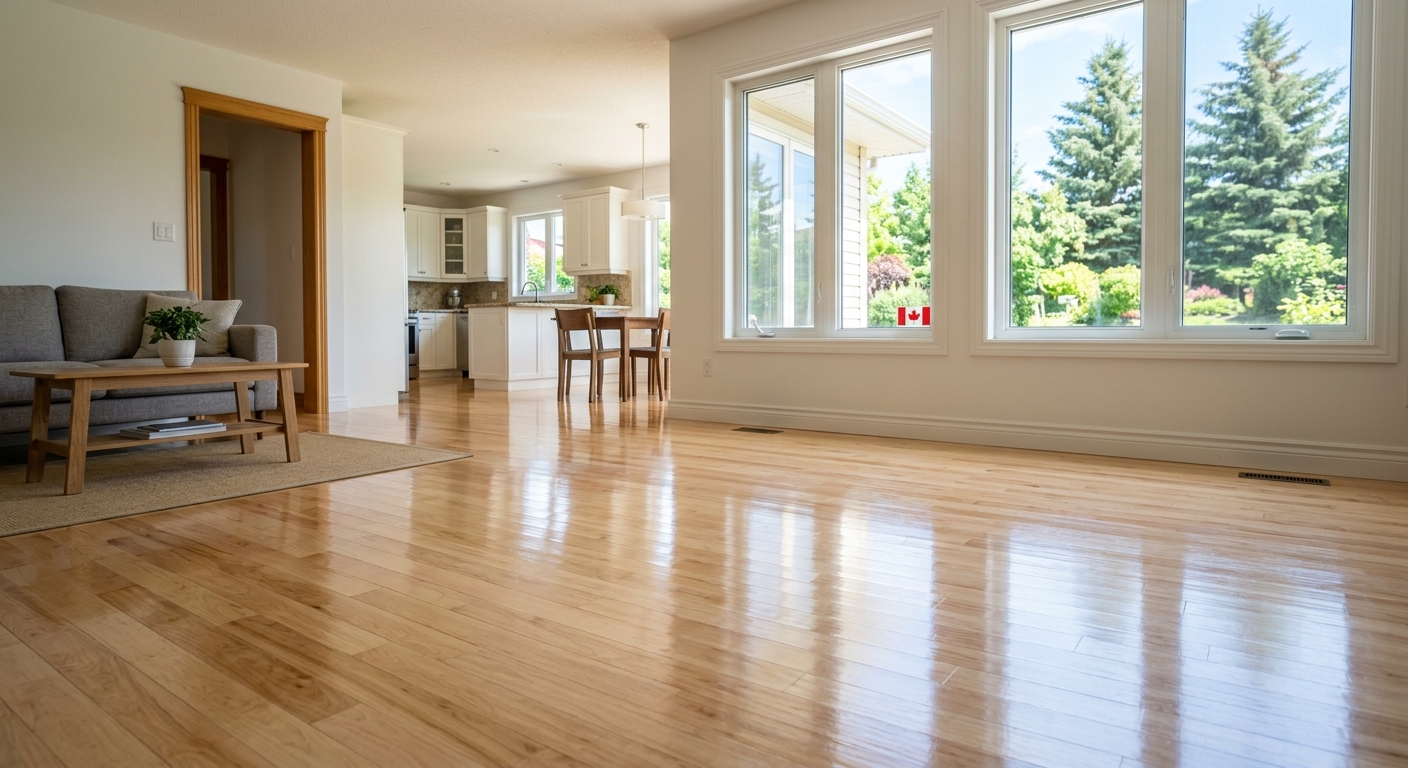
Flooring options and costs in Goderich
Goderich homeowners typically start flooring decisions with two realities: many houses are older, and the local climate can swing indoor humidity hard between winter and summer. In the Stratford–Bruce Peninsula area, 73.7% of homes were built before 1981 (Statistics Canada, 2021 Census), and that older stock often means the subfloor needs levelling, patching, or moisture-aware underlayment before you can install anything new. With 65.6% of dwellings being single-detached houses, you’ll also see more full-home renovations where prep work drives the total cost, not just the surface material. In practice, that prep is why a job that looks like “just flooring” can cost noticeably more here than in newer subdivisions.
Seasonal humidity swings also matter: wood products can gap, cup, or swell when moisture moves through the slab or subfloor. That’s why, in neighbourhoods with heavier renovation activity such as the West End (and areas close to the harbour where basements are common), contractors in Goderich often steer clients toward engineered hardwood or luxury vinyl plank (LVP) for basements and any space with higher moisture risk. For the same reason, colder-climate comfort—especially radiant floor heating—has become a common renovation upgrade, and that favours radiant-compatible engineered wood, many tiles, and appropriate LVP lines while limiting some solid hardwood installs and low-end laminate.
Below is a practical cost band comparison to help you estimate materials and installation expectations before you request itemised quotes.
| Type |
Best Room |
Moisture Resistance |
Lifespan |
Price per sq ft |
| Solid hardwood (nail-down, above grade only) |
Living / dining (dry, above-grade) |
Low (susceptible to humidity swings; avoid below grade) |
25–50 years (with proper conditions) |
$10–$18 |
| Engineered hardwood (float or glue, above + on-grade) |
Main floor, hallways, bedrooms (above/on-grade) |
Medium–high (more stable than solid; still needs good subfloor) |
20–40 years |
$12–$20 |
| Laminate (click-lock, above-grade) |
Bedrooms, offices (not basements) |
Low–medium (can swell at edges with moisture) |
10–25 years |
$4–$10 |
| Luxury vinyl plank / LVP (waterproof, any level) |
Basements, main floors with pet/kid traffic |
High (waterproof core; tolerates higher humidity better) |
15–30 years |
$6–$12 |
| Porcelain / ceramic tile |
Kitchen, bathrooms, entries |
High (waterproof when properly grouted/sealed) |
25–50 years |
$12–$22 |
| Carpet (broadloom or modular tile) |
Bedrooms, stairs, dens |
Medium (needs dry conditions; not ideal for damp basements) |
8–15 years |
$5–$11 |
Prices are estimates only and vary by project scope, site access and material selection.
What affects the price of flooring in Goderich
Two homeowners in Stratford–Bruce Peninsula can receive quotes that differ by 30–50% for what sounds like the “same” floor, and in most cases it’s not the flooring itself—it’s the preparation and installation conditions. Indoor humidity swings and below-grade moisture are the technical drivers: solid hardwood expands and contracts with moisture and temperature, and it can’t be glued or floated over concrete the way engineered products can. In basements, the risk is even higher because vapour drives moisture movement upward, so solid wood often performs poorly unless the system is engineered for it. Engineered hardwood and luxury vinyl plank (LVP) handle humidity and below-grade applications far better, and that stability is why they often win on value in Goderich renovations.
Cold-climate comfort also plays a role. Radiant floor heating is popular in Ontario upgrades, and that favours radiant-compatible engineered wood, many tiles, and selected LVP installations. That same reality rules out some solid hardwood approaches and some lower-end laminate lines that can’t tolerate temperature cycling. Older housing stock in Goderich (with much of it built before 1981) frequently needs subfloor levelling, patching, or repair before any new floor goes down; that prep is commonly a $1–$4 per sq ft add-on depending on how far out of level the substrate is.
Here are concrete examples of how costs rise or fall locally: if your main floor is out of level and needs an SLC/levelling compound, labour and material time increases even when you choose “just laminate.” Conversely, if you’re swapping carpet in a small, dry bedroom with good subfloor condition, carpet installation can land near the lower end of the $5–$11 band; but the minute you include transitions, stair work, or moisture-mitigation underlayments, the total moves toward the high end. In kitchens and bathrooms, tile can be an excellent long-term choice, often aligning with the $12–$22 band—especially when you factor in waterproofing and easier maintenance around spills.
| Price Factor |
Why It Matters |
Cost Impact |
| Room area in sq ft |
Material quantities and installation hours scale directly with coverage. |
Usually the biggest driver; large spaces spread fixed costs, lowering $/sq ft. |
| Subfloor condition |
Levelling/repair affects labour time and can require patching materials. |
Commonly adds roughly $1–$4 per sq ft in older Goderich homes. |
| Moisture / below-grade install |
Moisture movement can ruin solid wood and many laminates at edges. |
May require vapour-control products; often pushes you toward engineered or LVP. |
| Material choice |
Solid vs engineered vs LVP vs tile changes both product price and warranty expectations. |
Solid typically costs more in prep-sensitive areas; tile adds labour and setting time. |
| Removal and disposal of existing flooring |
Tearing out old material, underlay, and nails/staples takes time. |
Can add a noticeable labour premium, especially with glued down or tile removal. |
| Stair nosing / transitions |
Stairs and door transitions require precise cuts and extra finishing pieces. |
Often priced per step or per linear foot; expect add-ons beyond $/sq ft. |
| Radiant heat compatibility |
Not every product handles temperature cycling and heating protocols. |
May limit options and add cost if you need a radiant-rated underlayment. |
| Installation method |
Float, glue-down, or nail-down affects labour time, adhesives, and prep demands. |
Glue-down and nail-down generally require stricter substrate tolerances. |
Permits & regulations in Ontario
In Ontario, the act of installing most flooring surfaces does not require a building permit. Typical “no permit” work includes removing existing carpet or hard surface flooring, installing carpet, laying click-lock laminate, floating engineered wood, and installing LVP over an approved underlayment system. Flooring-only jobs are usually governed by building practices and product requirements (like underlayment specifications and subfloor flatness), not permits.
Where permits can come into play is with associated systems. If your project includes structural subfloor repair that changes load paths, major framing modifications, or in-floor heating circuit work (including new wiring, electrical alterations, or changes to the electrical panel), you may need electrical permitting depending on what’s being done. In multi-unit buildings, the condo corporation’s rules matter too: sound transmission requirements often restrict hard-floor underlay choices on upper floors and may require specific underlay with approved impact performance. That’s not a building permit, but it is a legal requirement via the condo declaration—so request written approval before installing hardwood or tile above grade in a condominium.
To verify a Goderich-area contractor, start with Ontario licencing status where applicable to the trade, then confirm liability insurance and WSIB/WCB coverage. Ask for current certificates of insurance (you should see your contractor named, coverage limits, and the effective/expiry dates). For WSIB/WCB, request a clearance letter or proof of account/coverage status. If they won’t provide documents promptly, that’s a serious red flag.
Best flooring for each room in your Goderich home
Choosing the right floor by room is how Goderich homeowners avoid premature wear and moisture problems. Living and dining areas experience daily traffic and temperature changes, so engineered hardwood or a high-quality laminate can balance warmth and durability—especially when the subfloor is level and the underlayment is correct. For master bedrooms, comfort and quieter acoustics often make carpet a smart fit, or engineered wood if you prefer easy cleaning and a more consistent look throughout the main floor.
In kitchens, spills and humidity from cooking are constant. Luxury vinyl plank (LVP) is a strong choice because it’s waterproof and handles the moisture-vapour reality of homes built before 1981 (Statistics Canada, 2021 Census) better than materials that can swell at seams. If you want a premium, long-lasting surface, large-format porcelain tile is also ideal, but be prepared for higher labour because the substrate must be properly prepared and tile set requires a careful installation pace.
Basements are where decisions get most critical in the Stratford–Bruce Peninsula region. LVP is typically the clear winner because it tolerates moisture better and reduces the risk of gapping or cupping. Bathrooms should be porcelain or ceramic tile only, since they’re designed for wet environments when installed with proper grout and waterproofing details.
Radiant floor heating—an increasingly popular renovation upgrade in Ontario—also affects the best material choices. Engineered wood, many tiles, and radiant-compatible LVP can work well, while some solid hardwood installation methods and low-end laminate can struggle with temperature cycling. For example, in a basement office, spending toward the $6–$12 LVP band is often cheaper than attempting to force a “solid wood” look that may fail under below-grade conditions, costing more to replace later. For a bathroom refresh, tile within the $12–$22 band is usually justified because it delivers waterproof performance that LVP or laminate can’t match long-term in wet zones.
| Room |
Best Material |
Why |
Moisture Risk |
Price Band per sq ft |
| Living / dining room |
Engineered hardwood |
Warm feel with better stability during seasonal humidity swings. |
Low to medium (depends on humidity control and subfloor dryness) |
$12–$20 |
| Master bedroom |
Carpet or engineered hardwood |
Carpet adds comfort and sound absorption; engineered wood simplifies cleaning. |
Low (above-grade, if ventilation is kept consistent) |
$5–$20 |
| Secondary bedrooms |
Laminate (or engineered if you want longer service life) |
Good value and durable surface for kids and daily wear. |
Low (avoid basements and damp zones) |
$4–$15 |
| Kitchen |
Luxury vinyl plank (LVP) or porcelain tile |
LVP is waterproof and forgiving; tile is the easiest to manage for spills. |
Medium (humidity from cooking; occasional wet events) |
$6–$22 |
| Basement (finished) |
LVP |
Dimensionally more stable and designed for waterproof, below-grade conditions. |
High (moisture vapour and humidity swings are common) |
$6–$12 |
| Bathroom |
Porcelain / ceramic tile |
Wet-rated performance when installed with correct underlayment and grout details. |
High (direct water exposure) |
$12–$22 |
How to choose a flooring contractor in Goderich
Hiring the right flooring contractor in Goderich is mainly about verifying coverage, getting clear scope, and comparing apples-to-apples quotes. First, ask for proof of Ontario-appropriate licencing (where relevant to the scope), liability insurance, and WSIB/WCB coverage. How to check: (1) request a current certificate of insurance and confirm it’s active (effective and expiry dates) and that your contractor is the named insured; (2) request WSIB/WCB clearance or written proof of coverage status; (3) keep copies for your records. A reputable installer won’t hesitate to provide these documents quickly.
Next, get 2–3 itemised written quotes—not lump sums. You want a labour line, material line, and allowances that show what’s included: underlayment, levelling compound or repair, transitions, stairwork, and demolition/disposal. Read the exclusions carefully: are they removing old flooring? Are they responsible for haul-away? Is there an allowance for mouldy subfloor areas if moisture is found? Also confirm warranty details. You should receive a workmanship warranty (how long and what it covers), plus the product manufacturer warranty terms and whether it transfers if you sell your home.
Payment schedules matter. Never pay more than about 10–15% upfront. A practical holdback is best kept until the job is complete and the flooring has been cleaned and inspected. Finally, insist on timing in writing: a start date and a realistic completion estimate.
- Ask for insurance and WSIB/WCB proof before signing.
- Require an itemised quote: labour + materials + underlayment/levelling.
- Confirm whether subfloor levelling/repair is included or quoted as an allowance.
- Verify disposal/haul-away is included (or priced separately).
- Check if transitions and stair nosing are included per step/linear foot.
- Ask what moisture prep is used (vapour barrier/underlayment) for basements.
- Request the radiant heat compatibility statement if you have in-floor heating.
- Confirm underlayment type and thickness match the product spec sheet.
- Get start date, work hours, and completion target in writing.
- Review warranty: workmanship length, exclusions, and whether it’s transferable.
- Clarify how disputes are handled and who does final measurement checks.
- Set a payment schedule with a holdback until final inspection.
In Goderich, common red flags include: the contractor can’t provide insurance or WSIB/WCB proof; quotes that don’t list underlayment/levelling as separate lines; vague scopes like “prep included” without describing what happens if the subfloor is out of level; insisting on installing solid hardwood in a basement; and a payment request for a large upfront amount (beyond 10–15%) without a signed schedule.
Frequently asked questions — flooring in Goderich
What flooring is best for a Goderich basement?
For most Goderich basements, luxury vinyl plank (LVP) is the practical best choice because it’s waterproof and tolerates the humidity swings and below-grade moisture conditions common in the Stratford–Bruce Peninsula region. Solid hardwood is usually a poor fit for basements because wood can swell, cup, or gap when vapour drives moisture through the slab or subfloor. Laminate can also fail at seams when moisture gets in. A typical local budget for installed LVP often lands around the $6–$12 per sq ft band depending on thickness, wear layer, and whether levelling and vapour-control prep is needed. If your basement has any historical dampness, insist on moisture-aware prep and an appropriate underlayment system before the first plank is installed.
Can I install hardwood over concrete?
Yes, but the key is what type of hardwood you mean. Solid hardwood is generally intended for nail-down installs above grade, and it shouldn’t be glued or floated directly over concrete in most renovation scenarios. If you want a hardwood look over concrete, engineered hardwood is commonly the better solution because it’s designed to be more dimensionally stable. In Goderich, where indoor humidity swings can be noticeable between seasons, that stability matters for long-term performance. Also, your concrete needs to be properly prepared: flatness checks, moisture control where required, and correct underlayment (or approved glue system) are what prevent future movement. If you’re pricing the options, engineered floors typically cost more than laminate, often aligning with the $12–$20 band, but it can still be cheaper than replacing solid wood issues later.
How long does flooring installation take?
Installation timelines depend mostly on square footage, subfloor condition, and how much prep work is required. In older Goderich homes (with a large share built before 1981), subfloor levelling or repair is more common, which can add time before you even start laying product (Statistics Canada, 2021 Census). As a practical guide, a smaller bedroom swap over good subfloor can take a couple of days, while a whole main-floor project with transitions, stair work, and moisture-aware underlayment can take a week or more. Tile projects usually take longer because of setting and cure times, while click-lock laminate can be faster when the substrate is flat. When you get a quote, ask for a written start date, completion target, and whether there’s an allowance for subfloor surprises.
What flooring works with radiant heat?
In Ontario—including Goderich—radiant floor heating is increasingly common, especially in renovations that aim for year-round comfort. The best-performing options are typically radiant-compatible engineered hardwood, many porcelain/ceramic tiles, and select LVP products rated for heat cycling. Solid hardwood can sometimes be compatible, but it’s more sensitive to temperature changes and has stricter installation requirements; it’s not a universal recommendation for every radiant system. Low-end laminates are also more likely to struggle with temperature cycling, which is why many installers avoid them unless the manufacturer explicitly approves radiant conditions. The safest approach is to provide your radiant system details to the contractor and confirm written product compatibility before purchase. Your quote should specify underlayment and installation method so the system performs as intended.
Engineered vs solid hardwood — what's the difference?
Solid hardwood is one piece of wood throughout the thickness and is usually installed nail-down above grade. That means it relies heavily on stable humidity and temperature; when conditions swing, it can gap or cup. Engineered hardwood is built in layers (often a stable core with a hardwood wear layer on top), which makes it more dimensionally stable for Ontario conditions like the humidity swings seen in the Stratford–Bruce Peninsula region. In basements or on concrete slabs, engineered is typically the better choice because it tolerates moisture movement far better than solid. If you’re comparing costs, engineered hardwood often sits closer to the $12–$20 range depending on quality, while solid hardwood commonly lands in the $10–$18 range when conditions allow nail-down above grade. The “difference” is less about look and more about how the product handles your site’s moisture and heating realities.
Do I need to level my subfloor first?
In many Goderich installs, yes—at least to a tolerable flatness standard—because uneven subfloors cause squeaks, gaps at joints, and long-term failures. The need is especially common in older homes, where unevenness and patchy repairs can be found after carpet removal. For example, click-lock laminate can perform poorly if there are high spots or dips beyond the product’s tolerance, and vinyl may show low spots over time. Tile requires an even flatter substrate because it magnifies lippage and bond issues. In practice, subfloor levelling and repair can add cost, and it’s why some quotes differ by 30–50% across the region even when material choices look similar. If your contractor offers levelling as an allowance, ask for the flatness target, the prep steps, and whether moisture mitigation is included—especially for any basement areas.