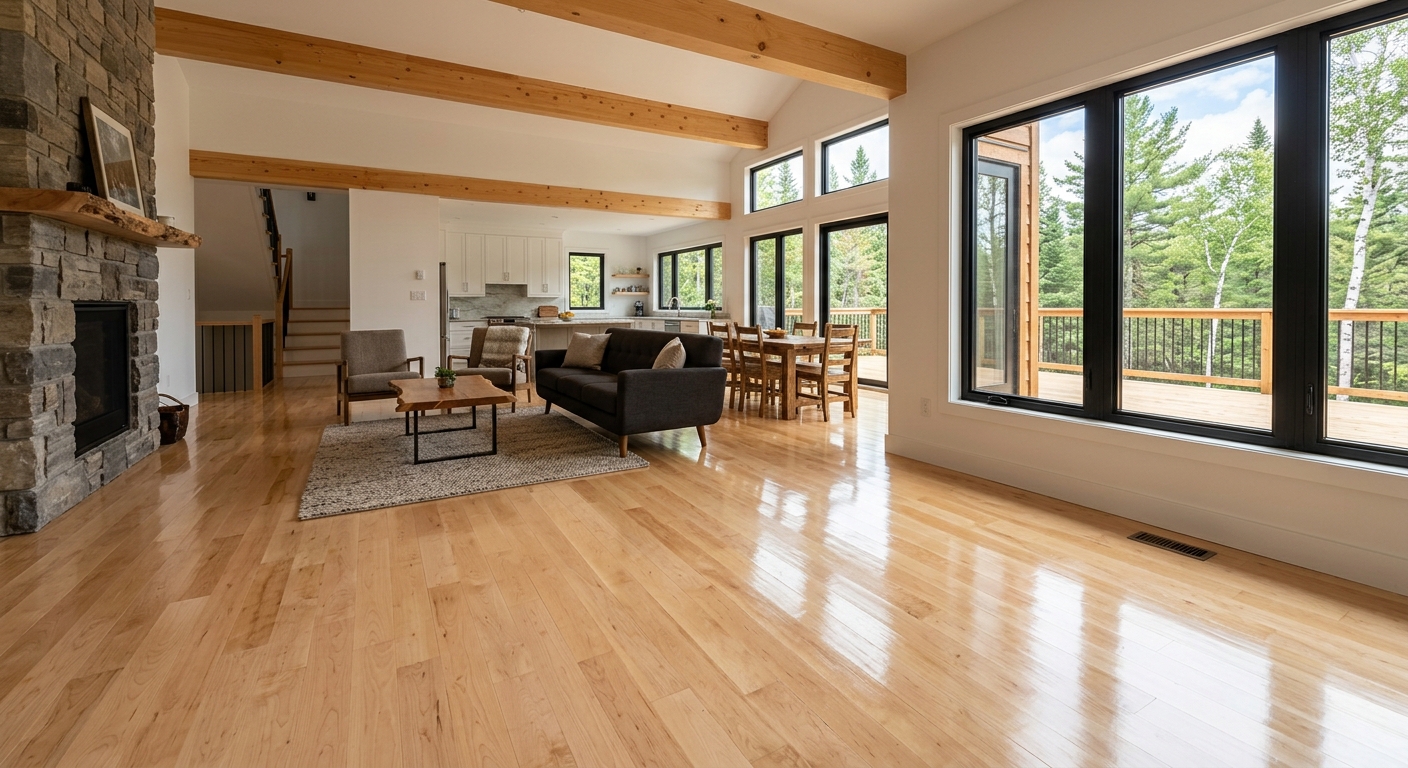
Flooring options and costs in Norfolk County
Norfolk County homeowners typically have a lot of flooring choice, but the best value depends on how your home holds up to seasonal humidity swings. In 2021, Norfolk County had 67,490 residents, and homeowner households made up 81.6% of households—so many projects are renovations tied to updating older housing. With 62.0% of homes built before 1981, it’s common to run into uneven subfloors, older underlayment, or patches that need levelling before you can install hard surfaces. That “prep work” is often what separates a realistic quote from an optimistic one.
In the Hamilton–Niagara Peninsula area, contractors see dry indoor air in winter and higher humidity in summer, plus recurring basement moisture concerns. That climate reality is a big reason engineered hardwood and luxury vinyl plank (LVP) are popular: they handle dimensional movement better than solid hardwood and tolerate below-grade conditions when properly detailed. Cold winters also drive demand for radiant-heat-compatible flooring—engineered wood, many LVP systems, and tile are preferred over traditional solid hardwood and some laminate setups.
If you’re near Simcoe or the other rural pockets along the North Shore corridor, flooring installs are especially in demand in family-heavy neighbourhoods where basements get finished and kitchen traffic is high. Before you pick a material, it helps to see the typical installed ranges side-by-side, including how moisture resistance and subfloor readiness affect the final ticket.
| Type |
Best Room |
Moisture Resistance |
Lifespan |
Price per sq ft |
Price Range |
| Solid hardwood (nail-down, above grade only) |
Living / dining, bedrooms |
Low (avoid basements and concrete) |
25–50 years |
$9–$18 |
$11,00 – $18,00 |
| Engineered hardwood (float or glue, above + on-grade) |
Living / dining, hallways |
Medium–high (stability improves over solid) |
20–40 years |
$9–$18 |
$12,00 – $18,00 |
| Laminate (click-lock, above-grade) |
Bedrooms, living areas |
Low–medium (not for wet basements) |
10–25 years |
$4–$10 |
$6,00 – $10,00 |
| Luxury vinyl plank / LVP (waterproof, any level) |
Kitchen, finished basement |
High (waterproof cores) |
15–25 years |
$4–$10 |
$6,00 – $11,00 |
| Porcelain / ceramic tile |
Kitchen, bathrooms, entries |
High (with proper membrane/underlayment) |
25–50 years |
$10–$22 |
$13,00 – $22,00 |
| Carpet (broadloom or modular tile) |
Bedrooms, stairs |
Medium (more sensitive to moisture) |
8–15 years |
$4–$9 |
$6,00 – $9,00 |
Prices are estimates only and vary by project scope, site access and material selection.
What affects the price of flooring in Norfolk County
Even when you’re comparing the “same” flooring product, quotes in Norfolk County and the wider Hamilton–Niagara Peninsula can vary by 30–50% once you account for the hidden drivers. The biggest reasons are technical: indoor humidity swings, below-grade moisture risks, subfloor repair/levelling needs, and the labour complexity of transitions and removals. Add in product availability and how quickly a contractor can schedule, and two homeowners with the same square footage can still see very different totals.
On the technical side, solid hardwood expands and contracts with humidity, and it also can’t be installed properly on concrete or in basements. That’s why solid is typically limited to above-grade work, while engineered hardwood and LVP are often chosen when basement moisture is a concern. Colder winter conditions in Ontario also increase demand for radiant-heat-compatible installs; many solid hardwood options get ruled out over time because not every board format tolerates thermal cycling, so you’ll see engineered wood, LVP, and tile more frequently.
Older housing stock (and your subfloor’s condition) is where the dollars stack up. In many pre-1981 homes, levelling or patching is required before hard surface flooring goes in; that prep commonly adds $1–$4 per sq ft. For example, moving from carpet to LVP often costs more than homeowners expect because removal, patch/level work, and moisture detailing can push the project toward the upper end of the $4–$10 band. Conversely, if your subfloor is already flat and dry, laminate at roughly $4–$10 per sq ft can come in closer to the low end, especially in bedrooms.
| Price Factor |
Why It Matters |
Cost Impact |
| Room area in sq ft |
Direct driver of material, underlayment, and labour time |
Often determines the base of the entire quote (commonly ±10% on large jobs) |
| Subfloor condition |
Uneven boards or damaged OSB require levelling and patching |
Typically adds about $1–$4 per sq ft |
| Moisture / below-grade install |
Moisture barriers and vapour control change the build-up |
Can shift pricing by roughly 10%–25% depending on basement conditions |
| Material choice |
Solid vs engineered vs LVP vs tile changes complexity and prep |
Hard surfaces can range from laminate/LVP ($4–$10) to tile ($10–$22) per sq ft |
| Removal and disposal of existing flooring |
Carpet, underpad, and old adhesive affect time and disposal fees |
Often adds a noticeable line item; can be $1–$3 per sq ft equivalent on average |
| Stair nosing / transitions |
Custom reducers, trims, and nosing materials are charged separately |
Per-step or per-linear-foot pricing can add 5%–15% total |
| Radiant heat compatibility |
Not all products tolerate heat cycling and flooring build-ups |
May move you to engineered/LVP/tile options at the higher end of the band |
| Installation method |
Float, glue-down, or nail-down changes labour and materials |
Glue-down and nail-down are usually more labour-intensive than click-lock |
Permits & regulations in Ontario
In Ontario, installing flooring as a stand-alone interior finish generally does not require a building permit. Where permits can come up is when the flooring project includes other regulated scopes—especially electrical work, structural subfloor modifications, or changes tied to in-floor heating controls. For example, if you’re adding or altering radiant heat thermostats, sensors, or electrical circuits, you may need an electrical permit and work must be done by (or supervised by) a licensed electrical contractor. If the project involves significant structural changes to a subfloor system (not just levelling a surface), the scope may trigger additional review depending on what’s being altered.
For condominium units, even when a permit isn’t required, condo corporations often restrict hard flooring due to sound transmission. Your documents and the corporation’s requirements for underlay (and the required STC/IIC performance) can determine whether you can install hardwood or tile on upper floors—and which underlay system you must use.
Step-by-step verification for Norfolk County homeowners:
- Verify the contractor’s Ontario licence details and business registration information through the appropriate provincial business/licensing channels (and confirm they provide a contract).
- Request a current certificate of insurance (general liability) naming you as the certificate holder if possible.
- Confirm WSIB/WCB coverage clearance: ask for proof of account status or a clearance letter and keep it with your paperwork.
- Get the scope in writing: product names, installation method, moisture barrier/underlayment included, transitions, and disposal.
- If you’re in a condo, request board approval in writing before hard-surface install.
Best flooring for each room in your Norfolk County home
Choosing flooring in Norfolk County means balancing comfort, traffic, and moisture management in a climate where winter air dries out and summer humidity climbs. In living and dining areas, engineered hardwood or high-quality laminate is a common “sweet spot” because they look great and install efficiently, with engineered wood giving you better dimensional stability than solid hardwood when the house breathes through seasons. For bedrooms, carpet still wins for day-to-day comfort and sound absorption—especially on stairs and upper levels—while engineered hardwood is a strong alternative if allergies are a concern.
Kitchens typically favour luxury vinyl plank (LVP) or large-format porcelain tile. LVP is attractive because it tolerates spills and helps resist moisture vapour issues that show up in older homes. Tile is excellent for cleaning and water tolerance, but it’s heavier and more sensitive to subfloor flatness. In basements, LVP is usually the clear winner: it’s waterproof with the right vapour-control build-up and it tolerates below-grade conditions far better than solid wood and most laminate.
Bathrooms should be porcelain or ceramic tile with proper waterproofing details. If you have radiant heat (more common in newer Ontario builds), choose radiant-compatible engineered wood, many LVP systems designed for heat, or tile. A practical example: if you compare LVP and tile, a tile job might land closer to the $10–$22 per sq ft band, but it can be justified in a bathroom where water exposure is constant and the long lifespan offsets the higher upfront cost.
| Room |
Best Material |
Why |
Moisture Risk |
Price Band per sq ft |
| Living / dining room |
Engineered hardwood |
Warm feel, stable across seasonal humidity swings |
Low to medium |
$9–$18 |
| Master bedroom |
Carpet or engineered hardwood |
Carpet adds comfort and reduces sound; engineered keeps it looking sharp |
Low |
$4–$18 |
| Secondary bedrooms |
Laminate (click-lock) or carpet |
Fast install, good value if subfloor is already flat |
Low |
$4–$10 |
| Kitchen |
LVP or large-format porcelain tile |
Resists spills, easier cleanup, handles day-to-day wear |
Medium |
$4–$22 |
| Basement (finished) |
LVP (waterproof) |
Best durability for below-grade humidity and moisture vapour |
High |
$4–$11 |
| Bathroom |
Porcelain / ceramic tile |
Water-ready surface when installed with correct waterproofing build-ups |
High |
$10–$22 |
How to choose a flooring contractor in Norfolk County
Picking the right flooring contractor in Norfolk County is mostly about proof: proof they’re insured, proof their numbers add up line-by-line, and proof they install the way the product requires. Start by verifying Ontario licensing and confirm they carry liability insurance. Then check WSIB/WCB coverage: ask for current clearance documentation or proof of account status before work begins. If they can’t provide it, that’s a major risk for you as the homeowner.
Next, get 2–3 itemised written quotes. A proper quote breaks labour and materials separately, and lists what’s included for underlayment, moisture barrier (where needed), transitions, and disposal. Avoid vague “installed price” language without a scope—especially in older Norfolk County homes where subfloor levelling and patching can make or break the outcome. A quote should say whether levelling compound is included, what type of prep is expected, and whether labour includes removal of existing flooring.
Warranty matters too. Ask for both workmanship warranty length and whether the product warranty is transferable (or requires registration). Pay attention to payment scheduling: never agree to more than 10–15% upfront, and request a holdback until completion and final punch-list. Finally, insist on a start date and estimated completion timeline in writing so you can plan around family schedules and basement humidity exposure during prep.
- Confirm Ontario business details match the contract name and address.
- Request certificate of insurance and verify the policy is active.
- Ask for WSIB/WCB clearance letter or proof of coverage before the crew arrives.
- Get an itemised breakdown: materials, labour, and accessories (transition strips, trims).
- Confirm underlayment/moisture barrier is included and specify the product type.
- Ask whether subfloor levelling/repair is included; if not, clarify who assesses flatness.
- Verify removal and disposal are included (and what they’ll do with nails, tack strips, or old adhesive).
- Check warranty: workmanship duration, coverage limits, and how issues are remedied.
- Confirm product warranty details: brand, model, and whether it transfers to you.
- Review the payment schedule in writing and request a small holdback for completion.
- Ask about dust control and protection of HVAC returns and nearby finishes.
- Get the timeline in writing, including curing/settling time if levelling compounds are used.
Red flags in Norfolk County: contractors quoting without measuring moisture and flatness, refusing to show insurance/WSIB/WCB proof, “lump sum only” pricing with no scope details, promises of basement installs without a moisture-control plan, and vague warranty terms that don’t specify workmanship coverage.
Frequently asked questions — flooring in Norfolk County
What's the most durable flooring for pets and kids?
For most Norfolk County families, waterproof LVP is the go-to because it stands up to accidents and everyday impacts better than laminate, and it’s easier to clean after spills. If you need maximum scratch resistance and are okay with higher cost, porcelain tile is also very durable, especially in entries and kitchen zones. That said, durability isn’t only about the surface—installation details matter. In older homes (many built before 1981), subfloor flatness and moisture control can affect how any “durable” floor performs over time. If you’re working within the typical laminate/LVP band, expect realistic installed pricing around $6,00 – $11,00 for LVP and higher for tile. A good contractor will also recommend the right transitions at doorways to reduce lift and wear.
How do I choose flooring for humidity in Norfolk County?
Humidity swings are a real driver of performance in Ontario, especially in the Hamilton–Niagara Peninsula where winter air can be dry and summer humidity can rise. In Norfolk County homes, humidity issues often show up in basements and around concrete slabs, so you generally want dimensionally stable products in those areas. Solid hardwood is typically limited to above-grade rooms because it expands/contracts with humidity and performs poorly in basement or concrete conditions. Engineered hardwood is often a better choice for the main floor, while LVP is usually best for finished basements because waterproof cores handle moisture vapour and spills more reliably. If you’re comparing budgets, laminate often sits around $4–$10 per sq ft, but for basement humidity you’ll usually be better off moving to LVP in the higher end of the same band (commonly near $6,00 – $11,00 installed).
Do condos restrict hard flooring?
In many Ontario condominiums, the flooring is restricted not because a permit is required for the finish, but because the condo corporation must manage sound transmission between units. That usually means you must follow underlay requirements and sometimes meet specific STC/IIC performance targets for hardwood or tile on upper floors. For Norfolk County homeowners buying into a multi-unit building, the key step is reviewing the condo declaration and obtaining board approval in writing before you start. A flooring contractor can install properly, but if you don’t comply with the building’s rules, you may be required to correct or remove the floor. Even if you’re aiming for engineered hardwood or tile, ask your contractor which underlay system they plan to use and confirm it matches the condo’s written spec.
How do I compare flooring quotes?
The best way to compare quotes in Norfolk County is to compare scope, not just the final number. Ask for itemised pricing that clearly separates labour and materials, including underlayment/moisture barrier, transitions, removal and disposal, and any subfloor levelling/repair allowance. In many pre-1981 homes, flatness issues are common, so a quote should state how they’ll address unevenness and what happens if additional prep is needed. Also check whether radiant heat compatibility is considered—if you’re installing over in-floor heating, not every material performs the same. Finally, compare warranties: workmanship duration and product warranty coverage, plus whether the product warranty is transferable to you. If one quote lists tile in the $10–$22 per sq ft band but doesn’t mention the membrane build-up, it’s not truly comparable to a quote that includes correct waterproofing details.
Can I install flooring over existing tile in Norfolk County?
Sometimes, but it depends on tile condition and the type of new flooring. Over existing tile, the main concern is creating a flat, stable substrate. LVP and laminate generally require a smooth, well-prepared surface; if the tile is loose, uneven, or has high grout ridges, the new floor can “telegraph” imperfections or fail around the edges. Tile-over-tile for tile itself is also possible, but only when the existing surface is properly bonded and suitable for the new mortar system. Most successful installs involve either thorough prep (scraping and smoothing) or selective removal in problem areas. In older Norfolk County homes, uneven subfloor conditions can also be hidden under finishes, so a contractor should inspect before quoting. If you’re considering LVP priced around $6,00 – $11,00 installed, insist the quote explains what they’ll do to flatten and prep the tile substrate.
What is the best flooring for a high-traffic area in Norfolk County?
For high-traffic areas—entries, hallways, and busy living spaces—porcelain/ceramic tile and quality engineered hardwood are top performers. Tile is extremely hard-wearing and handles moisture well when the system is installed correctly, which is useful in homes that see salted snow tracking in during Ontario winters. Engineered hardwood is a strong choice because it tolerates normal seasonal movement better than solid wood and still provides a warm, residential feel. For more budget-friendly durability, waterproof LVP is often the practical middle ground, especially when your home has basement moisture concerns or you want easier maintenance. If you’re comparing price points in Norfolk County, tile often lands in the $10–$22 per sq ft range, while LVP typically sits lower (often near $6,00 – $11,00 installed). The “best” choice is the one that matches your moisture risk and gets installed over a properly prepped subfloor.