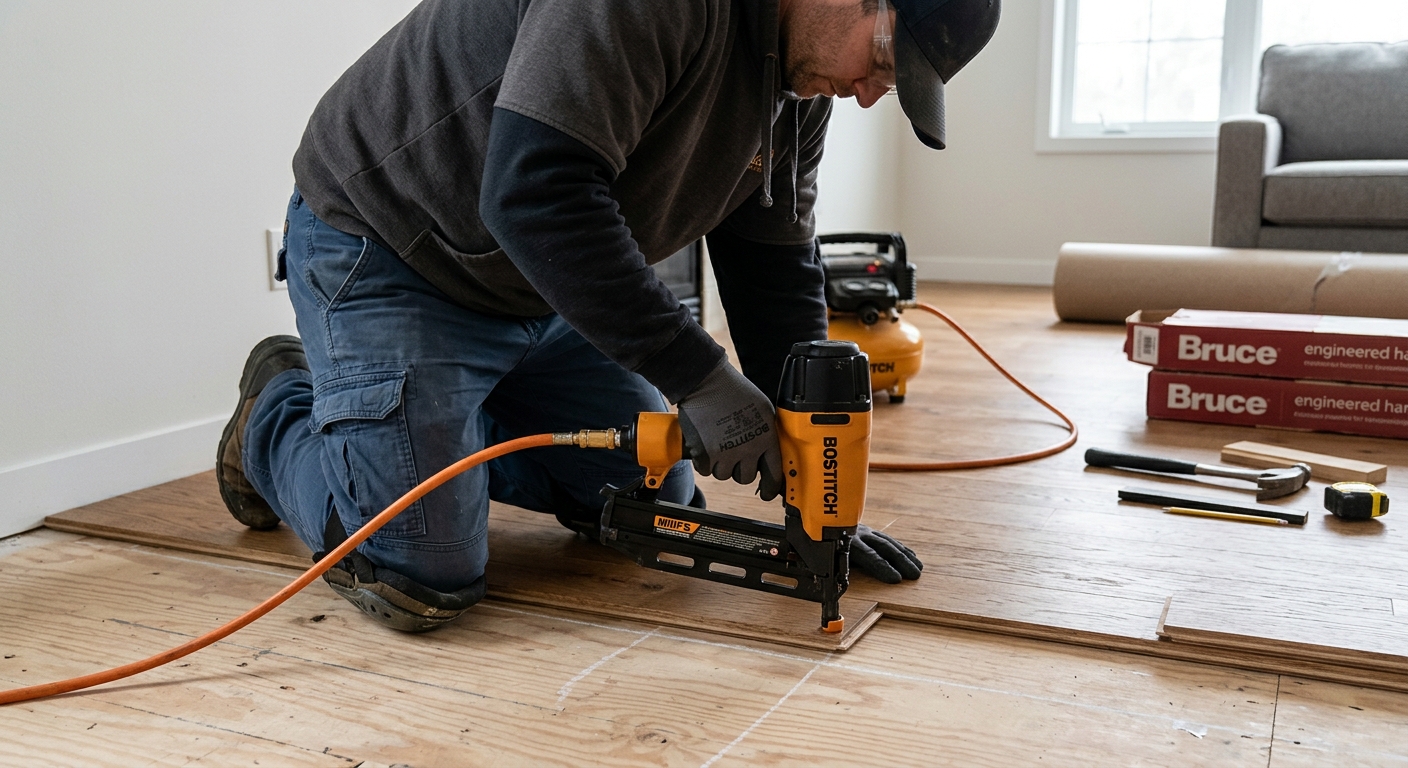
Flooring options and costs in Red Deer
Red Deer homeowners usually price flooring around how the home behaves seasonally. With 100,844 people in the city (Statistics Canada, 2021 Census), there’s a steady mix of updates and full renos, and that affects contractor availability and scheduling. You’ll also see more variability in quotes because Red Deer has a large older-housing footprint: 34.1% of dwellings were built before 1981 (Statistics Canada, 2021 Census). In practical terms, older subfloors are more likely to be uneven, have minor deflection, or need patching/levelling, which adds labour and underlayment/patch materials before any new surface can be installed.
Alberta winters push indoor dryness and then spring can bring rapid humidity swings, so the “wrong” material choice can translate into gaps, cupping, or failures in basements and concrete-adjacent areas. That’s why engineered wood and luxury vinyl plank (LVP) are often the best value in Red Deer: engineered planks handle everyday moisture better than solid hardwood, and waterproof LVP performs strongly in both on-grade and below-grade installs. Solid hardwood remains a premium look choice, but in Alberta it’s typically limited to above-grade rooms unless the assembly is engineered specifically for your exact conditions.
In neighbourhoods like Riverside Meadows and Anders on the south/east sides, flooring contractors often see high demand because homeowners there frequently do open-concept upgrades and finish basements as families settle in. From there, you can compare typical material cost ranges in the table below.
| Type |
Best Room |
Moisture Resistance |
Lifespan |
Price per sq ft |
| Solid hardwood (nail-down, above grade only) |
Main floors (not basements) |
Low to moderate (sensitive to humidity) |
30–50+ years |
$10,–$22 |
| Engineered hardwood (float or glue, above + on-grade) |
Main floors; some on-grade entries |
Moderate to high (more stable than solid) |
20–35 years |
$11,–$20 |
| Laminate (click-lock, above-grade) |
Living rooms, bedrooms (dry zones) |
Moderate (water can damage core at seams) |
15–25 years |
$5,–$12 |
| Luxury vinyl plank / LVP (waterproof, any level) |
Kitchen, main floor traffic zones, basements |
High to waterproof (with correct prep) |
20–30 years |
$6,–$15 |
| Porcelain / ceramic tile |
Bathrooms, kitchens, entries |
Very high (with proper grout/sealing if needed) |
25–50+ years |
$12,–$28 |
| Carpet (broadloom or modular tile) |
Bedrooms, stairs (comfort) |
Low to moderate (avoid basements unless controlled) |
7–15 years |
$4,–$9 |
Prices are estimates only and vary by project scope, site access and material selection.
What affects the price of flooring in Red Deer
In Red Deer, two homes can receive quotes that differ by 30–50% even when they list the same “type” of flooring. The main reason is that the installed cost depends heavily on site conditions—especially in older properties common in the region—plus whether your assembly has to be changed for Alberta’s indoor humidity swings and basement moisture risk.
Technically, solid hardwood expands and contracts with humidity and is typically not suitable over concrete or for most below-grade applications. In practical quote terms, that rules out solid wood for most basements, and it can also affect whether your contractor recommends climate controls and an appropriate underlayment system. Engineered hardwood and luxury vinyl plank (LVP) handle day-to-day moisture better, which is why they’re frequently positioned as better fits for the Red Deer economic region.
Radiant heat compatibility also matters: colder Alberta homes with in-floor heating (in-slab or underfloor systems) often require products rated for heat transmission. That can exclude certain solid hardwood installs and some laminate options, pushing the project toward engineered or radiant-approved flooring. On older housing stock, expect levelling/repair to add meaningful labour—commonly around $1–$4 per sq ft—because uneven subfloors must be corrected to prevent clicking failures in laminate, movement in LVP, or squeaks and fastener problems with hardwood.
Concrete examples: (1) If you’re removing old carpet and the subfloor has concrete patches, levelling can add time and materials even if your “finish” flooring is in the $10–$22 hardwood band. (2) If your install is in a basement over moisture-prone concrete, choosing waterproof LVP (often within the $5–$12 laminate/vinyl plank band for many entry-to-mid grades) can reduce risk and rework compared with attempting solid hardwood. From there, you can pinpoint your costs with the factors below.
| Price Factor |
Why It Matters |
Cost Impact |
| Room area in sq ft |
Larger areas increase material quantities and labour time |
Direct: can move total by thousands |
| Subfloor condition — levelling or repair needed before install |
Uneven floors require prep to protect the click system or planks |
Often +$1–$4/sq ft depending on condition |
| Moisture / below-grade install — rules out solid hardwood |
Humidity swings and basement moisture change which products are safe |
Can add moisture testing; may change material type |
| Material choice — solid vs. engineered vs. LVP vs. tile |
Different construction tolerates different conditions |
Solid hardwood typically highest; LVP often middle |
| Removal and disposal of existing flooring |
Disposal fees and demolition time affect labour |
Often +$1–$3/sq ft for mixed removals |
| Stair nosing / transitions — charged per step or per linear foot |
Transitions and stair finishing are labour-intensive details |
Can add several hundred to over $1,000 |
| Radiant heat compatibility — limits material options |
Only certain products and assemblies transmit heat correctly |
May increase material cost or require different underlayment |
| Installation method — float vs. glue-down vs. nail-down |
Method drives labour and required prep/adhesives |
Glue-down generally more prep/time than click-lock |
Permits & regulations in Alberta
In Alberta, flooring installation itself usually does not require a building permit. Replacing your flooring surface in a typical single-family home—carpet, laminate, LVP, engineered hardwood, or tile—generally falls under common renovation work that doesn’t trigger permits. That said, associated work can change the permitting picture. If your flooring project includes electrical components (for example, adjustments or repairs to in-floor heating wiring or new circuit work), electrical permits may be required.
In multi-unit buildings and condominiums, the rules often come from the condo corporation, not from a building-permit process. Sound transmission requirements (commonly discussed through STC/IIC expectations) may restrict hard flooring on upper floors unless you use approved underlay systems. Before work starts, review your condo declaration and obtain board approval in writing if required—especially for tile and hardwood-related assemblies.
To verify your contractor in Red Deer step-by-step, ask for three things and check them before you sign:
- Alberta licence/registration details (if applicable to the contractor’s trade scope) and confirmation of who will be on-site.
- Certificate of liability insurance with coverage amounts matching your project scale—ensure it lists the correct business name.
- WSIB/WCB coverage: request proof of clearance or active coverage, and confirm the “clearance” document is current.
- For in-floor heating: ask whether any electrical work triggers an electrical permit and who will pull it.
Using a contractor who’s ready with documentation reduces the risk of delays and protects you if something goes wrong during prep, underlayment installation, or any electrical-related scope.
Best flooring for each room in your Red Deer home
Choosing flooring by room helps you spend once and avoid callbacks. In Red Deer’s climate, indoor humidity can swing through the year, and basements are more likely to see vapour and moisture pressure. For daily living areas, you want warmth underfoot but also durability for traffic. Living and dining rooms usually perform best with engineered hardwood or a high-quality laminate—both balance comfort and practicality when installed over properly prepared subfloors. For master bedrooms, carpet is a strong option for comfort and sound absorption, while engineered hardwood can work if you maintain reasonable indoor humidity levels.
Kitchens take water exposure seriously: luxury vinyl plank (LVP) is a common favourite because it’s forgiving around spills and easy to clean, and it’s often easier to install than tile without sacrificing performance. If you love the look of stone, large-format porcelain tile is excellent for water resistance, though you need good substrate prep to prevent cracking.
Basements (finished) are where Red Deer homeowners see the biggest pay-off. LVP is the clear winner because it’s waterproof and handles below-grade installations far better than solid wood and most laminate products. Bathrooms should be porcelain or ceramic tile only—this is a “do it right” zone for slip resistance and water management. If your home includes radiant heat, prioritize products that are specifically rated for radiant compatibility so the assembly warms evenly and doesn’t damage the flooring. As a price example, upgrading from standard laminate to waterproof LVP in a basement can be justified when moisture testing shows higher vapour conditions; you may be paying closer to the $5–$12 vinyl plank band rather than risking a repeat install.
| Room |
Best Material |
Why |
Moisture Risk |
Price Band per sq ft |
| Living / dining room |
Engineered hardwood |
Warm look with better stability than solid wood |
Low (above grade) |
$11–$20 |
| Master bedroom |
Carpet or engineered hardwood |
Comfort and quieter feel; engineered keeps floors stable |
Low |
$4–$9 (carpet) or $11–$20 (engineered) |
| Secondary bedrooms |
High-quality laminate |
Cost-effective durability for family use |
Low (keep spills managed) |
$5–$12 |
| Kitchen |
Luxury vinyl plank (LVP) or porcelain tile |
Easy cleaning; LVP handles minor spills well |
Medium (spills and humidity peaks) |
$6–$15 (LVP) or $12–$28 (tile) |
| Basement (finished) |
Luxury vinyl plank (LVP) |
Waterproof and more forgiving over concrete |
High (vapour/moisture pressure possible) |
$6–$15 |
| Bathroom |
Porcelain / ceramic tile |
Waterproof surface with durable finishes |
Very high |
$12–$28 |
How to choose a flooring contractor in Red Deer
When you’re hiring a flooring contractor in Red Deer, start with verification and then move to documentation. In Alberta, ask for proof of liability insurance and current WSIB/WCB coverage (or a clearance document). For many homeowners, the simplest check is: request the certificates up front, then review the document dates and the insured business name before you commit to pricing. Don’t rely on verbal confirmation.
Next, get 2–3 itemised written quotes. You want a labour-and-materials breakdown, not just a single lump sum. Itemisation should include what’s included for prep (subfloor levelling, grinding, patching), what type of underlayment is being used (and where), and how transitions and stair nosing will be handled. Pay close attention to exclusions: sometimes “floor removal” doesn’t include underlayment removal, or disposal is not included. Also confirm whether moisture testing is included when your basement is involved, since that can prevent an expensive mistake.
Warranty matters on two levels: workmanship and product. Ask for the workmanship warranty length, whether it’s transferable, and what conditions void it (often related to moisture levels, acclimation, or improper installation methods). For payment schedule, never pay more than 10–15% upfront; hold back a portion until the full job is complete and you’ve confirmed transitions, baseboards, and cleanup.
Finally, insist on a start date and an estimated completion timeline in writing. In Red Deer’s winter season, a clear schedule prevents delays that can affect humidity control and material acclimation.
- Request liability insurance and confirm coverage limits match your project.
- Ask for current WSIB/WCB clearance/proof—check it’s not expired.
- Get an itemised quote with material and labour separated.
- Confirm subfloor prep scope (levelling/patching) and who checks flatness.
- Ask about moisture testing for basements and concrete slabs.
- Verify underlayment type and thickness for your exact flooring product.
- Clarify removal scope: what’s torn out and what’s disposed of.
- Confirm stair work pricing: nosing per step and transitions per linear foot.
- Ask how they handle door jambs—planing/clearance is usually required.
- Get manufacturer warranty terms in writing and workmanship warranty terms.
- Set a payment schedule capped at 10–15% deposit; hold back at completion.
- Require a written schedule with start date and estimated completion.
Red flags I commonly see in Red Deer include: (1) no written scope for prep/levelling, (2) no proof of WSIB/WCB coverage, (3) refusing to provide certificate of insurance, (4) quotes that don’t mention transitions/stairs or disposal, and (5) pressuring large deposits upfront.
Frequently asked questions — flooring in Red Deer
Can I install hardwood over concrete?
In most Red Deer homes, you can install engineered hardwood over concrete when the system is designed for it (correct moisture conditions, proper subfloor prep, and the right installation method such as glue-down or a manufacturer-approved system). Solid hardwood over concrete is generally a poor fit because it’s sensitive to humidity and doesn’t behave well when locked in over slab movement. Before any wood goes down on concrete, reputable installers will check moisture and confirm the slab is within the product’s limits. If your basement is part of the plan, it’s usually safer to choose engineered wood for above/on-grade areas and consider waterproof LVP for below-grade. Always ask whether your contractor includes moisture testing as part of the scope.
How long does flooring installation take?
Timelines in Red Deer depend on square footage, subfloor prep, and removal. For a straightforward above-grade install over an already-flat subfloor, you might see a couple of days for labour on a typical main-floor area. If your home is older—remember, 34.1% of dwellings were built before 1981 (Statistics Canada, 2021 Census)—prep can take longer because levelling and patching are more common. Basements and tile jobs often take additional time for substrate preparation, layout, and curing. If you’re comparing materials, note that tile (often in the $12–$28/sq ft range) usually requires more time than LVP in the $5–$12 band for many projects. Ask for a written start date and completion estimate tied to your exact room measurements.
What flooring works with radiant heat?
For radiant heat in Alberta, you need flooring and an assembly that are rated for heat transmission. In practice, many homeowners choose engineered hardwood or radiant-approved LVP, because they’re built to tolerate temperature changes more predictably than solid hardwood. Many laminate products can work too, but only if the manufacturer confirms radiant compatibility and installation instructions are followed exactly (underlayment, spacing, and acclimation). Solid hardwood is often limited because it expands/contracts more with humidity and temperature. If your home uses in-floor heating, ask your contractor to confirm “radiant heat compatibility” in writing before quoting. In Red Deer, this is particularly important because winters are long and indoor temperature targets often shift more than in milder provinces.
Engineered vs solid hardwood — what's the difference?
Solid hardwood is one piece of real wood throughout and is typically installed nail-down and kept for above-grade rooms. It’s durable and can last decades, but it’s sensitive to Alberta’s humidity swings, so it usually shouldn’t be installed over concrete or in basements. Engineered hardwood is layered wood with a stable core and a hardwood wear layer. It can be more forgiving over properly prepared slabs and can often be installed with float or glue-down methods depending on the product. For Red Deer homeowners, engineered is frequently the better balance of look and performance. Price-wise, you’ll usually see solid hardwood in the premium range (roughly the $10–$22 band) while engineered often lands slightly below or overlapping depending on grade (commonly around $11–$20). Your installer should recommend based on moisture testing and the room’s grade level.
Do I need to level my subfloor first?
Usually, yes—at least to a “flooring-manufacturer flatness” standard. In Red Deer, older homes and renovated basements can have uneven joists, minor waves, or patched areas that look fine under carpet but create problems under click-lock laminate and can lead to squeaks or movement under hardwood. Levelling is also critical for LVP so it doesn’t rock at edges. Typical adds to cost come from prep work: levelling/repair is commonly in the ballpark of $1–$4 per sq ft when required, and that’s before considering removal/disposal. The best contractors measure flatness and document what they find. If moisture is part of the issue, they should address it before levelling because levelling over the wrong conditions can trap moisture.
What's the most durable flooring for pets and kids?
For pets and kids in Red Deer, the most consistently durable option is often waterproof luxury vinyl plank (LVP) or porcelain/ceramic tile—assuming the subfloor prep is done correctly. LVP tends to be more forgiving with minor spills, accidents, and day-to-day impacts, and it usually performs well in high-traffic areas and basements. Tile is extremely tough and resists water, but it can be harder underfoot and more prone to cracking if the substrate isn’t prepared properly. Hardwood can work well, but it’s a higher-maintenance choice in basements and anywhere moisture risk exists. If you’re balancing durability with budget, LVP commonly falls within the $5–$12 laminate/vinyl plank band for many midrange projects, while tile often lands in the $12–$28 band. If you tell your contractor where the accidents happen most, they can recommend the right wear layer and thickness.