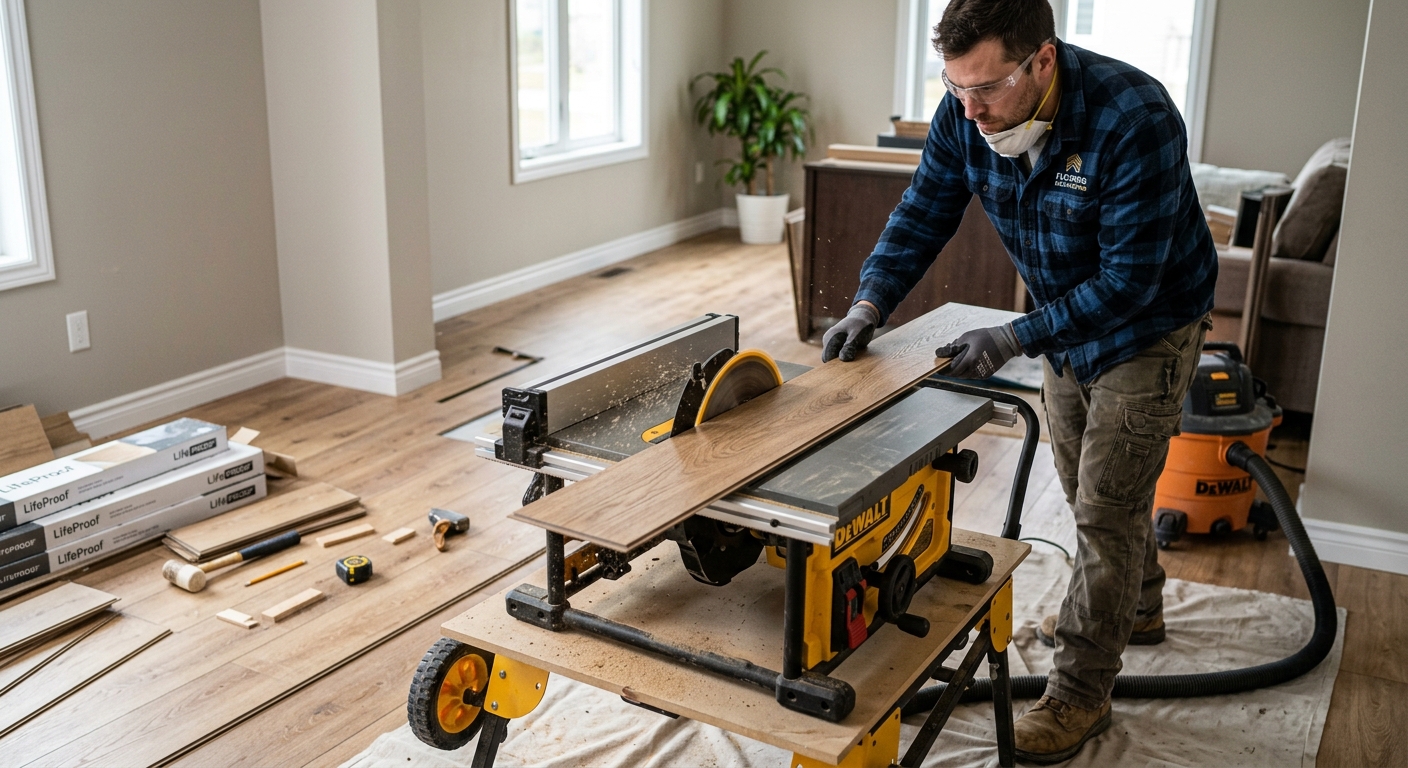
Flooring options and costs in Old East York
Old East York, Ontario is a great place to update your floors, but the neighbourhoods around the Bloor–Danforth corridor and the pocketed, older housing stock mean every quote has to factor in moisture behaviour and subfloor prep. For example, with a 2021 population of 9,233 (Statistics Canada, 2021 Census), demand is steady, and contractors can be scheduled quickly in peak renovation months. At the same time, many older Toronto-area homes are more likely to have uneven subfloors and damaged plywood/underlay layers that need levelling or replacement before install—prep is often what separates a “cheap” install from a long-lasting one.
In Toronto-area homes, indoor humidity swings through the seasons are a real issue: hardwood can expand and contract, and below-grade moisture can migrate up through concrete. That’s why, in most Old East York projects, we steer homeowners toward engineered hardwood or luxury vinyl plank (LVP), especially in condos and newer infill where concrete slabs and airtight basements are common. If you’re installing over radiant floor heating, engineered wood, tile, and many vinyl systems are better matched than traditional solid hardwood because the heating cycle affects expansion more predictably.
Labour pricing is also pushed up by renovation demand and higher construction wages in the Toronto market, so the “installed” cost gap between products is usually wider than the material-only sticker price. The good news: once the subfloor is right and the product is moisture-appropriate, you can get a floor that looks sharp and performs reliably for years. Use the table below as a budgeting baseline for your room choice.
| Type |
Best Room |
Moisture Resistance |
Lifespan |
Price per sq ft |
| Solid hardwood (nail-down, above grade only) |
Living / dining on a wood subfloor |
Low to moderate (humidity-sensitive) |
20–30+ years |
$10–$18 |
| Engineered hardwood (float or glue, above + on-grade) |
Main floors, hallways, bedrooms |
Moderate (designed for humidity) |
15–30 years |
$9–$16 |
| Laminate (click-lock, above-grade) |
Secondary bedrooms, light-traffic areas |
Low to moderate (seams can swell) |
10–20 years |
$4–$8 |
| Luxury vinyl plank / LVP (waterproof, any level) |
Kitchen, main floor, basements |
High (waterproof core) |
15–25+ years |
$6–$11 |
| Porcelain / ceramic tile |
Kitchen, baths, entryways |
Very high (grout still needs care) |
25–50+ years |
$14–$25 |
| Carpet (broadloom or modular tile) |
Master bedroom, stairs |
Low to moderate (spot-cleaning needed) |
7–15 years |
$5–$11 |
Prices are estimates only and vary by project scope, site access and material selection.
What affects the price of flooring in Old East York
In Old East York and the wider Toronto market, it’s common to see the same “flooring type” priced 30–50% apart between bids. Two homes can look similar on paper, but the real drivers are usually subfloor condition, removal work, and how moisture-safe the install needs to be for your building. Ontario also has higher baseline construction costs in the Toronto economic region, and that pushes up labour rates when trades are in high demand.
Technically, Toronto-area indoor humidity swings across seasons are the key issue. Solid hardwood expands and contracts with moisture and cannot be glued or floated over concrete; it also performs poorly in basements where below-grade vapour is more likely. Engineered hardwood and LVP handle humidity and below-grade applications far better, so contractors can install with the correct underlayment/barrier system rather than treating the job like an all-purpose “one product fits all” situation. In colder parts of the region—and especially in newer custom homes—radiant floor heating is increasingly common, which limits material choices and adds coordination with the heating system.
Older regional housing stock often needs levelling or repair before new flooring goes in. That prep can add roughly $1–$4 per sq ft in many Toronto-area renovations (depending on whether it’s just self-levelling compound versus partial plywood replacement). As a simple budgeting example, moving from laminate at around $4–$8 per sq ft to engineered hardwood at $9–$16 per sq ft can be justified when your subfloor requires a moisture-tolerant system; the “cheaper” product sometimes costs more in the long run if it fails or needs rework after humidity cycles.
In practical Old East York terms, I often see two cost surges: converting a concrete slab room to wood (more moisture mitigation + correct adhesive/primer where required) and installing over a worn-out underlayment layer (extra prep labour). Conversely, open-concept rooms with easy access and minimal furniture moves can bring labour time down, keeping your project closer to the low end of the bands.
| Price Factor |
Why It Matters |
Cost Impact |
| Room area in sq ft |
Materials are priced per square foot and labour scales with cut complexity. |
Direct (large rooms tend to reduce cost per sq ft after mobilization) |
| Subfloor condition |
Levelling compound, repair patches, or plywood replacement may be required. |
Often adds about $1–$4 per sq ft |
| Moisture / below-grade install |
Below-grade vapour can ruin solid hardwood and can swell laminate seams. |
May require barrier/underlayment and changes in product choice |
| Material choice |
Solid, engineered, LVP, and tile all carry different material and labour requirements. |
Wide: for example, laminate may start near $4–$8 per sq ft while tile often runs $14–$25 |
| Removal and disposal of existing flooring |
Old floors can include glued-down residue, multiple layers, or damaged underlay. |
Can add a noticeable labour line item; depends on what’s underneath |
| Stair nosing / transitions |
Work is charged per step or per linear foot for mouldings and edging. |
Common mid-project add-on, especially with hard-surface transitions |
| Radiant heat compatibility |
Heat cycles affect expansion; some products are restricted over in-floor systems. |
May require an engineered wood or specific vinyl/tile build-up |
| Installation method |
Float vs. glue-down vs. nail-down changes labour time, adhesives, and prep. |
Glue-down typically takes longer; nail-down needs a suitable above-grade base |
Permits & regulations in Ontario
In Ontario, installing a new flooring finish by itself typically does not require a building permit. Replacing flooring boards, installing laminate, carpet, LVP, engineered hardwood, or tile surface coverings is usually considered a “finish” trade scope. However, associated work can trigger permitting—so the safest approach is to separate “flooring” from “substrate/electrical” work in your quote.
What commonly DOES require a permit (examples): electrical work tied to in-floor heating (new circuits, thermostat changes, or modifications to wiring) and structural subfloor changes that go beyond simple patching—such as significant structural repairs that alter load-bearing elements or require engineering direction. What typically does NOT require a permit: removal of existing flooring, subfloor levelling for flatness, replacing damaged plywood in-kind, installing an underlayment, and adding a barrier for moisture control.
For condominiums in Old East York, the building’s corporation rules on sound transmission are often the real “gatekeeper.” Even when the installation doesn’t need a permit, many condos restrict or require specific underlay under hard flooring on upper floors to meet sound performance expectations. Always request written approval if hardwood or tile is planned, and keep that correspondence with your paperwork.
To verify an Ontario-licensed contractor, ask for (1) their licence details (where applicable to their trade scope), (2) a certificate of liability insurance showing coverage limits appropriate for your project, and (3) WSIB/WCB clearance evidence. Check the contractor’s credentials using online registry sources where available, then confirm dates align with your start date. For peace of mind, request the certificates and clearance letter before work begins—don’t rely on verbal assurances.
Best flooring for each room in your Old East York home
Choosing flooring room-by-room matters most in Old East York because Toronto-area humidity swings and the likelihood of moisture coming from concrete slabs or basements affect performance. Living and dining spaces benefit from warmth and visual texture; engineered hardwood or high-quality laminate is usually the balanced choice when you want an attractive wood look without the same moisture risk as traditional solid hardwood. If you’re on radiant floor heating, engineered wood (with a system-approved build-up) is often a better fit than solid hardwood because the heating cycle can influence movement.
For the master bedroom, carpet remains one of the most comfortable options—especially in winter when floors feel colder and sound control is valuable. Kitchens are where spills and cleaning frequency test materials; waterproof LVP or large-format porcelain tile are practical because they tolerate water and reduce maintenance headaches. In finished basements, the rules shift: LVP is the clear winner because it’s designed to handle high humidity and below-grade installs that solid wood and many laminate products aren’t built for.
Bathrooms should be porcelain or ceramic tile only, with proper underlayment and grout system choice. Tile’s water tolerance is excellent, but the real determinant of longevity is the installer’s prep and waterproofing system, not just the tile brand.
Where the price difference is “worth it,” homeowners often feel it most when comparing laminate to LVP for a basement: laminate at roughly $4–$8 per sq ft can look attractive until humidity cycles cause edge swelling, while LVP at about $6–$11 per sq ft costs a bit more but avoids the most common failure point in Toronto basements.
| Room |
Best Material |
Why |
Moisture Risk |
Price Band per sq ft |
| Living / dining room |
Engineered hardwood |
Looks like wood, handles humidity better than solid, and stays stable for daily traffic. |
Moderate (seasonal indoor swings) |
$9–$16 |
| Master bedroom |
Carpet or engineered hardwood |
Carpet improves comfort and sound; engineered wood offers an easier-care alternative. |
Low to moderate |
$5–$14 |
| Secondary bedrooms |
Laminate (click-lock) or engineered hardwood |
Laminate is cost-effective for above-grade rooms; engineered gives better long-term stability. |
Low to moderate |
$4–$16 |
| Kitchen |
Luxury vinyl plank (LVP) or porcelain tile |
LVP withstands spills and frequent cleaning; tile adds premium durability where water exposure is higher. |
Moderate to high |
$6–$25 |
| Basement (finished) |
Luxury vinyl plank (waterproof) |
Built for below-grade moisture conditions and dimensional stability over concrete. |
High (vapour + seasonal humidity) |
$6–$11 |
| Bathroom |
Porcelain / ceramic tile |
Water-resistant finish with long service life when installed with a proper system. |
Very high |
$14–$25 |
How to choose a flooring contractor in Old East York
When you’re hiring a flooring contractor in Old East York, start by verifying Ontario coverage and credibility, not just the price. Ask whether they carry liability insurance and whether they can provide proof of WSIB/WCB coverage. In practice, you should see a current certificate of insurance (with your project named or at least the insured party and coverage limits clearly listed) and an up-to-date WSIB/WCB clearance letter or equivalent proof. If anything is expired or missing, that’s a delay risk and a liability risk for your household.
Next, request 2–3 itemised written quotes, not a single lump-sum number. A good quote breaks out labour (installation, subfloor prep, removal/disposal) and materials (underlayment, adhesives/primer, edging/transitions, trim, and any moisture mitigation). It should also clearly state what’s included versus excluded, such as: furniture move/return, baseboard removal and reinstallation, stair work, and whether the installer supplies and disposes of debris. If permits or coordination are needed for electrical radiant heat changes, the quote should say who handles the coordination and what is excluded.
Warranty matters twice: workmanship warranty length and whether it is valid for the installed system, plus the manufacturer warranty for the product. Confirm whether the workmanship warranty is transferable if you sell your home later. Payment schedule should be conservative: never pay more than 10–15% upfront, with a holdback held until the job is complete and deficiencies are corrected. Get a start date and estimated completion timeline in writing, so you can plan around Toronto renovation scheduling realities.
- Request proof of liability insurance with coverage limits and effective dates.
- Ask for WSIB/WCB clearance evidence before work begins.
- Confirm whether they’re including subfloor levelling/repair lines if needed.
- Get an itemised breakdown: demo/removal, prep, install labour, and materials.
- Clarify underlay/barrier selection for Toronto humidity and any slab/below-grade work.
- Confirm stair nosings, transitions, and edging are priced per step/linear foot.
- Check what “moisture mitigation” includes (barrier type, overlap, and sealing details).
- Verify product acclimation plan for hardwood/engineered flooring.
- Ask who manages disposal (and whether it’s included in the quote).
- Review warranty terms in writing: workmanship duration and manufacturer coverage.
- Ensure payment schedule is at most 10–15% deposit and a holdback at completion.
- Get the start and completion dates, plus a change-order process in the contract.
Red flags I see too often in Old East York include: quotes that omit subfloor moisture/levelling scope, refusal to provide insurance and WSIB/WCB proof, “all-in” lump sums without line items for stair work and transitions, very large deposits (over 20%), and timelines that don’t specify start/completion in writing.
Frequently asked questions — flooring in Old East York
How do I prepare my subfloor before new flooring?
In Old East York, good subfloor prep is what prevents problems from Toronto’s indoor humidity swings. Before installation, the subfloor should be cleaned of dust and adhesive residue, checked for flatness, and repaired where needed (cracked plywood, soft spots, or delaminating underlay). If you’re working over concrete or near a below-grade area, you also need moisture assessment and an appropriate barrier/underlayment system; this is where solid hardwood is usually risky. Many projects include levelling compound or plywood replacement, which can add roughly $1–$4 per sq ft depending on condition. A contractor should explain what they’re measuring (flatness) and what corrective work they’re including, rather than assuming “the new floor will cover it.”
Is cork or bamboo flooring a good choice in Old East York?
Cork and bamboo can look great, but whether they’re a “good choice” in Old East York depends heavily on the install method and moisture risk. Cork is generally softer underfoot and can help with sound, while bamboo can be harder than many hardwoods. The challenge in Toronto-area homes is seasonal humidity movement and, for basements and concrete slabs, below-grade vapour. If the product is designed for floating installs with the right underlayment and vapour barrier, it can be workable above grade. If it’s intended to be glued-down without a moisture plan over concrete, it’s riskier. In most below-grade scenarios, homeowners are usually better served by engineered hardwood (with system guidance) or waterproof LVP in the $6–$11 per sq ft band. If you tell me your room type (main floor vs basement vs condo), I can suggest where cork/bamboo typically fits best.
What is the difference between floating and glued-down flooring?
Floating flooring “locks together” and does not rely on adhesive bonding to the subfloor; it sits on an underlayment layer. Glued-down flooring is bonded to the subfloor with manufacturer-approved adhesives, which can help reduce movement but demands strict subfloor prep and the correct adhesive system. In Old East York, Toronto’s humidity swings are the main reason you’ll hear us steer solid hardwood away from certain installs, and also why the product’s system matters for engineered wood. For example, engineered hardwood installed correctly—either floating or glue-down—can be more tolerant than solid hardwood, but both methods require flatness and moisture-safe conditions. A float install is often quicker and can be more forgiving over mild subfloor imperfections; glue-down generally takes more time and requires careful substrate moisture control. Your quote should specify the method being used and the related underlayment/primer details.
What flooring holds up best to pets in a Old East York home?
For pets in Old East York, the “best” flooring usually balances scratch resistance, cleanability, and moisture tolerance. Waterproof LVP is a common winner because it’s designed to handle accidents and easier to wipe down; many homeowners choose LVP in the $6–$11 per sq ft range for busy households, especially where humidity or basement access is a factor. Engineered hardwood can also hold up well, particularly with a protective finish, but it remains more sensitive to moisture than LVP—spills must be cleaned promptly, and basements are where we commonly avoid solid hardwood. Tile is very durable and stain resistant, but it can be harder underfoot. Carpet can be comfortable but shows wear and odours sooner if pets have frequent accidents. If you’re leaning toward hardwood, consider engineered and ask the contractor about pet-proofing recommendations (pads, cleaning routine, and how the system handles humidity).
How do I fix squeaky floors in my Old East York home?
Squeaky floors are usually caused by movement between subfloor layers, fasteners that have loosened, or gaps at the joists/subfloor connection—not the surface finish itself. In Old East York, many older renovations reveal issues during demo, and addressing squeaks early can prevent a “new floor that still complains.” The fix typically involves locating the source (joist/subfloor interface, nail pops, or loose plywood), then re-screwing or shimming appropriately, sometimes adding a reinforcing layer where feasible. If you’re planning engineered hardwood or laminate, the installer should check for any bounce or deflection and correct it before installation. It’s important to ask your contractor whether squeak correction is included in the quote; otherwise, it can become an add-on line item after demo. A well-written quote will describe subfloor evaluation and any repair steps, especially in homes with older subfloor assemblies.
What is luxury vinyl plank and is it worth it in Old East York?
Luxury vinyl plank (LVP) is a multi-layer vinyl product with a wear layer on top and a stable core underneath. What makes it especially worth considering in Old East York is that LVP is generally waterproof and more dimensionally stable under Toronto-area humidity swings than laminate, and far more forgiving than solid hardwood in moisture-prone areas. That matters most in basements and on concrete slabs where vapour can be an ongoing factor. Many homeowners see good value choosing LVP around the $6–$11 per sq ft band because it reduces the risk of edge swelling and water damage from everyday spills or seasonal moisture. In addition, LVP can work well with renovations where the subfloor needs levelling but doesn’t need the same moisture constraints as wood systems. If you have radiant heat, ask about the specific product’s approval for heating cycles—some vinyl builds are better matched than others.