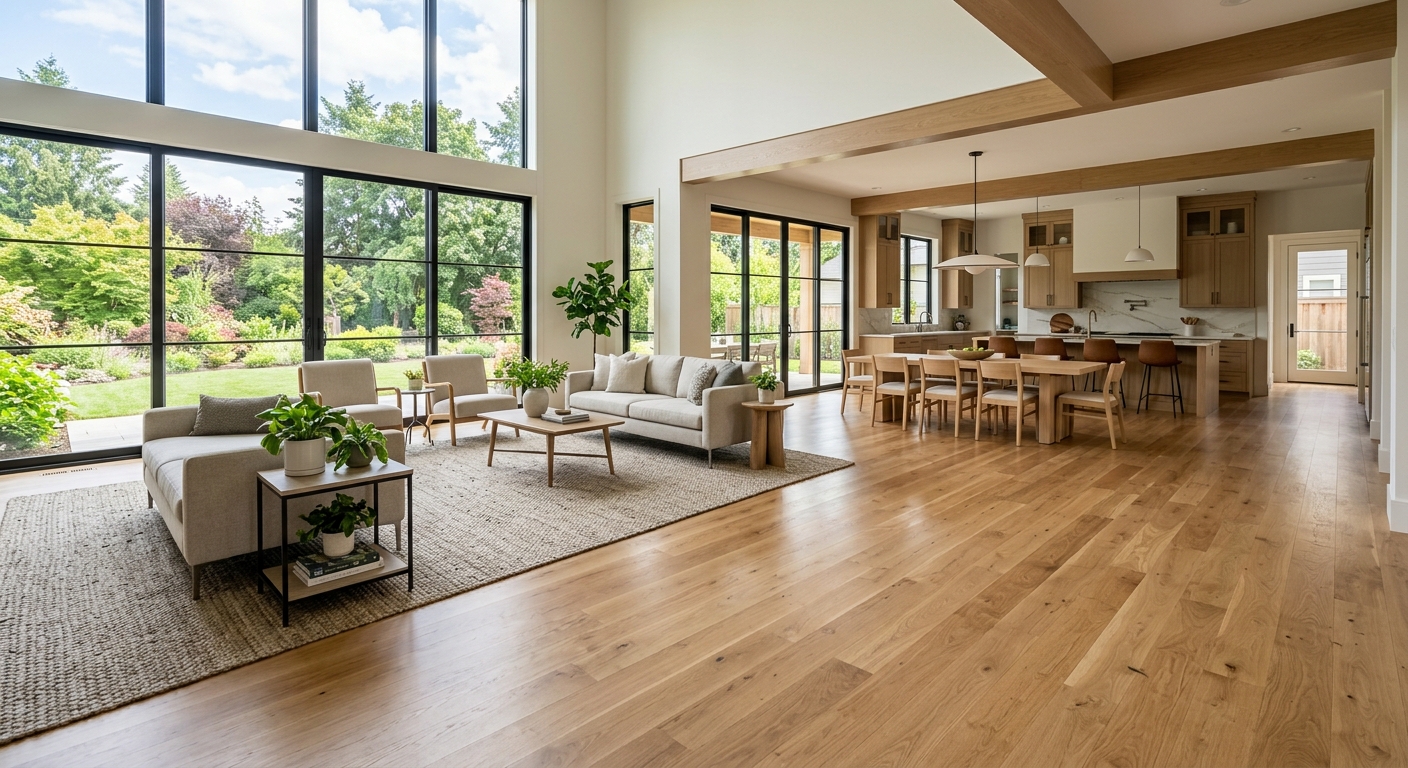
Flooring options and costs in Long Branch
Long Branch, Ontario homeowners usually have a short list of flooring choices because the Toronto-area climate creates real indoor humidity swings between seasons. For a community of about 10,084 residents (Statistics Canada, 2021 Census), there’s also steady renovation demand, so you’ll see competitive contractor availability—but premium finishing and busy schedules can push labour rates up. On older properties common around Long Branch, you may be dealing with subfloor levelling, patching, or even plywood replacement before the new surface can be installed straight and solid. That prep step can change your total cost, even when you select mid-range materials.
In practice, we budget for airflow and moisture first. Solid hardwood looks classic, but in Toronto’s humidity it expands and contracts more noticeably, and it’s risky over concrete and in basements. Engineered hardwood and luxury vinyl plank (LVP) are designed to handle higher humidity and below-grade situations, which is why they’re often the safest “set-and-forget” options in condos and newer infill builds. If your home is wired for radiant floor heating, that also matters: some owners add heating after renovations, and it pairs better with engineered wood, tile, and certain vinyl systems than traditional solid hardwood.
We also see extra trades activity in the older pockets of Long Branch near Lake Shore and the beachfront-adjacent streets, where turnover and condo conversions frequently mean careful underlay selection and floor-level planning. From there, comparing material types by performance and price per square foot is the fastest way to tighten your budget—see the table below.
| Type |
Best Room |
Moisture Resistance |
Lifespan |
Price per sq ft |
| Solid hardwood (nail-down, above grade only) |
Living / dining |
Low (humidity-sensitive; not for below-grade) |
25–50 years |
$9–$18 |
| Engineered hardwood (float or glue, above + on-grade) |
Living / dining, bedrooms |
Medium to high (more dimensionally stable) |
20–35 years |
$10–$16 |
| Laminate (click-lock, above-grade) |
Bedrooms, hallways |
Low to medium (resists light spills; avoid standing water) |
10–25 years |
$4–$9 |
| Luxury vinyl plank / LVP (waterproof, any level) |
Kitchen, finished basement |
High (waterproof vinyl core) |
15–25 years |
$5–$10 |
| Porcelain / ceramic tile |
Kitchen, bathrooms |
Very high (handles moisture directly) |
25–50 years |
$12–$25 |
| Carpet (broadloom or modular tile) |
Bedrooms, stairs (comfort) |
Low (can hold moisture; needs proper underpad) |
7–15 years |
$5–$11 |
Prices are estimates only and vary by project scope, site access and material selection.
What affects the price of flooring in Long Branch
In Toronto-area quoting, two contractors can land on prices that are 30–50% apart for the same “type” of flooring because the invisible work differs: subfloor prep, moisture mitigation, underlay choices, layout complexity, and the way a job is scheduled. Even when material looks similar at the store, the install system can change the total—especially in Long Branch where humidity can swing and where many homes were built during periods that often require levelling or subfloor repair before a new floor goes down.
The main technical driver is Toronto’s indoor humidity cycling. In that environment, solid hardwood expands and contracts with moisture and is not meant for direct glue or floating over concrete. It’s also risky in basements, where below-grade moisture vapour can’t be controlled perfectly. Engineered hardwood and luxury vinyl plank handle humidity and below-grade conditions far better; that stability is built into how the products are manufactured and installed. In colder stretches of the region, many owners add radiant floor heating during renovations. That heat and expansion timing makes solid hardwood a poorer fit, so product selection shifts—typically toward engineered wood, tile, or certain vinyl that’s rated for heated subfloors.
Older Long Branch housing stock frequently needs levelling or repair. A typical levelling/repair line item can add roughly $1–$4 per sq ft before you even consider finishing. If you’re comparing a laminate/vinyl range around $4–$9 per sq ft to engineered hardwood around $10–$16 per sq ft, that prep work can narrow the “gap” in surprising ways—because the floors that tolerate moisture often reduce the number of corrective steps.
Two concrete examples from local installs: (1) a small 400 sq ft condo living area often costs more per square foot than expected when required acoustic underlay and transition details are included; (2) a basement conversion to finished space can start with $5–$10 LVP per sq ft, but only after we address subfloor dryness, flattening and encapsulation steps that protect the install.
| Price Factor |
Why It Matters |
Cost Impact |
| Room area in sq ft |
Material quantities and labour hours scale directly with coverage |
Small rooms often cost more per sq ft after minimum labour and layout allowances |
| Subfloor condition |
Levelling, patching, and repair determine how smooth and stable the final floor will be |
Can add about $1–$4 per sq ft in prep on older Toronto-area homes |
| Moisture / below-grade install |
Concrete vapour and humidity require specific systems to prevent cupping or failure |
Rules out solid hardwood; often increases prep but protects long-term performance |
| Material choice |
Solid vs engineered vs LVP vs tile changes install complexity and tolerances |
Solid hardwood typically lands in the higher band; LVP usually sits lower |
| Removal and disposal of existing flooring |
Demo, underpad removal, and hauling are labour-intensive |
Often a noticeable add-on in Toronto due to waste handling time and restrictions |
| Stair nosing / transitions |
Transitions around doorways and stair detailing take time and specialty pieces |
Charged per step or linear foot; can materially change the total on multi-level homes |
| Radiant heat compatibility |
Some materials and underlays aren’t suitable over heated slabs or have expansion limits |
May shift you from solid hardwood to engineered, tile, or rated vinyl systems |
| Installation method |
Float, glue-down, or nail-down affects labour and subfloor tolerances |
Glue-down and nail-down usually require stricter prep; floating can be faster |
Permits & regulations in Ontario
In Ontario, installing flooring by itself typically does not require a building permit. That means replacing an existing wood, laminate, LVP or carpet surface with the same general type is usually a “standard renovation” job. However, flooring projects often include associated work that can trigger permits—especially where electrical, structural, or moisture-control systems are involved.
Permit-relevant work commonly includes: installing or altering in-floor radiant heating circuits (because it’s electrical work), making structural subfloor repairs that go beyond patching (for example, significant beam/joist remediation or load-bearing adjustments), and any electrical modifications to service underfloor components. Moisture remediation may also involve trade work that needs permits depending on what’s being installed or altered (for example, dehumidification systems, sump modifications, or any electrical tie-ins).
For condominiums, the corporation’s sound requirements matter. Even when no permit is required, the condo board may require specific underlay for STC/IIC performance and may restrict hard-surface flooring on upper floors. Always review the condo declaration and request approval in writing before starting.
To verify your contractor is legitimate in Ontario, check: (1) contractor licensing status via Ontario’s public contractor registry where applicable for the trade scope, (2) liability insurance certificate naming you as an additional insured where possible, and (3) WSIB/WCB clearance or account status for the workers. Ask for copies of certificates and a clearance letter before work begins; reputable flooring contractors provide these without delay.
Best flooring for each room in your Long Branch home
Choosing the right flooring for each room in Long Branch is mostly about managing moisture exposure, foot traffic, and comfort under Toronto’s indoor humidity swings. Living and dining areas usually benefit from engineered hardwood or high-quality laminate: they keep a warm, natural look while tolerating seasonal changes better than solid wood. In the master bedroom, many homeowners choose carpet for comfort and sound control, but engineered hardwood is also common if you want easier cleaning and a consistent look.
Kitchens are where moisture and spills are predictable, so luxury vinyl plank (LVP) or large-format porcelain tile is typically the smartest match. LVP is waterproof and handles everyday splashes well, which helps in homes that experience quick humidity shifts near exterior doors. Bathrooms should be porcelain or ceramic tile only because water management needs to be reliable at every splash point.
Basements are the decision point that separates “good on paper” from successful installs. For finished basements, LVP is often the clear winner: it’s designed for below-grade installs and can better handle vapour than solid hardwood or most laminate. If your home uses radiant floor heating, that also affects compatibility—engineered wood, tile, and certain rated vinyl systems pair better with heat and expansion management than traditional solid hardwood.
To show where the price difference is justified: if you’re debating laminate at about $4–$9 per sq ft versus LVP at about $5–$10 per sq ft for a finished basement, that extra $1–$2 per sq ft often buys peace of mind against moisture vapour. Over 500 sq ft, that can be roughly $500–$1,000 in difference, which is usually cheaper than replacing a failed floor later.
| Room |
Best Material |
Why |
Moisture Risk |
Price Band per sq ft |
| Living / dining room |
Engineered hardwood |
Natural warmth with better stability than solid wood in humidity swings |
Low to medium |
$10–$16 |
| Master bedroom |
Carpet or engineered hardwood |
Comfort and sound absorption for carpet; cleanable stability for engineered |
Low |
$5–$11 |
| Secondary bedrooms |
Laminate or engineered hardwood |
Good durability for kids and guests; easier maintenance than carpet |
Low |
$4–$16 |
| Kitchen |
Luxury vinyl plank (LVP) |
Waterproof core for spills; quick wipe-clean surface |
Medium to high |
$5–$10 |
| Basement (finished) |
Luxury vinyl plank (LVP) |
Designed for below-grade conditions and moisture vapour tolerance |
High |
$5–$10 |
| Bathroom |
Porcelain / ceramic tile |
Impervious surface and long-term water performance |
Very high |
$12–$25 |
How to choose a flooring contractor in Long Branch
Start by verifying the contractor’s legal and worker-protection credentials. In Ontario, reputable flooring installers should provide proof of liability insurance and WSIB/WCB coverage (or clearance status) before they step onto your property. Ask for certificates and a clearance letter—then confirm the dates are current. If the contractor is partnering with crews for tasks like subfloor repair or tile setting, ask that coverage applies to the workers on your job, not just the business name on the quote.
Next, compare quotes the way professionals do: request 2–3 itemised written estimates with a breakdown for labour, material allowances (including underlay and adhesives where needed), removal/disposal, transitions, and any subfloor prep. Avoid lump-sum numbers that don’t explain what’s included. Confirm whether permits are included if radiant heating or electrical-related work is part of your scope, and specify if old flooring removal, patching, and hauling away debris are included.
Warranty matters on both sides. Check the workmanship warranty length, whether it’s in writing, what it covers (e.g., gapping, buckling, delamination), and whether the floor manufacturer warranty is valid for your installation method. If you sell your home, ask if the workmanship warranty is transferable or can be supported with your invoice and photos.
For payment scheduling, use a conservative approach: never pay more than about 10%–15% upfront. Hold back remaining funds until key milestones are complete (subfloor prep verified, material installed, trim and transitions finished, cleanup done). Get your start date and completion estimate in writing so you can align trades and access—important in condo and occupied homes in Long Branch.
- Ask for the Ontario proof of liability insurance and confirm the policy is active.
- Request WSIB/WCB clearance documentation dated for the current period.
- Get at least 2–3 itemised quotes with labour and material line items.
- Confirm whether subfloor levelling/repair is included or quoted separately.
- Specify moisture testing and mitigation steps if you’re doing a basement or concrete slab.
- Ask what underlay is used for laminate/LVP and whether it matches your product rating.
- Confirm transition pieces (reducers, T-molds, stair nosing) and how they’re priced.
- Clarify removal scope: flooring, underpad, staples/adhesive, and disposal/hauling.
- Ensure the written scope states what’s excluded (e.g., moving furniture, patch drywall).
- Verify warranty terms in writing: workmanship coverage and manufacturer exclusions.
- Use a payment schedule that limits upfront payment to roughly 10–15%.
- Require a written timeline with start date and completion estimate.
Red flags in the Long Branch market: a contractor who won’t show current insurance or WSIB/WCB clearance; quotes that are not itemised or don’t mention underlay, transitions, or subfloor prep; refusal to put the scope and timeline in writing; promises that contradict product instructions (like installing solid hardwood over concrete); and demands for large upfront payments with no milestone holdback.
Frequently asked questions — flooring in Long Branch
Do condos restrict hard flooring?
Yes, in Ontario condo buildings it’s common for the corporation to restrict or regulate hard-surface flooring due to sound transmission. Even when a permit isn’t required for flooring itself, condo boards often require specific underlay for STC/IIC performance and may require approval before any install begins. In Long Branch, where condo and infill turnover is steady, this approval step can be the difference between a smooth start and a delayed schedule. Ask your board (or property manager) what underlay is approved and whether nail-down or floating installations are allowed. When you request approval, include product details (LVP thickness, underlay type, and installation method). If you’re comparing costs, note that a well-chosen engineered hardwood or LVP system can land in the mid bands (for example, LVP around $5–$10 per sq ft), but the required underlay and transitions may add to the final line item.
How do I compare flooring quotes?
Compare quotes line by line, not by the headline total. Ask each contractor to provide an itemised breakdown of labour, material allowances, underlay/adhesives (where required), subfloor prep, removal and disposal, and all transitions (including stair nosing if applicable). In Toronto-area homes, subfloor levelling or plywood replacement is frequently where costs diverge; older Long Branch properties may need prep before new flooring can be installed flat. Also confirm moisture handling steps: engineered hardwood and LVP are typically more forgiving for humidity swings, while solid hardwood requires stricter above-grade conditions. If one quote includes moisture mitigation or levelling and another doesn’t, your “cheaper” option can quickly become more expensive. Use real price bands to sanity-check: laminate/vinyl options often sit near $4–$9 per sq ft, while engineered hardwood and higher-end installs commonly land closer to $10–$16 per sq ft. Then make sure the scope matches those numbers.
Can I install flooring over existing tile in Long Branch?
Sometimes, but it depends on what’s under the tile, how level it is, and your product type. If the tile is firmly bonded and the surface is smooth and properly prepared, you may be able to install floating laminate or some click-lock systems over it—usually with a suitable underlay system that’s compatible with the manufacturer’s requirements. For LVP, there are also cases where you can install over tile if the tile is flat enough and you use the correct underlayment or vapour guidance. That said, thick tile can raise your floor height and create threshold problems at doorways, and any cracked or uneven tile can translate into movement and early wear. If you’re placing tile over tile (new tile installation), that’s a heavier approach and needs specific prep and thinset bonding steps. For best results in Long Branch’s humidity swings, confirm the floor is clean, flat, and dry, and ask the contractor to measure flatness before proceeding—this is where misquotes often happen.
What is the best flooring for a high-traffic area in Long Branch?
For high-traffic areas, the “best” choice is usually the one that resists dents, handles humidity, and stays stable over time. In Long Branch, that often points homeowners to LVP for kitchens and entry zones or engineered hardwood for main living spaces. LVP is typically the safest bet when spills and moisture are possible; it’s waterproof and performs well across humidity swings common in Toronto homes. Engineered hardwood is also a strong option when you want a natural look with better dimensional stability than solid wood. If you’re considering laminate, choose a higher quality wear layer and avoid setups where standing water is likely. As a budgeting reference, LVP commonly sits around $5–$10 per sq ft, while engineered hardwood commonly lands closer to $10–$16 per sq ft depending on thickness and finish. If your entry directly faces exterior doors and tracked-in moisture is frequent, LVP usually offers better “value-per-repair” over time than carpet.
How do I prepare my subfloor before new flooring?
Subfloor prep is where durability is won or lost, especially in the Toronto area where humidity and below-grade moisture vapour can affect performance. In Long Branch, common prep tasks include flattening, levelling compounds, replacing soft or damaged plywood, and addressing gaps or squeaks. For concrete slabs, moisture conditions matter; installers may require specific vapour mitigation systems before you lay engineered wood or vinyl systems. Solid hardwood requires stricter conditions and is generally not recommended over concrete or below grade. Before work begins, ask your contractor to describe the prep steps in writing: how they’ll measure flatness, whether they’ll repair or replace subfloor sections, what underlay system is used, and how they’ll handle transitions at doorways. Budget-wise, prep can add roughly $1–$4 per sq ft in older homes when levelling or repair is needed. If your quote doesn’t mention prep, ask directly—those costs often appear later as change orders.
Is cork or bamboo flooring a good choice in Long Branch?
Cork can be a good comfort choice for living spaces because it’s softer underfoot and quieter than many hard options, but it still has to be installed correctly for humidity stability. In Long Branch’s Toronto climate, the key is how your indoor humidity is controlled and whether the product is rated for the specific room. Cork is generally not the top pick for below-grade basements, and standing water should be avoided even with moisture-tolerant finishes. Bamboo is a hard surface, but like other natural materials, it can react to moisture and temperature changes. Unless the product is engineered bamboo designed for greater dimensional stability, it can carry similar risks to solid hardwood in basements. If you’re deciding between bamboo/cork and more proven options, consider that engineered hardwood and LVP are often more reliable across seasonal humidity swings. For example, if you’re comparing a mid-range engineered option around $10–$16 per sq ft versus LVP around $5–$10 per sq ft, LVP often wins for kitchens and finished basements where moisture handling matters most.